2026 Best Biodegradable Containers for Global Buyers
Choosing the right Biodegradable Containers in 2026 requires more than comparing prices or attractive green labels. Global buyers must examine material composition, food-contact safety, shelf life, transport strength, and end-of-life conditions. A container that performs well in a Singapore warehouse may soften in humid Brazil or crack during winter delivery in Canada. Small details matter. Lid fit matters. Moisture resistance matters.
Dr. Ramani Narayan, a respected bioplastics researcher, has stated, “Biodegradability is a function of the environment, not the material.” This warning should guide every purchasing decision. Buyers need clear evidence about the required temperature, humidity, microorganisms, and processing time. Certifications such as EN 13432 or ASTM D6400 can support evaluation, but they do not replace local verification. Compostable does not always mean home-compostable. It may require an industrial facility that customers cannot access.
This guide reviews practical Biodegradable Containers for international procurement teams, food brands, retailers, and hospitality operators. It considers container strength, sealing performance, customization, minimum order quantities, shipping efficiency, and supplier transparency. It also highlights materials that may disappoint under real conditions. That is important. No product is perfect. Some options reduce fossil-plastic use but need controlled composting. Others offer strong performance but have limited recycling pathways. Responsible buyers should request test reports, production samples, and full disposal instructions before signing large contracts. The best choice protects the product, respects regional infrastructure, and avoids exaggerated environmental promises.
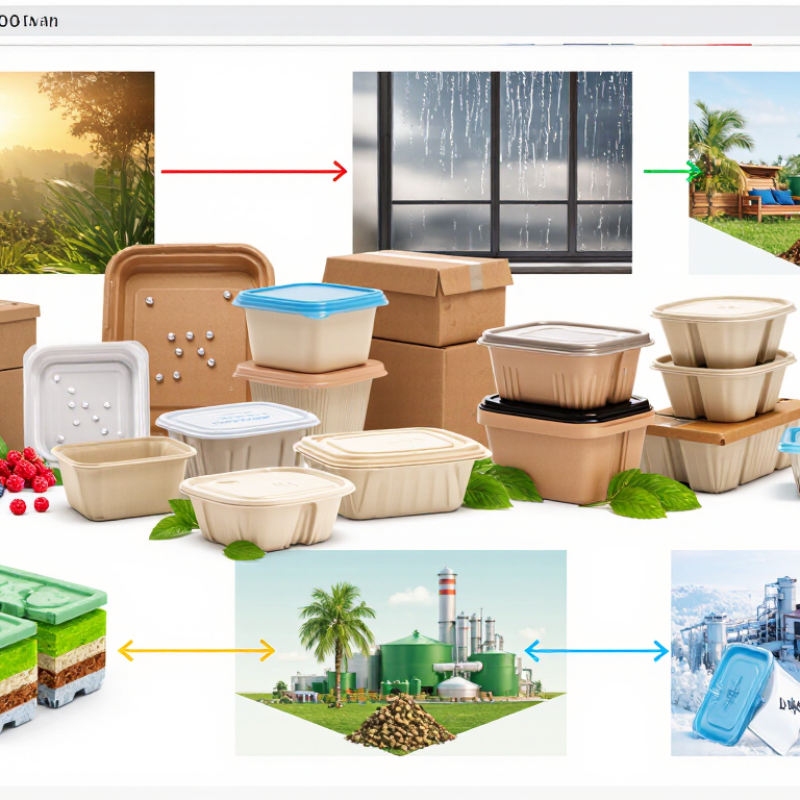
Biodegradable vs. Compostable: EN 13432 and ASTM D6400 Rules
For global buyers, “biodegradable” and “compostable” are not interchangeable terms.
Biodegradable material may break down naturally, but the timeframe and conditions can remain unclear. Compostable packaging must meet defined performance requirements in controlled composting environments.
EN 13432
EN 13432 applies to packaging designed for industrial composting in Europe. It assesses disintegration, biodegradation, material safety, and effects on compost quality.
ASTM D6400
ASTM D6400 is a United States specification for compostable plastics used in municipal or industrial composting facilities.
Neither standard automatically confirms home compostability. Context matters. A container may pass testing but fail in a cool backyard pile.
Buyers should request complete test reports, certification scope, product specifications, and evidence linking the report to the exact container. Check thickness, coatings, inks, lids, and adhesives. Small changes can affect composting performance.
Ask whether local facilities accept the material, because collection systems vary by region. Terms such as “eco” or “plant-based” provide little technical assurance alone.
A useful purchasing review also checks food-contact compliance, moisture resistance, storage conditions, and shelf life. Some suppliers present partial data, and that deserves careful questioning.
Even experienced teams can overlook the lid or printed label. Reliable decisions require both laboratory evidence and a realistic disposal route.
Market Baseline: European Bioplastics Forecasts 5.73 Mt Capacity by 2029
2026 Best Biodegradable Containers for Global Buyers
European Bioplastics forecasts global bioplastics production capacity could reach 5.73 million tonnes by 2029. This figure signals stronger manufacturing potential. It does not guarantee universal composting access or lower purchasing costs.
For global buyers, container selection should begin with the intended disposal route. Industrially compostable packaging may need controlled heat, humidity, and microbial conditions. Home compostable materials require different evidence. Biodegradable claims can also create confusion when suppliers omit testing details. Ask for certification scope, test methods, shelf-life data, and food-contact compliance documents.
A useful sample test includes chilled salad, hot soup, and oily meals. Check leakage after transport, not only inside a showroom. Measure lid fit after temperature changes. Inspect printed labels after condensation. These small checks reveal practical weaknesses.
Material capacity matters, but supply reliability matters more. Buyers should compare resin availability, minimum order quantities, and regional conversion capacity. A container that performs well may still fail if replacement stock takes twelve weeks. That risk is often overlooked.
Some buyers expect biodegradable containers to replace every conventional format immediately. That assumption needs reflection. Reuse, recycling, and compostable options may each suit different markets. Local waste infrastructure should influence the final specification. Procurement teams should also review environmental data carefully, because a larger production capacity does not automatically mean a smaller total footprint.
Material Data: PLA, PHA, Bagasse and Paper by Barrier and Heat Performance
For global buyers, biodegradable containers should be compared by barrier data, not appearance alone. PLA offers clear presentation and good resistance to water-based foods. However, standard PLA can soften near 55–60°C. It suits chilled desserts, salads, and cool takeaway meals. Hot soup is risky.
PHA usually provides stronger moisture and oxygen resistance than many natural-fiber options. Its heat performance varies by formulation, so buyers should request testing at the intended filling temperature. In practical evaluations, PHA containers can handle warm foods more confidently, but repeated heating may still cause warping. The data is not universal.
Bagasse has a firm, natural structure and performs well with hot, wet foods for short service periods. Its fiber network can absorb oil unless treated. Paper gives useful stiffness and printability, yet its moisture barrier depends heavily on the inner coating. Thin fiber walls may soften beside sauces. Test it.
A reliable purchasing check includes water-vapor transmission, oxygen transmission, grease resistance, seal strength, and heat exposure. Use real food, not only empty-container tests. Measure the container after 30 minutes at the target temperature. Compostability claims also depend on local processing conditions. That detail is often missed. No material wins every category. PLA may fail on heat, while coated paper may complicate end-of-life handling. Performance, supply conditions, and disposal infrastructure must be judged together.
2026 Best Biodegradable Containers for Global Buyers
This comparative chart evaluates typical PLA, PHA, bagasse, and paper containers by oxygen barrier, moisture barrier, and heat performance. Scores range from 1 (low) to 5 (high).
PLA generally offers good oxygen resistance but limited heat performance unless crystallized or modified. PHA provides balanced biodegradability and moderate barrier performance. Bagasse and paper tolerate higher serving temperatures, while their moisture and oxygen resistance usually depends on coatings, density, and structure. Typical heat-use ranges are approximately PLA 50–60°C, PHA 60–100°C, bagasse 100–120°C, and paper 120–200°C, depending on product design and coating.
Regulatory Map: EU Packaging Targets 65% Recycling by 2025 and 70% by 2030
2026 Best Biodegradable Containers for Global Buyers
EU packaging decisions now require more than a “green” material claim. Under the EU packaging framework, packaging waste recycling targets reach 65% by 2025 and 70% by 2030. Eurostat reported an EU packaging recycling rate of about 67.5% in 2022. The figure looks encouraging, but national performance remains uneven. Buyers should study destination-country collection systems, not rely on EU averages.
Biodegradable containers can support waste reduction, but they do not automatically count as recycled packaging. Many require controlled industrial composting at suitable temperature and humidity. A used container placed in a household bin may still become residual waste. Certification against standards such as EN 13432 helps verify compostability, while migration testing supports food-contact safety. These checks are practical, not decorative paperwork.
Material selection should follow the actual supply chain. A fiber container with a thin barrier layer may work for dry foods, yet fail with oily meals or long transport. A compostable lining can create sorting confusion. It happens. The European Environment Agency has repeatedly identified collection quality and sorting capacity as major recycling challenges. Global buyers should request independently verified test reports, disposal instructions, recycled-content data, and evidence of local treatment access. Cost comparisons should include freight damage, moisture resistance, and end-of-life fees. The cheapest container may become the least compliant choice by 2030.