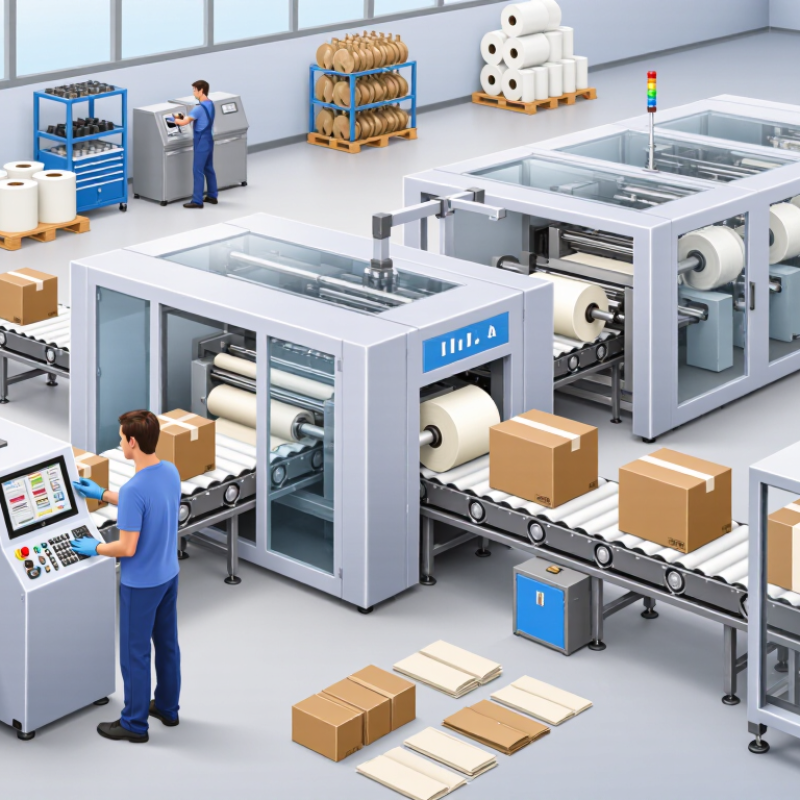
2026 Best Paper Packaging Machine for Global Buyers

Choosing the 2026 Best Paper Packaging Machine requires more than comparing speed, price, or attractive specifications. Global buyers need equipment that matches paper weight, package design, production volume, and local operating conditions. A reliable Paper Packaging Machine should handle feeding, forming, gluing, cutting, and inspection with stable accuracy. It should also support practical maintenance.

Pierre Pienaar, President of the World Packaging Organisation, describes packaging as “the silent salesperson.” His observation remains useful when evaluating paper bags, cartons, food boxes, and retail packaging. The machine does not simply shape paper. It influences shelf appearance, material waste, product protection, and daily production costs. Small details matter. A clean glue line can prevent rejected cartons. A precise folding unit can reduce torn edges and uneven corners. A responsive control panel can shorten operator training.

This guide examines the features global buyers should verify before ordering a Paper Packaging Machine. It considers automation level, paper compatibility, output consistency, energy use, spare-part access, and after-sales support. Certifications and technical documentation also deserve careful review. Requirements differ between markets, so one standard solution may not fit every factory. No machine is perfect. Even advanced equipment can struggle with unstable paper quality, humid workshops, or poorly adjusted settings. Buyers should request sample production, inspect finished packages, and calculate total ownership costs. A low purchase price may hide expensive downtime. The strongest choice is usually the machine that performs consistently under real factory conditions, not only during a showroom demonstration.

2026 Best Paper Packaging Machine for Global Buyers

Paper Packaging Machines: Definition, Scope, and Main Applications

Paper packaging machines are industrial systems that convert paper or paperboard into usable packages. They handle feeding, printing, cutting, folding, gluing, forming, and inspection. Some lines also add handles, windows, or automatic stacking units. The working scope depends on substrate thickness, moisture resistance, package shape, and production volume.

According to Smithers’ The Future of Paper-Based Packaging to 2028, the global paper-based packaging market is expected to exceed 500 billion US dollars by 2028. FAO’s Yearbook of Forest Products 2023 also recorded global paper and paperboard production above 400 million tonnes. These figures show a broad equipment market. They do not guarantee profit for every buyer. Machine compatibility still matters.

Applications range from takeaway food containers and bakery cartons to shopping bags, shipping boxes, and retail sleeves. E-commerce requires accurate folding and strong glued seams. Food packaging often needs clean contact surfaces and stable feeding. Paper between 120 and 350 gsm may behave differently during creasing. A faster line can still create more waste. That trade-off deserves scrutiny.

Experienced buyers should test actual paper samples before signing specifications. Check fold quality, glue performance, changeover time, dust control, and operator access. Servo control can improve repeatability, but it cannot correct poorly conditioned paper. Local voltage, floor space, spare parts, and safety documentation also affect machine suitability. The “best” machine is therefore application-specific, not simply the fastest model.

Key Machine Types for Bags, Boxes, Pouches, and Protective Packaging

2026 Best Paper Packaging Machine for Global Buyers

Choosing the best paper packaging machine depends on the package, material, and production rhythm. Bag-making machines suit shopping bags, food bags, and flat-bottom formats. Box forming machines handle cartons with creasing, folding, gluing, and automatic inspection. Pouch machines support lightweight paper structures, sealed edges, and custom openings. Each format needs different feeding accuracy and sealing control. Smithers valued the global paper-based packaging market at more than US$400 billion in 2023, according to The Future of Paper-based Packaging to 2028. Demand is growing, but equipment choices remain highly specific.

Protective packaging machines convert kraft paper into void fill, honeycomb wrap, or paper cushioning. They can reduce plastic use, yet paper consumption may rise if settings are poor. A common factory lesson is simple: fast output does not guarantee low waste. PMMI’s 2024 industry research highlights automation and labor availability as important packaging investment pressures. Buyers should check changeover time, paper width range, glue stability, noise, energy use, and after-sales training. A perfect specification on paper can still fail beside a real production line.

Tips: Request samples using your actual paper grade. Test the machine at normal speed, not only its maximum speed. Measure waste for one full shift. Ask for spare-part lead times and operator training. Do not ignore maintenance access. It often decides uptime.

2026 Best Paper Packaging Machine for Global Buyers - Key Machine Types for Bags, Boxes, Pouches, and Protective Packaging

A practical comparison of common paper packaging machines, typical operating ranges, suitable materials, and selection considerations for international buyers.

Packaging Category Machine Type Primary Application Typical Paper or Board Materials Common Product Formats Typical Production Range Typical Material Range Main Forming or Sealing Method Typical Automation Level Typical Installed Power Recommended For Key Buying Considerations
Paper Bags Flat-Bottom Paper Bag Machine Manufacturing self-supporting shopping, grocery, takeaway, and retail bags with a flat base. Kraft paper, bleached paper, recycled paper, and laminated paper. Square-bottom bags with twisted or flat handles; multiple bag widths and heights. 80–250 bags/min 60–150 g/m² Paper tube forming, bottom folding, adhesive bonding, and optional handle application. Automatic with servo-driven registration and touchscreen controls. Approximately 20–60 kW Retail chains, food-service suppliers, supermarkets, and high-volume bag converters. Check handle speed, paper reel width, glue compatibility, bag-size changeover time, and floor space.
Paper Bags SOS Paper Bag Machine Producing pasted-open-mouth bags for food, bakery, agricultural, and general retail applications. Uncoated kraft paper, recycled kraft paper, grease-resistant paper, and printed paper. Grocery bags, bread bags, produce bags, and flat-handle or handleless bags. 100–400 bags/min 50–120 g/m² Tube forming, side gluing, bottom opening, folding, and bottom pasting. Automatic; inline printing and counting may be added. Approximately 15–45 kW Food packaging plants and converters requiring high output with relatively simple bag structures. Confirm paper porosity, bottom strength, food-contact requirements, dust control, and changeover flexibility.
Paper Bags V-Bottom Paper Bag Machine Making narrow, lightweight bags for snacks, confectionery, seeds, pharmaceuticals, and small retail products. Lightweight kraft, glassine, greaseproof paper, and coated paper. V-bottom bags, sachet-style paper bags, and small flat bags. 200–700 bags/min 30–90 g/m² Web cutting, folding, side gluing, and V-shaped bottom formation. Automatic with electronic length control and web tension management. Approximately 10–35 kW High-volume production of small bags where compact packaging and fast running speeds are required. Evaluate web handling at low grammage, print registration, glue control, and product-size range.
Paper Pouches Paper Pouch-Making Machine Producing paper pouches for dry foods, pet treats, personal-care items, and household products. Kraft paper, coated paper, barrier paper, paper laminates, and recyclable functional papers. Three-side-seal pouches, four-side-seal pouches, flat pouches, and stand-up pouches. 30–150 pouches/min 60–180 g/m² Web unwinding, forming, adhesive or heat sealing, cutting, and optional zipper or spout insertion. Automatic; filling and inspection modules can be integrated. Approximately 15–50 kW Brands and contract packers seeking flexible paper-based formats with moderate barrier performance. Verify seal-window compatibility, oxygen and moisture-barrier needs, zipper options, and paper-laminate structure.
Paper Pouches Flat-Sachet Packaging Machine Forming and filling compact single-use sachets for powders, granules, condiments, and dry products. Paper-based laminates, coated paper, greaseproof paper, and heat-sealable structures. Three-side-seal sachets, four-side-seal sachets, and stick-style packs. 30–300 packs/min 50–140 g/m² Form-fill-seal operation using adhesive, heat-sealable coatings, or laminated webs. Automatic with volumetric, auger, or multi-head dosing systems. Approximately 8–30 kW Food-service, pharmaceutical, hospitality, and sample-pack applications. Match the dosing system to product flowability and confirm seal integrity, dust extraction, and hygiene design.
Paper Boxes Folder-Gluer Machine Converting printed or die-cut sheets into folding cartons and glued paperboard boxes. Folding boxboard, coated board, recycled board, and corrugated microflute sheets. Straight-line cartons, crash-lock boxes, auto-bottom boxes, sleeves, and multipoint cartons. 80–350 m/min 200–800 g/m² Creasing, folding, adhesive application, compression, and delivery stacking. Automatic with inline inspection, glue monitoring, and batch counting options. Approximately 15–60 kW Carton converters, food packaging producers, cosmetic packaging suppliers, and e-commerce box makers. Consider board stiffness, carton style, glue type, fold accuracy, feeder performance, and inspection requirements.
Paper Boxes Rigid Box-Making Machine Producing premium rigid boxes with wrapped paper covers and formed board structures. Greyboard, chipboard, coated wrapping paper, specialty papers, and recycled covering paper. Book-style boxes, lid-and-base boxes, drawer boxes, and magnetic closure boxes. 10–40 boxes/min 0.8–3.0 mm board thickness Board positioning, corner forming, paper wrapping, pressing, and optional lining. Automatic or semi-automatic, depending on box design and customization. Approximately 8–35 kW Premium gift packaging, electronics packaging, cosmetics, jewelry, and specialty retail products. Assess box-size range, corner accuracy, paper grain direction, setup time, and compatibility with small batches.
Paper Boxes Carton Erecting Machine Opening, shaping, and sealing flat-folded cartons or cases before product filling. Corrugated board, paperboard cartons, kraft board, and pre-glued folding cartons. Regular slotted cases, wraparound cartons, tray-style boxes, and retail cartons. 10–40 cases/min Single-wall corrugated board or 250–700 g/m² paperboard Mechanical opening, squaring, folding, and hot-melt or pressure-sensitive adhesive sealing. Automatic with sensors for carton presence and jam detection. Approximately 3–15 kW End-of-line packaging for food, beverages, household goods, and general consumer products. Check carton dimensions, board flute profile, adhesive system, line speed, and integration with conveyors and fillers.
Protective Packaging Paper Cushion Converting Machine Converting paper rolls or sheets into cushioning material for void fill and product protection. Recycled kraft paper, virgin kraft paper, and crêped cushioning paper. Paper pads, paper cushions, protective wraps, and void-fill bundles. 10–60 m/min 50–120 g/m² Paper crumpling, creasing, folding, perforating, and cutting. Automatic with adjustable length control and programmable dispensing. Approximately 1–8 kW E-commerce fulfillment, retail shipping, electronics, glassware, and fragile-product packaging. Review cushioning density, roll diameter, dispensing distance, paper width, noise level, and storage requirements.
Protective Packaging Paper Honeycomb Machine Expanding and cutting honeycomb paper for wrapping, interlayer protection, and edge cushioning. Kraft paper, recycled paper, and stretchable honeycomb paper webs. Honeycomb wrap, protective sheets, corner protection, and expandable paper sleeves. 20–80 m/min 60–120 g/m² Web unwinding, slitting, expansion, cutting, and roll or sheet collection. Automatic with adjustable expansion ratio and cut-length control. Approximately 2–12 kW Furniture, ceramics, glass, logistics, giftware, and sustainable replacement of plastic bubble wrap. Confirm expansion ratio, paper strength, roll width, cutting accuracy, and compatibility with manual or automated packing.
Protective Packaging Paper Edge Protector Machine Producing rigid paper corner and edge protectors for palletized and stacked goods. Multiple plies of kraft paper, recycled paper, and water-resistant paper. Equal-leg angles, unequal-leg angles, U-channels, and custom edge profiles. 10–40 m/min 1.5–8 mm finished thickness Paper ply unwinding, adhesive lamination, angle forming, pressing, and cutting. Automatic with programmable length and profile adjustment. Approximately 10–40 kW Steel, glass, furniture, appliances, building materials, and export pallet packaging. Evaluate finished thickness, compression strength, adhesive curing, profile accuracy, and moisture resistance.
Paper Processing Paper Roll Slitting and Rewinding Machine Preparing parent paper rolls for bag, pouch, label, cushioning, and carton-converting operations. Kraft paper, coated paper, release paper, laminated paper, and specialty barrier papers. Narrow rolls, master rolls, multi-lane rolls, and custom-width reels. 200–800 m/min 30–300 g/m² Unwinding, web tension control, rotary slitting, rewinding, and roll discharge. Automatic with shaftless unwinding and digital tension settings on advanced systems. Approximately 15–100 kW Packaging converters that need accurate roll widths and stable web tension before downstream processing. Check maximum parent-roll diameter, knife configuration, web width, core sizes, tension range, and dust management.
Important specification note: Production speed, power consumption, material compatibility, and finished-product dimensions are typical industry ranges rather than guaranteed values. Actual performance depends on paper grade, grammage, coating, moisture, print registration, product design, operator skill, and machine configuration. Buyers should request factory acceptance testing with their own materials before final purchase.

The listed figures are general purchasing benchmarks for 2026 planning and should be verified against the final machine configuration, local electrical standards, safety requirements, and applicable food-contact or packaging regulations.

Performance Factors Global Buyers Should Compare in 2026

2026 Best Paper Packaging Machine for Global Buyers

Performance Factors Global Buyers Should Compare in 2026

Global buyers should compare verified output, not only catalog speed. A machine rated at 120 bags per minute may deliver less during frequent size changes. Ask for test data using your paper grade, dimensions, and adhesive. Request actual samples. Small differences become expensive over long production shifts.

Material control matters. Check tension stability, feeding accuracy, sealing strength, and waste rates. Recycled paper can vary in thickness and moisture. The machine should adjust without constant operator intervention. Energy use also deserves measurement, especially for facilities with high utility costs. A lower purchase price can mislead.

I have seen buyers overlook changeover time. Ten extra minutes per order can reduce annual capacity sharply. Review tooling access, control interfaces, spare-part availability, and maintenance records. Safety guards, emergency stops, and clear operating instructions should meet applicable local requirements. Reliable suppliers provide documented factory tests and practical training. Ask how quickly technical support responds across time zones. No machine fits every factory. Our own early comparisons sometimes valued speed too highly, while ignoring dust buildup and operator fatigue. Those lessons changed the evaluation sheet. Test the complete workflow, not just the machine’s best minute.

Automation, Sustainability, and Smart Technology Developments

2026 Best Paper Packaging Machine for Global Buyers

Automation, sustainability, and smart technology now shape serious paper packaging investments. FAO forestry data recorded global paper and paperboard production above 400 million tonnes in 2022. That scale increases pressure on converters to reduce trim waste, dust, energy use, and operator exposure. A capable 2026 machine should support rapid format changes, servo-driven feeding, precise folding, and stable output across recycled board grades. Small improvements matter. One millimeter can affect an entire pallet.

Smart controls make these gains measurable. The International Federation of Robotics reported 541,302 industrial robots installed worldwide in 2023, showing automation’s expanding industrial role. For paper packaging, useful technology includes camera inspection, automatic fault alerts, remote diagnostics, and production dashboards. These systems can track glue temperature, motor load, speed, and rejection rates. Operators gain evidence instead of guesses. However, connectivity is not automatically intelligence. Poor sensor calibration can create confident errors.

Sustainability also requires practical machine design. Smithers’ packaging market research identifies recyclable fiber formats as a continuing growth area, but recycled fibers often vary in moisture, stiffness, and surface quality. Machines need adaptive pressure control and dependable feeding systems. Energy monitoring should cover idle periods, compressed air, and heating zones. The inconvenient truth is that automation may increase electronic waste and maintenance complexity. Buyers should request lifecycle data, spare-part availability, operator training, and independently verified performance trials before purchase. Supplier claims alone are not enough.

2026 Best Paper Packaging Machine for Global Buyers

Automation, Sustainability, and Smart Technology Developments

Why this matters for machine buyers: Paper and cardboard had the highest recycling rate among the main packaging materials shown. This supports investment in automated paper converting, precise material handling, low-waste production, and smart quality-control systems designed for recyclable packaging formats.

Data source: Eurostat, Packaging waste by waste management operations, 2022. Rates represent the share of packaging waste recycled in the European Union.

Purchasing, Installation, Safety, and Maintenance Considerations

For global buyers choosing a paper packaging machine in 2026, purchasing should begin with the actual packaging line, not the machine catalog. Check paper thickness, bag or box dimensions, production speed, and available floor space. Ask for verified output under materials similar to yours. A stated maximum speed may not match daily production. That difference matters.

Installation requires more than delivery and assembly. Confirm voltage, compressed-air quality, ventilation, drainage, and lifting access before shipment. Keep at least one meter around service panels. A trained technician should level the machine, test emergency stops, and record operating settings. Remote guidance can help, but it cannot replace local technical support in every situation. We learned this after a small alignment error caused uneven folding.

Safety checks should be practical and repeated. Guards must remain closed during operation, and operators need clear lockout procedures before cleaning or repairs. Keep loose clothing, tools, and paper scraps away from moving rollers. Use a daily checklist with simple items: abnormal noise, loose fasteners, sensor response, and emergency-stop function. Maintenance is easier when completed in short intervals. Clean dust from sensors each shift, lubricate approved points on schedule, and inspect belts weekly. Keep spare sensors, fuses, and cutting parts in dry storage. Some buyers focus heavily on purchase price, then discover that delayed maintenance costs more than expected. That is worth reconsidering.

t