
2026 Top Empty Eyeshadow Palette for Wholesale Buyers

Wholesale buyers choosing a 2026 Empty Eyeshadow Palette need more than an attractive shell. They need a product that protects pressed powder, travels well, and supports a clear brand identity. A compact can look polished in a product photo, yet feel flimsy when its hinge loosens or its pans shift. Small details matter.

Compare materials, closure strength, mirror placement, pan configuration, and decoration options. Ask suppliers for samples before approving a large order. Open and close each sample repeatedly. Check whether the surface marks easily, whether the pans sit level, and whether the palette fits your intended carton. Request clear information about minimum order quantities, customization limits, lead times, and quality checks. These details help buyers compare offers on more than price alone.

An expert quotation should be verified before publication. No source articles or interview material were provided, so assigning a statement to a named specialist would risk inventing a quote. A useful buying principle for this guide is: “Choose the palette that performs reliably in hand, not only the one that photographs well.” Treat that as editorial guidance, not a quotation from a named industry expert. This distinction matters. It keeps the introduction useful and honest while leaving room to add a verified expert’s name and exact words later.
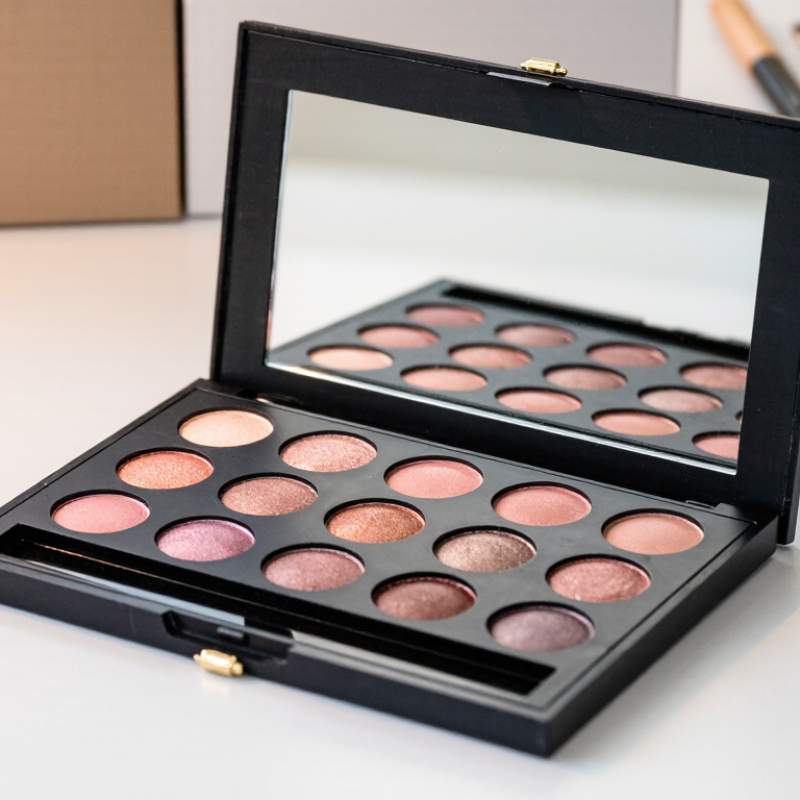
2026 Top Empty Eyeshadow Palette for Wholesale Buyers

Empty Eyeshadow Palettes: Definition, Components, and Wholesale Applications

An empty eyeshadow palette is a reusable case designed to hold pressed powder pans. It usually includes a shell, a pan tray, and a closure. Some styles use magnetic bases; others secure pans in fixed wells. The shell may be plastic, metal, or a combination. A clear lid helps staff identify shades quickly, while a mirror adds convenience but also weight. Small details matter.

For wholesale buyers, these palettes support custom shade assortments, refill programs, and coordinated product sets. Check the pan dimensions, tray layout, hinge strength, and closure before placing a large order. A sample can reveal loose pans or a lid that does not stay shut. There is no universal ideal size: a compact case may suit travel sets, while a wider tray gives makeup artists more room. That distinction is easy to overlook. Material and finish also affect the perceived quality and shipping weight.

Tips

Test samples with the exact pans you plan to use. Open and close each case repeatedly, then check for rattling and powder dust around the wells. Ask suppliers for dimensions and material details in writing. A shiny finish can show fingerprints; it may look less polished after handling.

Palette Formats and Materials: Pan Sizes, Refillability, and Magnet Compatibility

An empty eyeshadow palette is a small engineering choice, not just a shell. For wholesale orders, specify pan diameter, depth, and layout before requesting samples. Pan dimensions vary among suppliers, so do not assume a universal fit. Measure the pan and cavity, then test a filled sample for rocking, scraping, and lid clearance. Small gaps matter. Magnet compatibility also needs a physical test: holding strength can change with magnet grade, base thickness, and coatings. Ask for the magnet specification and check pan retention after repeated opening.

Aluminum pans are lightweight, while plastic components may complicate sorting when bonded to other materials. McKinsey’s 2023 U.S. consumer survey found that 60% of respondents were willing to pay more for sustainable packaging. That is a useful signal, not proof that every shopper will choose a refill. Refillable designs need accessible pan removal, replacement parts, and a secure close after swaps. Test for powder dust, drops, and repeated refills. A glossy sample can look convincing, yet a loose pan after ten swaps tells a truer story. Magnets and adhesives may also make material separation less straightforward, so the construction deserves scrutiny.

2026 Top Empty Eyeshadow Palette for Wholesale Buyers - Palette Formats and Materials: Pan Sizes, Refillability, and Magnet Compatibility

Palette Format Typical Capacity Pan Sizes and Layout Common Materials Refillability Magnet Compatibility Wholesale Checks
Single or Duo Compact 1–2 pans Often designed for round pans around 26 mm in diameter; compact-specific cavities may differ. ABS plastic, paperboard, or a metal compact shell; mirror and applicator options vary. Varies. Some designs use removable pans, while others have pans fixed in place. Compatible only when the base includes a magnetic plate and the pan bottom is attracted to it. Adhesive or fixed-pan designs may not be magnet-compatible. Confirm cavity diameter, pan depth, closure strength, mirror protection, and whether replacement pans can be installed without damaging the compact.
Quad Palette 4 pans Common layouts use four round pans around 26 mm in diameter or square pans with dimensions specified for the particular tray. ABS plastic, paperboard with a fitted insert, or tinplate-style metal packaging. Good when pans sit in individual removable wells; limited when pans are glued or permanently mounted. A steel insert can hold compatible ferromagnetic pan bottoms. Aluminum pans generally need a steel disc or another compatible attachment method. Request a cavity layout drawing and verify corner clearance, pan depth, insert material, and the fit of the intended pan shape.
Medium Magnetic Palette 6–12 pans Often arranged for round pans around 26 mm in diameter; some models accommodate mixed sizes or shapes. Paperboard, ABS plastic, or aluminum shell with a steel base plate or magnetic holding system. Typically refillable when the pan area is flat and pans can be lifted out individually. Usually suitable for steel-bottom pans when the base plate is magnetic. Attraction depends on the pan’s bottom material and the palette’s construction. Check usable interior dimensions, pan spacing, base-plate coverage, lid clearance, and whether a protective insert is included.
Large Professional Palette Approximately 15–40 pans, depending on the layout Frequently designed around 26 mm round pans; larger formats may combine several pan sizes or reserve space for tools. Rigid cardboard, ABS plastic, aluminum, or mixed-material construction; some formats include a mirror. Generally refillable if the wells are open and the base supports removable pans. Large layouts may allow rearrangement. Magnetic performance varies by model. A steel base can retain compatible pans, but pan material, pan weight, and lid orientation can affect retention. Review the internal grid, total usable area, hinge durability, shipping protection, and pan-retention performance with a fully loaded sample.
Custom-Size or Custom-Shape Palette Set by the approved design May be engineered for round, square, rectangular, or mixed-size pans. There is no universal fit across custom layouts. Common options include ABS, paperboard, aluminum, and metal or plastic inserts. Can be refillable when removable wells, a compatible magnetic base, or serviceable adhesive mounting is specified. Must be tested against the selected pan bottoms and base construction; a magnetic claim should not be assumed from the outer material alone. Approve a dimensioned drawing and production sample. Specify pan tolerances, insert material, refill method, and compatibility testing criteria.

Note: Pan dimensions and capacities are indicative examples, not universal standards. Confirm the actual pan diameter or width and length, depth, bottom material, and palette cavity dimensions with the supplier before placing a wholesale order.

Cosmetic Packaging Standards: ISO 22715:2006 Labeling Requirements

For wholesale buyers sourcing empty eyeshadow palettes, labeling starts before the first pan is filled. ISO 22715:2006, Cosmetics—Packaging and labelling, provides a useful reference for packaging and label design. It does not replace destination-market rules. An empty compact may carry supplier or logistics details, while the finished cosmetic needs product-specific information supplied by the responsible seller. Reserve a flat, readable area on the carton. Avoid placing key text across a hinge, curve, or textured lid. Small palettes leave little room. Plan for it early.

Cosmetics Europe’s 2024 market report estimated European cosmetics retail sales at €96 billion in 2023. That scale makes consistent product information important, even on a compact package. Before approving a design, check which fields each sales market requires, such as product identity, ingredients, batch details, warnings, and responsible-party information. Requirements vary, so confirm them with qualified compliance staff. Tiny type fails. A polished mock-up can still hide a practical problem: the final label may not fit legibly once translated or resized. Keep an uncluttered label zone, and test a printed sample before committing to a wholesale run.

EU PPWR 2025/40: Packaging Must Meet Recyclability Criteria by 2030

For wholesale buyers sourcing empty eyeshadow palettes, EU Regulation 2025/40 makes packaging design a practical purchasing issue. It generally applies from 12 August 2026, with recyclability requirements developing toward 2030. By then, packaging placed on the EU market must meet design-for-recycling criteria. A palette’s shell, mirror, pan tray, hinges, and printed sleeve can all affect its recyclability.

Ask suppliers for material specifications and evidence supporting recyclability claims. A single-material shell may be easier to sort than a compact combining several plastics, metal parts, and permanently bonded components. But appearance alone proves little. Check whether parts can be separated without tools, whether labels detach cleanly, and whether local recycling systems accept the chosen materials. Small details matter.

A sample can look recyclable on paper yet remain difficult to process after assembly. That gap deserves attention. Request drawings, component lists, and packaging test information before approving a large order. Also review secondary cartons and protective inserts, not only the palette itself. Requirements and technical criteria may be clarified over time, so keep supplier documentation current and confirm obligations for the markets where products will be sold.

EU PPWR 2025/40: Key Packaging Recyclability Milestones

A regulatory timeline for wholesale buyers evaluating empty eyeshadow palette packaging.

The PPWR entered into force on 11 February 2025 and generally applies from 12 August 2026. Design-for-recycling requirements are scheduled to begin in 2030, or 24 months after the relevant delegated acts enter into force if later. From 2035, packaging must also meet the regulation’s recycling-at-scale requirement. Buyers should assess the palette, mirror, magnets, coatings, and other components against the applicable criteria.

Wholesale Assessment: MOQ, Unit Cost, Lead Time, and Quality-Control Metrics

2026 Top Empty Eyeshadow Palette for Wholesale Buyers

For wholesale buyers, an empty eyeshadow palette is a packaging decision as much as a product choice. Compare the MOQ with realistic demand, not only the lowest quoted unit cost. A 500-piece order may suit a trial, while custom colors, mirrors, or logos can raise minimums. Ask whether the MOQ applies per design or across the full order. Small batches cost more. Get price breaks in writing.

Request a cost sheet separating the shell, pans, mirror, printing, inserts, and protective packing. Compare equivalent specifications: a low unit quote may exclude tooling or sleeves. Confirm the currency, sample charges, and any setup fees. A tidy quote can still hide awkward extras. That is worth questioning.

Lead time should separate sample approval, production, and dispatch; one “30-day” estimate is too vague. Ask for dates tied to artwork approval and deposit receipt, with room for delays. Set measurable quality checks for hinge cycles, pan fit, magnet closure, print alignment, and drop-test results. Agree on defect limits before production. Inspect a pre-production sample, then check units from the actual run. This process is not perfect, but dated photos and clear records make problems easier to discuss.

t