2026 Best Robot Warehouse Picking Systems for Global Buyers

Choosing the right Robot Warehouse Picking system in 2026 requires more than comparing advertised picking speeds. Global buyers must examine accuracy, integration, worker safety, maintenance support, and total ownership costs. A system that performs well in a controlled showroom may struggle with soft packaging, reflective labels, mixed-size cartons, or crowded aisles.

This guide evaluates leading solutions through practical warehouse requirements. It considers robotic arms, autonomous mobile robots, vision systems, grippers, warehouse management software, and human-robot workflows. Real performance depends on product variety, order profiles, floor conditions, and local technical support. A reliable supplier should provide documented test results, transparent service terms, cybersecurity information, and references from comparable operations.

Details matter. Can the robot pick a small cosmetics box without crushing it? Can it recover after a barcode is partly hidden? How long does an operator need to clear a failed pick? These questions often reveal more than impressive demonstration videos. Independent validation is valuable, but available data may remain incomplete. No ranking can replace a site survey or controlled pilot.

Buyers should also review electrical requirements, employee training, spare-parts availability, and relevant regional standards before signing a contract. The cheapest deployment may become expensive when integration takes longer than expected. Some emerging systems look promising, yet their long-term reliability is not fully proven. That uncertainty deserves honest attention.

The following overview compares notable Robot Warehouse Picking options for global buyers. It focuses on practical fit, measurable evidence, and realistic limitations, helping decision-makers build a safer and more dependable automation strategy.

2026 Best Robot Warehouse Picking Systems for Global Buyers

Industry Scale: IFR Reports 541,302 Global Robot Installations in 2023

2026 Best Robot Warehouse Picking Systems for Global Buyers

The International Federation of Robotics reported 541,302 industrial robot installations worldwide in 2023. This figure signals strong automation demand, but it does not guarantee a suitable picking system for every warehouse. Buyers should examine order volume, product variation, labor availability, and local service capacity before comparing equipment.

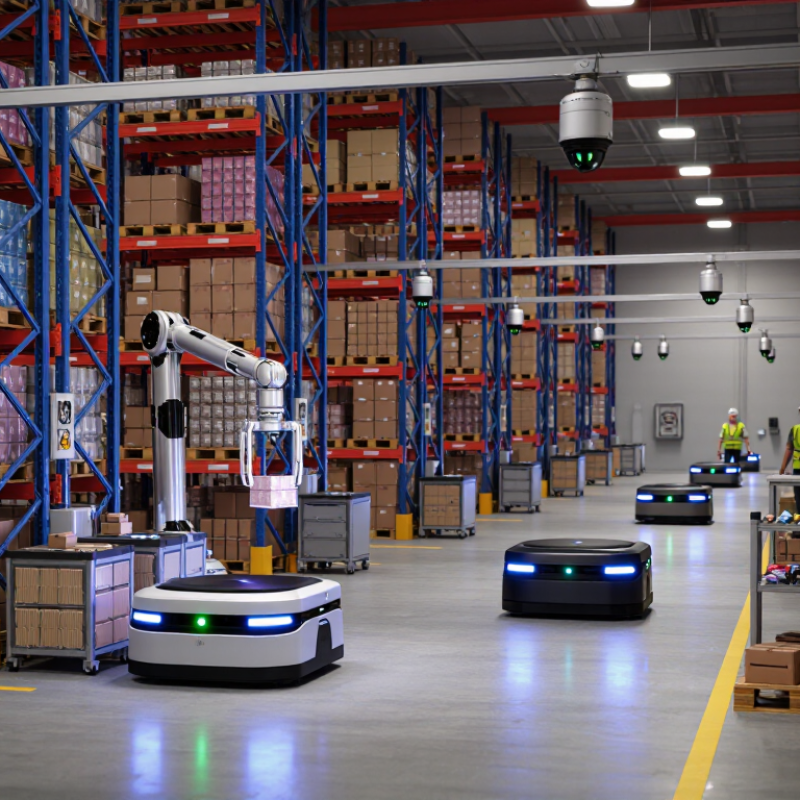
A practical picking cell may include a robotic arm, vision camera, gripper, conveyor, and warehouse software connection. It should identify mixed cartons, handle reflective packaging, and place items without damaging corners. In a live facility, performance also depends on lighting, barcode quality, bin design, and replenishment discipline. Small errors can create large delays during peak shifts.

Speed is only one measurement. Buyers should request data on pick accuracy, recovery time, maintenance intervals, and safe human interaction. Installation training matters, especially where technical support is limited.

A system that performs well in a demonstration may struggle with dusty shelves or irregular products. That assumption can fail. Not always fast. Sometimes reliability deserves priority.

The 541,302-installation figure provides useful market context, yet it should not replace site testing. Global buyers can compare capacity using real order samples, including damaged cartons and difficult shapes. Pilot testing often reveals hidden costs, such as gripper changes, software integration, and operator retraining. These details are easy to overlook.

Warehouse Picking Taxonomy: AMRs, AS/RS, Cobots, and Vision Systems

2026 Best Robot Warehouse Picking Systems for Global Buyers

Warehouse picking automation is easier to evaluate when systems are classified by their core movement and decision functions. Autonomous mobile robots, or AMRs, move shelves, totes, or completed orders between zones. They suit changing layouts and mixed workflows. However, floor traffic, battery charging, and pedestrian safety require careful planning.

Automated storage and retrieval systems, known as AS/RS, place inventory in dense racks and retrieve it through controlled equipment. They can improve space usage and inventory accuracy, especially for repetitive demand. Their fixed structure may reduce flexibility when product sizes or order profiles change. Collaborative robots, or cobots, work beside trained staff for picking, packing, or replenishment. Their value depends on ergonomic design, gripper selection, and realistic cycle-time testing.

Vision systems identify product shape, location, labels, and damaged packaging. Good lighting matters more than many buyers expect. In practical evaluations, cameras should be tested with transparent bags, reflective surfaces, and partially blocked items. No category wins every aisle. A combined design may use AMRs for transport, cobots for handling, and vision for verification. Yet integration can become the weak point. Data delays, unclear handoffs, and poor exception procedures often reduce actual performance. Buyers should compare confirmed picks per labor hour, recovery time, maintenance access, and training needs. Initial demonstrations can look impressive. Real warehouse conditions are less polite.

Performance Benchmarking: Throughput, Accuracy, Payload, and SKU Mix

2026 Best Robot Warehouse Picking Systems for Global Buyers

Performance Benchmarking: Throughput, Accuracy, Payload, and SKU Mix

Robot picking systems should be compared under identical order conditions, not showroom demonstrations. Measure completed picks per hour, including replenishment, charging, travel, and exception handling. MHI’s 2024 Annual Industry Report places robotics and automation adoption at roughly one-third of surveyed supply chains. That signals growth, but not automatic productivity.

Accuracy needs a clear definition. Separate robot grasp success from order accuracy after scanning, weighing, and packing. A 99.5% pick rate may still create costly errors across one million annual units. Test small cartons, soft packaging, reflective surfaces, and irregular shapes. Payload also matters. A system rated for 15 kilograms may slow down near its limit. SKU mix changes everything. High-volume, stable SKUs usually produce better throughput than long-tail assortments.

Tips: Build a four-week benchmark using real orders. Record hourly throughput, first-attempt success, average payload, recovery time, and labor minutes per order. Interact Analysis reports continued expansion in warehouse automation, but market averages can hide site-specific weaknesses. Ask for raw test conditions, not only peak figures. Also test replenishment pressure during busy periods. This part is often underestimated. A technically impressive system may disappoint when product dimensions, demand variability, and software exceptions become messy. That is not failure, but it requires honest recalculation.

Global Buying Criteria: TCO, ROI, ISO 3691-4, and Cybersecurity

Global buyers evaluating robot warehouse picking systems should calculate total cost of ownership, not purchase price alone. TCO includes robots, grippers, software licenses, integration, training, batteries, maintenance, and downtime. Ask for five-year service records. A pilot should measure picks per hour, error rates, energy use, and recovery time after faults. One shift can expose problems hidden in a polished demonstration. Real cartons vary. Some arrive crushed, reflective, or poorly labeled.

ROI depends on usable throughput, labor redeployment, order density, and peak-season resilience. Build a conservative model using actual SKU dimensions and weekly order data. Include facility changes, safety barriers, network upgrades, and operator training. Do not count every theoretical pick as revenue. That mistake is common. Compare payback under normal and peak conditions, then test sensitivity to lower volumes. A credible supplier should explain assumptions, exclusions, and failed pilot cases.

ISO 3691-4 should guide risk assessment for mobile robots and their operating zones. Buyers need documented speed limits, protective fields, emergency stops, traffic rules, and validation records. Compliance claims require evidence, not a logo on a slide. Cybersecurity deserves equal attention. Require unique accounts, encrypted communications, patch procedures, offline recovery, access logs, and incident contacts. Segment robot networks from office systems. It is not perfect. Even mature deployments can miss a forgotten service account or delayed patch. Independent testing and clear ownership reduce uncertainty before contracts are signed.

Supplier Due Diligence: Integration, Service Coverage, and 2026 Scalability

For global buyers, robot warehouse picking systems should be judged beyond speed claims. Integration is the real test. Ask suppliers to demonstrate connections with your WMS, WES, barcode scanners, and inventory rules. Request live data from a pilot site, not only a polished simulation. MHI’s 2024 Annual Industry Report found that 55% of supply chain professionals planned to increase technology investment. That investment still needs measurable operational value.

Service coverage matters when a picking cell stops at 2 a.m. Check local engineers, spare-parts locations, response times, remote diagnostics, and multilingual training. Ask for uptime records from comparable warehouses. The International Federation of Robotics reported 541,302 industrial robots installed globally in 2023, showing strong automation momentum. However, warehouse picking has different challenges, including changing SKUs, fragile packaging, and variable order peaks. A supplier with excellent hardware may still provide weak integration support.

Tips: Test ten difficult SKUs, not ten easy ones. Measure recovery time after sensor faults. Review cybersecurity responsibilities and data-storage rules with your legal team. For 2026 scalability, require modular software, expandable charging capacity, and clear pricing for additional robots. A pilot may achieve impressive throughput, yet full deployment can expose hidden labor, maintenance, and network costs. No checklist predicts every failure. Leave room for uncomfortable questions.

2026 Best Robot Warehouse Picking Systems for Global Buyers - Supplier Due Diligence: Integration, Service Coverage, and 2026 Scalability
System Category Best-Fit Warehouse Use Case Typical Payload Typical Throughput Range Infrastructure Requirements Integration and Data Interfaces Service-Coverage Due-Diligence Checks 2026 Scalability Indicators
Autonomous Mobile Robots for Goods-to-Person Picking Piece picking from mobile inventory racks in e-commerce, retail replenishment, and spare-parts operations. 300–1,500 kg per robot, depending on the carrier and rack configuration. 80–250 tote or shelf moves per hour per robot; actual output depends on walking distance, workstation design, and SKU profile. Mostly existing flat floors; wireless coverage, charging areas, rack-compatible floor locations, and protected pedestrian crossings. REST or web-service APIs, warehouse-management-system task exchange, inventory synchronization, barcode or vision events, and fleet-management dashboards. Verify local spare-parts stock, remote diagnostics, response-time commitments, technician coverage, battery replacement process, and operator training. Robot fleet expansion without major building work; modular workstations; software support for multi-site control and workload balancing.
Autonomous Case-Handling Mobile Robots Transporting cartons, cases, and pallets between storage, picking, packing, and shipping zones. 500–2,000 kg per unit, subject to load-center and floor conditions. 30–120 completed transport missions per hour per robot, influenced by travel distance and traffic density. Marked traffic routes, floor-load verification, safety scanners, docking points, charging strategy, and controlled interaction with forklifts. WMS and warehouse-control-system integration, mission queues, digital map management, equipment-status data, and optional PLC or conveyor handshakes. Check safety validation documents, incident-reporting procedures, on-site commissioning resources, software-update policy, and escalation contacts by region. Additional robots can be added progressively; traffic-management software should support priority rules, congestion control, and zone restrictions.
Robotic Picking Arms with Machine Vision High-volume piece picking of reasonably standardized items from bins, totes, or conveyor presentations. 0.1–15 kg typical item weight; gripper selection is critical for flexible packaging, reflective surfaces, and irregular products. 600–1,200 picks per hour per cell in suitable item mixes; mixed-SKU performance can be materially lower. Rigid mounting, guarded work cells, calibrated cameras, controlled lighting, compressed air where required, and stable product presentation. PLC or industrial Ethernet communication, WCS/WMS order release, vision-event feedback, pick-confirmation data, and exception handling. Validate achieved pick rates using the buyer’s SKU sample; review gripper-change time, vision-training responsibility, preventive maintenance, and safety certification. Scale by adding cells, grippers, or parallel conveyors; confirm that software licensing and technical support remain practical at multiple sites.
Robotic Piece-Picking Workstations Automated picking and placing between source totes and order containers in fulfillment and returns operations. Up to approximately 10 kg per item in common configurations, with lower limits for delicate or deformable products. 400–1,000 picks per hour per workstation, depending on SKU dimensions, presentation quality, and exception rate. Ergonomic infeed and outfeed zones, safety guarding, tote standards, vision calibration, and adequate lighting. Order-wave or task-based interfaces, barcode validation, inventory events, pick-confirmation messages, and operational-performance reporting. Require a documented acceptance test, accuracy target, exception workflow, spare-camera and gripper availability, and local field-service arrangements. Workstations can be deployed in parallel; assess software support for new SKUs, product master-data changes, and seasonal volume peaks.
Shuttle-Based Automated Storage and Retrieval Systems Dense tote or carton storage with automated presentation to picking stations in high-throughput distribution centers. Typically 30–50 kg per tote or carton; heavier-load versions require specific rack, shuttle, and lift designs. Hundreds to several thousand tote movements per hour per system, depending on aisle count, lift capacity, and station configuration. Engineered rack structure, controlled floor flatness, lifts, conveyors, fire-protection coordination, electrical capacity, and defined maintenance access. WMS/WCS middleware, equipment-control interfaces, inventory location messages, conveyor PLC signals, and real-time fault notifications. Check structural calculations, seismic design where applicable, local certification, mean-time-to-repair targets, critical spares, and disaster-recovery procedures. Capacity grows through additional aisles, shuttles, lifts, and stations; verify that the control architecture supports phased expansion.
Vertical Lift Modules and Carousel-Based Picking Small-item storage, high-value inventory, maintenance parts, and operations with limited floor space or high SKU density. Common tray loads of 100–500 kg, subject to machine design and tray spacing. 20–80 tray presentations per hour per module; operator travel and transaction method affect final output. Level floor, overhead clearance, electrical supply, safe access, fire and building-code review, and operator-facing interfaces. Inventory-control software, host-system APIs, barcode or RFID events, user authentication, and stock-audit reporting. Confirm local installation capability, emergency retrieval procedures, service-part lead times, annual inspection requirements, and training materials. Modules can be added by zone; expansion depends on ceiling height, floor loading, electrical capacity, and available operator stations.
Goods-to-Person Tote and Carton Systems Fast order assembly where totes or cartons are automatically delivered to fixed picking and packing operators. Typically 10–50 kg per container; container geometry and load distribution must be standardized. 150–600 container presentations per hour per station, depending on ergonomics, batching, and replenishment logic. Conveyor or robotic transport, standardized containers, buffer capacity, workstation ergonomics, network coverage, and power redundancy. WMS/WCS integration, order batching, inventory allocation, container tracking, packing confirmation, and system-performance dashboards. Review service-level agreements, 24/7 support availability, remote-access controls, cybersecurity responsibilities, and recovery procedures after equipment downtime. Scale through additional stations, buffers, and transport capacity; model peak-season throughput rather than average daily volume.
Autonomous Forklift and Pallet-Movement Robots Pallet transport, put-away, replenishment, and staging in structured storage and manufacturing logistics environments. Common ratings of 1,000–2,500 kg; rack height, pallet condition, and load stability determine usable capacity. 10–40 pallet moves per hour per vehicle, depending on route length, rack height, and traffic controls. Validated floor condition, rack-location mapping, pallet standards, safety zones, charging areas, and coexistence rules for manual vehicles. WMS task assignment, warehouse-control integration, fleet traffic management, PLC or door signals, and pallet identification events. Verify compliance with applicable mobile-robot and industrial-truck safety requirements, site risk assessment, operator training, and emergency support. Fleet size can increase incrementally; confirm that charging, traffic management, and narrow-aisle performance remain stable at peak utilization.
Hybrid Robotic Picking Cells Mixed automation environments combining mobile transport, robotic picking, conveyors, and human exception handling. Varies by subsystem: approximately 0.1–15 kg for robotic picks and up to 1,500 kg for mobile transport loads. System-level output is application-specific; a practical design review should measure picks, replenishment, exceptions, and packing capacity together. Coordinated layout, safety zoning, shared data network, standardized containers, exception benches, and integrated maintenance access. Unified orchestration layer, WMS/WCS interfaces, robot-fleet APIs, machine telemetry, barcode or vision data, and common event logging. Assess the supplier’s responsibility matrix, multi-vendor integration experience, cybersecurity controls, change-management process, and escalation ownership. Strongest option for staged growth when interfaces are open; require documented limits for concurrent robots, stations, sites, and software tenants.
Performance figures are representative industry ranges for preliminary supplier screening, not guaranteed specifications. Final selection should be based on a site-specific acceptance test using the buyer’s SKU dimensions, weights, order profile, floor plan, labor model, safety requirements, and peak-season volume.
t