2026 Top Switch Terminal Types for Global Buyers?
Choosing the right Switch Terminal in 2026 will require more than comparing prices or catalog photos. Global buyers must evaluate current capacity, contact resistance, vibration performance, plating, and automated assembly compatibility. Small details matter. A loose crimp can stop a vehicle, machine, or control cabinet.
The International Energy Agency’s Global EV Outlook 2025 reported that electric car sales exceeded 17 million in 2024. That growth increases demand for terminals that tolerate heat, vibration, moisture, and repeated electrical loads. IPC reliability guidance also highlights process control, crimp consistency, and traceability as practical foundations for dependable interconnections. Meanwhile, connector market studies from Bishop & Associates continue to identify automotive, industrial, and data applications as major demand centers.
Ronald Bishop, founder of Bishop & Associates, has expressed a useful industry principle: “Terminal performance defines connector reliability.” Buyers should treat that sentence seriously. A terminal is not merely a stamped metal part. Its alloy, plating thickness, spring force, and mating cycle directly affect service life.
This guide examines the leading terminal types expected to shape global sourcing in 2026, including crimp, solder, spring, blade, ring, and PCB terminals. It compares their real operating strengths and limits. Some assumptions deserve reconsideration. A cheaper terminal may create higher maintenance costs later. A premium coating may also be unnecessary in a protected indoor cabinet. The best choice depends on application evidence, supplier quality, regional standards, and verified test data—not marketing language.
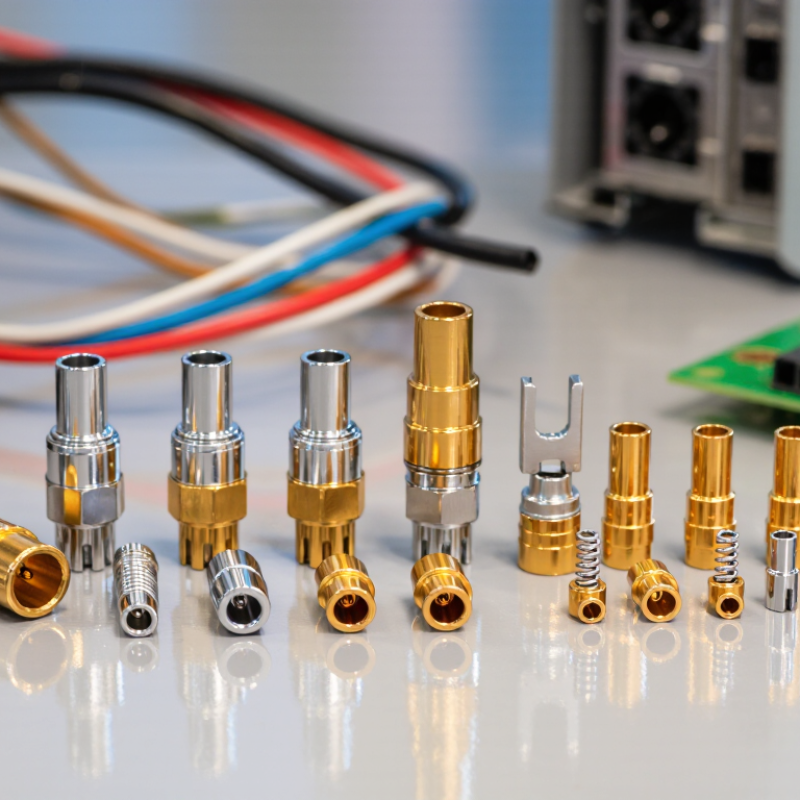
What Are Switch Terminal Types and Why Do They Matter?
Switch terminal types are the connection points that carry current between a switch and the surrounding circuit. They may look small, but they influence installation time, maintenance, and electrical reliability. Common options include screw terminals, solder lugs, quick-connect tabs, spring terminals, and PCB pins.
Each type suits a different working condition. Screw terminals allow field wiring and simple retightening. Spring terminals resist loosening under moderate vibration and reduce tool use. Solder lugs create a compact connection, but they demand careful temperature control and skilled assembly. Quick-connect tabs support faster replacement, especially inside control panels. PCB pins work well when the switch mounts directly onto a circuit board. The wrong terminal can cause heat, movement, or intermittent contact.
Selection should begin with current, voltage, wire size, vibration, and available space. A terminal rated for a heavy load may still fail if the wire is poorly stripped. In my inspection experience, loose screws and excessive solder are frequent practical problems. They are easy to overlook. Buyers should also check contact material, insulation clearance, terminal direction, and the required tooling. Product drawings often show dimensions clearly, yet they may not explain how installers handle the part in crowded equipment. That gap deserves attention. A sample installation can reveal more than a polished specification sheet.
How Do the Main Switch Terminal Types Differ?
Switch terminal types determine how a device connects, carries current, and survives repeated use. Global buyers should compare more than terminal shape. The connection method affects assembly time, servicing, vibration resistance, and field reliability.
Solder terminals create a compact, permanent connection. They suit controlled assembly, but repairs can become slow and heat may damage nearby parts. Screw terminals accept wires directly and allow easy maintenance. However, loose clamping can increase resistance and generate heat. Quick-connect terminals support fast installation and replacement. They work well in production lines, though poor alignment may cause weak contact. PCB pins mount directly onto circuit boards, saving space and reducing wiring. Their performance depends heavily on board strength and solder quality. Pre-wired terminals simplify installation. They also reduce field wiring errors, but their fixed cable length may limit flexibility.
In practical sourcing, I check the conductor size, rated load, insulation clearance, and expected switching frequency. I also inspect terminal plating and crimp quality, not only the catalog drawing. A terminal that feels secure during assembly may loosen after months of vibration. That detail is easy to miss. For damp locations, sealed wire leads may offer better protection than exposed quick-connects. For serviceable equipment, screw or quick-connect designs usually save labor. Still, no terminal type is universally superior. I have seen efficient designs fail because the terminal matched the switch but not the installation environment. Sample testing under real temperature and vibration conditions remains essential.
Which Switch Terminal Materials and Designs Suit Global Applications?
2026 Top Switch Terminal Types for Global Buyers?
Choosing a switch terminal starts with the application, not the catalogue image. Copper and copper alloys remain common because they balance conductivity, strength, and cost. Tin plating improves solderability and limits surface oxidation. Gold plating suits low-current signal contacts, where stable resistance matters more than price. For harsh environments, nickel-plated terminals can better tolerate heat, vibration, and chemical exposure.
Design also changes field performance. Screw terminals provide strong clamping, but installers must control torque carefully. Too little torque causes heating; too much can deform the conductor.
Spring-clamp terminals support faster assembly and resist loosening under vibration. Push-in designs save panel space, although wire quality and insertion depth still require inspection. A compact terminal is not automatically a safer terminal.
Industry data supports careful material selection. The 2024 Fortune Business Insights report projects continued growth in the global electrical switches market, driven by automation, infrastructure upgrades, and connected equipment. IEC 60947-1 emphasizes reliable insulation, temperature rise, and mechanical endurance across low-voltage switching devices. UL 94 flammability classifications also help buyers compare insulating housings.
These ratings are useful, but they do not replace application testing. I have seen technically compliant terminals fail after moisture entered an unsealed enclosure. That uncomfortable detail deserves more attention. Global buyers should verify current, voltage, conductor size, IP requirements, plating thickness, and test conditions before approving a design.
How Should Buyers Compare Performance, Safety, and Installation Needs?
Global buyers should compare switch terminal types by application, not appearance.
Screw terminals suit stable panels and serviceable wiring. Spring-clamp terminals resist vibration and reduce retightening work. Push-in terminals can shorten installation time, but only with compatible wire sizes and proper insertion depth.
Performance must be measurable.
Check rated current, voltage, temperature rise, contact resistance, and conductor range.
IEC 60947-7-1 provides a recognized framework for terminal-block safety and testing.
The IEA’s Electricity 2024 report projects global electricity demand to grow by about 3.2% annually through 2026. Higher loads make heat management less forgiving. A terminal that feels solid may still fail under continuous thermal stress.
Safety depends on more than the terminal itself. Compare insulation, creepage distance, touch protection, short-circuit withstand, and resistance to dust or moisture. IRENA’s Renewable Capacity Statistics 2024 recorded 473 GW of renewable capacity added in 2023, increasing demand for equipment in outdoor and fluctuating-power environments. Installation details matter: use the specified torque, strip length, ferrule type, and conductor material. Field audits often find avoidable errors here. That is uncomfortable, but useful. Buyers should also test vibration, repeated maintenance cycles, and actual enclosure conditions before approving a terminal type.
What Global Standards Apply to Switch Terminal Selection?
2026 Top Switch Terminal Types for Global Buyers?
Switch terminal selection should begin with the installation environment, not appearance. Screw terminals remain familiar and serviceable, but vibration can loosen poorly secured connections. Spring-clamp terminals resist this issue and support faster assembly. Quick-connect terminals save labor, while PCB terminals suit compact control equipment. Each type needs matching wire size, insulation clearance, current rating, and temperature limits.
Global buyers should check IEC 60998 for connecting devices used in low-voltage applications. IEC 60947-7-1 is relevant for industrial terminal blocks and their performance requirements. Equipment with enclosure protection may also require an IP rating under IEC 60529. In North American projects, UL or CSA requirements can apply, depending on the final equipment category. Regional certification is not always interchangeable. That detail is often underestimated.
A reliable review compares rated current, voltage, conductor range, torque, pull-out strength, and contact temperature rise. Testing should reflect real conditions, including repeated wiring, humidity, vibration, and thermal cycling. RoHS and REACH may also affect material selection and documentation. I would not approve a terminal from a datasheet alone. Samples can reveal weak clamping, brittle housings, or difficult tool access. The process is not perfect. Installation skill and local inspection practice can still change the outcome. Specification sheets should record the target market, applicable standard, test evidence, and traceable production information.