
2026 Top Types of Stick Welding Sticks for Buyers

Choosing the right Stick Welding Sticks can change how easily an arc starts, how the bead forms, and how much cleanup a job needs. Yet no single electrode works best for every welder or workpiece. A rod that performs well on a rusty outdoor repair may be a poor match for a clean, thin steel panel. Small details matter.

This 2026 buyer’s guide introduces common choices, including E6010, E6011, E6013, E7018, and E7024. Their coatings and intended uses differ. Cellulose-coated rods are often selected for digging arcs and field work, while rutile rods can offer a smoother feel for general tasks. Low-hydrogen electrodes require closer attention to storage and handling. E7018 is not automatically the best answer.

We’ll compare typical applications, arc behavior, penetration, slag removal, and practical buying considerations. We’ll also explain why electrode diameter, base-metal thickness, welding position, power source, and polarity should guide a purchase. Check the package and manufacturer’s data sheet for the exact requirements. Those specifics can vary by product.

The labels help, but they do not tell the whole story. Your first pass may still look rough. That is useful feedback, not a verdict. A sensible choice starts with the job in front of you, then balances performance, ease of use, and cost.
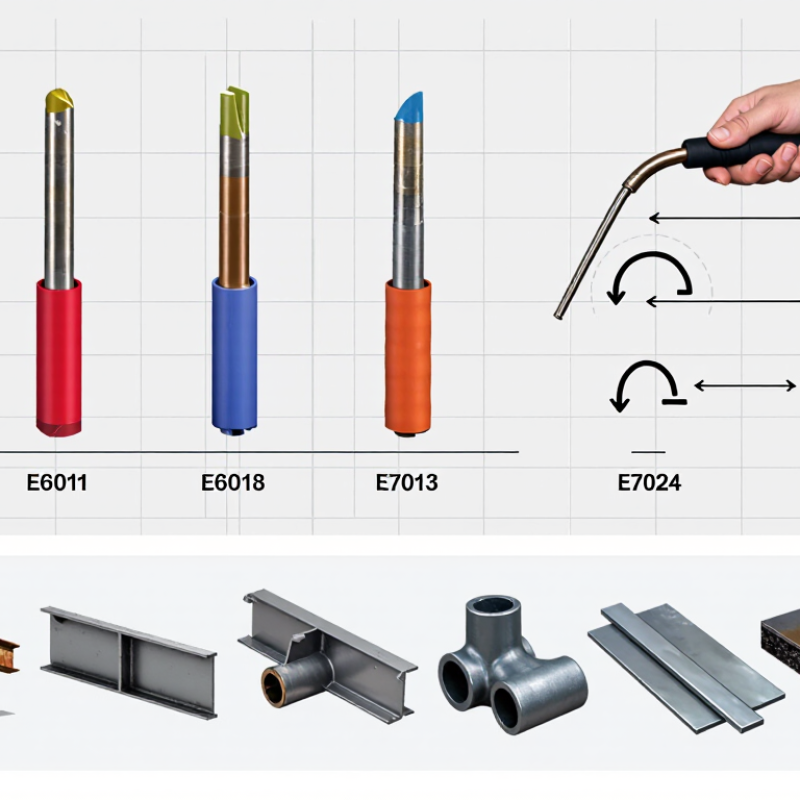
2026 Top Types of Stick Welding Sticks for Buyers

What Stick Welding Electrodes Are and How They Work

2026 Top Types of Stick Welding Sticks for Buyers
What Stick Welding Electrodes Are and How They Work

A stick welding electrode is a metal rod covered with a flux coating. The rod carries welding current and melts into the joint as the arc heats the workpiece. Meanwhile, the coating produces shielding gases and forms slag over the cooling weld. This helps protect the molten metal from contamination. The electrode is consumed during welding, so the welder gradually feeds it toward the joint. Simple in principle, but the arc takes practice to control.

Electrodes differ in coating, strength, and recommended operating conditions. Some suit general-purpose repairs, while others are designed for particular steel types or welding positions. Check the electrode classification and the machine’s instructions before choosing current or polarity; requirements vary. In practice, the weld puddle may feel less predictable on rusty or uneven material. Clean preparation helps, though it cannot fix every setup problem.

Tips: Keep electrodes dry and store them as their packaging directs. Use a steady travel speed, and watch the small pool of molten metal rather than the bright arc alone. Remove slag between passes with suitable tools, then inspect the bead for gaps or trapped debris. Keep it simple. Even experienced welders sometimes need to adjust their technique when the joint or material changes.

How Electrode Types Differ by Coating and Operating Characteristics

Stick electrodes differ mainly by coating, which controls arc behavior, slag, penetration, and moisture sensitivity. Cellulose-coated E6010 produces a forceful, deeply penetrating arc and is commonly used with direct current electrode positive. E6011 has a similar coating but can run on alternating current or direct current. Rutile-coated E6013 tends to provide a softer arc, lighter penetration, and an easy-to-remove slag. Low-hydrogen E7018 contains iron powder and needs careful dry storage. Different feel, different results.

Operating characteristics matter as much as the coating. AWS A5.1/A5.1M classifies carbon-steel covered electrodes and sets mechanical requirements; in E7018, “70” indicates a minimum tensile strength of 70,000 psi, about 483 MPa. E6010 is useful for root passes and tight joints, while E6013 can suit thinner material where excessive penetration is a concern. E7018 is often selected for structural work, but damp electrodes can increase hydrogen-related cracking risk. That detail is easy to miss.

Tips: Match the electrode to the base metal, joint position, and power source. Check the electrode maker’s data sheet for current range and storage instructions. Try a short bead on scrap first; the smoothest arc is not always the right choice.

Common Stick Welding Rods for Steel, Stainless Steel, and Cast Iron

2026 Top Types of Stick Welding Sticks for Buyers

For common mild-steel repairs, E6013 rods are popular for their smooth arc and manageable slag. They suit clean sheet metal, gates, and light fabrication. E7018 rods provide stronger, tougher welds for properly prepared steel joints. Keep them dry; moisture can contribute to weld defects. E6010 and E6011 rods penetrate more deeply and can handle less-than-perfect surfaces, but their forceful arc takes practice. Start with the base metal, joint design, and welding position.

Stainless steel rods should match the material as closely as possible. E308L is commonly selected for many 304 stainless-steel joints, while E316L often suits 316 stainless. Check the material specification before buying, especially when corrosion resistance matters. Stainless can distort or discolor from excess heat. Use controlled passes and avoid contaminating it with tools used on carbon steel. Small details count.

Cast iron needs a different approach. Nickel or nickel-iron electrodes are common choices for repairs because they can produce more machinable, less crack-prone deposits than ordinary steel rods. Clean the casting carefully, then use short welds and allow it to cool gradually. Preheating may help, but the right method depends on the casting and repair. There is no perfect rod for every crack. A rushed repair can fail, and even careful procedures sometimes need adjustment after a test bead.

How to Read Electrode Classifications and Choose a Rod

Stick electrode codes look cryptic until you break them into parts. In common four- and five-digit classifications, “E” means electrode. The first two or three numbers indicate minimum tensile strength in thousands of pounds per square inch. E6013, for example, is in the 60,000-psi class; that number alone does not guarantee a weld’s performance. The next digit identifies welding position, while the final digits describe coating and current characteristics.

Match the classification to the job, not just the price or rod diameter. E6013 is often chosen for general-purpose work and a smooth-looking bead. E6010 is known for deeper penetration and is typically used with direct current. E7018 is a low-hydrogen option for applications requiring stronger weld metal, but it needs careful storage. Damp rods can cause trouble. Check the exact package information, since suffixes may specify current type, hydrogen limits, or moisture resistance.

Think about base-metal thickness, joint fit, position, and available power. A small-diameter rod can help on thin material, where too much heat may burn through. For a vertical joint, confirm that the electrode is rated for that position. I would still verify the full classification before buying; similar-looking codes can behave differently, and a tidy bead is not proof of a sound weld.

2026 Top Types of Stick Welding Sticks for Buyers — How to Read Electrode Classifications and Choose a Rod

The first two digits in a four-digit AWS electrode classification indicate minimum tensile strength in thousands of pounds per square inch (ksi). For example, E6010 and E7018 indicate minimum strengths of 60 ksi and 70 ksi, respectively. The third digit indicates welding position: “1” means all-position. Choose an electrode that matches the base metal, joint position, power source, and job requirements.

Key Factors Buyers Should Compare Before Selecting an Electrode

Choosing a stick electrode starts with the base metal and the job position. Check the electrode classification against the material, joint design, and required strength. A rod suited to flat welding may be harder to control overhead. For thin steel, a smaller diameter can help limit heat and burn-through. Thick plate may call for a larger rod, provided the power source can supply the required current. Small details matter.

Compare the recommended amperage range with your machine’s output and duty cycle. Then consider coating type, penetration, and slag removal. A fast-freezing slag can help with vertical or overhead work, while other electrodes may suit cleaner, flatter beads. Look at storage needs, too: moisture-sensitive coatings can affect arc behavior and weld quality. Keep rods dry according to their packaging guidance. In practice, a short test bead on matching scrap often reveals more than a chart alone. Check arc stability, spatter, bead shape, and how easily slag lifts. I have seen buyers focus only on strength ratings and regret it when the rod feels difficult to control. Technique still matters, and no electrode makes a poor joint preparation disappear.

2026 Top Types of Stick Welding Sticks for Buyers - Key Factors Buyers Should Compare Before Selecting an Electrode
Electrode Type Typical Coating AWS Classification Strength* Common Current and Polarity Typical Welding Positions Penetration and Arc Characteristics Common Applications Key Buyer Considerations
E6010 Cellulose sodium 60 ksi minimum tensile strength DCEP (electrode positive) All positions Deep penetration; forceful arc; fast-freezing slag Root passes, pipe welding, and work on some less-than-clean steel surfaces Requires a compatible DCEP power source and good arc control. Its forceful arc can be less forgiving for beginners.
E6011 Cellulose potassium 60 ksi minimum tensile strength AC or DCEP, as specified for the electrode All positions Deep penetration; forceful arc; fast-freezing slag Maintenance, repair, and jobs where AC operation or work on less-than-clean steel is needed Check the product data for permitted current and polarity. The arc is typically more aggressive than that of a general-purpose low-penetration rod.
E6013 Rutile, commonly potassium-based 60 ksi minimum tensile strength AC or DC; exact polarity depends on the electrode product All positions; confirm diameter and product guidance Smoother, relatively soft arc; moderate-to-light penetration; easy slag removal is common General-purpose fabrication, sheet metal, and light repair on clean material Often selected for ease of use and appearance. It may be less suitable than a deep-penetrating electrode where joint fit-up or heavy contamination is a concern.
E7018 Low-hydrogen iron powder 70 ksi minimum tensile strength Commonly DCEP; some products are designed for AC as well All positions, subject to diameter and product instructions Medium penetration; smooth arc; low-hydrogen weld-metal characteristics when handled correctly Structural fabrication, general-purpose steel construction, and applications with specified mechanical-property requirements Requires proper storage and handling to control moisture pickup. Confirm the required strength, impact properties, and applicable welding procedure.
E7024 Iron powder, typically rutile-based 70 ksi minimum tensile strength AC or DC, depending on the electrode product Primarily flat and horizontal fillet positions High deposition rate; produces a large weld bead; designed for fast welding in suitable positions Production welding of flat plate and horizontal fillet welds Useful when deposition rate is a priority, but its position limitations make it unsuitable for many vertical or overhead welds.
Buyer note: In AWS electrode designations, the first two digits commonly indicate the minimum tensile strength in ksi, while the position and current-related digits identify other classification characteristics. Actual operating current, polarity, diameter range, toughness, and handling requirements vary by product; verify the electrode packaging, technical data sheet, welding procedure, and applicable code before purchase or use.
t