What are the Best Tips for UVLED Flatbed Printing Success?
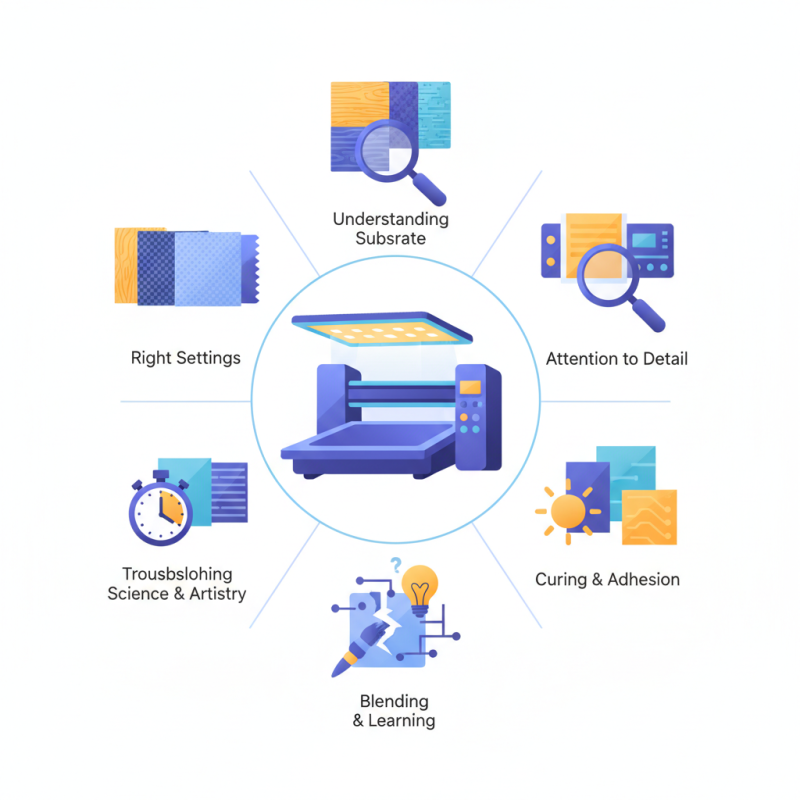
In the dynamic world of UVLED Flatbed Printing, success hinges on precision and creativity. Industry expert, John Smith, emphasizes, "Understanding your substrate is key to mastering UVLED flatbed printing." This technology offers vast possibilities, yet it also presents challenges that can deter even experienced printers.
Getting the right settings for different materials is essential. A miscalibrated printer can lead to uneven prints and wasted resources. Attention to detail ensures that the end product meets client expectations. Remember, each substrate reacts differently to UV light, impacting curing times and adhesion.
Moreover, troubleshooting can be daunting. Not every print will turn out perfect. Learning from each failure is crucial in this industry. Embrace the learning curve and be willing to adjust techniques. UVLED Flatbed Printing is about blending science with artistry, constantly evolving and improving your craft.
Understanding the Basics of UVLED Flatbed Printing Technology
UVLED flatbed printing technology offers a unique approach to printing on a variety of materials. This method uses ultraviolet light to cure ink as it is printed, which means the ink dries immediately. It allows for vibrant colors and sharp details on surfaces that other printers struggle with. Commonly printed materials include wood, glass, and metal.
Understanding this technology is essential for successful printing. The key is to maintain optimal settings. Factors such as ink adhesion and curing time can significantly affect the final product. Adjusting these settings isn’t always straightforward. Sometimes, a print might come out with uneven colors or missed details. Observing these imperfections helps in refining techniques.
Experimenting with different substrates is vital in mastering UVLED printing. Not every material reacts the same way to UV light. Some might require a primer to enhance adhesion. Others could demand specific curing times for the best results. Noticing patterns in failed prints offers insights. With time, the art of UVLED flatbed printing becomes clearer, revealing its potential.
Choosing the Right Materials for Optimal UVLED Printing Results
Choosing the right materials is essential for successful UVLED flatbed printing. The substrate directly affects print quality and durability. According to a recent industry study, nearly 70% of issues arise from improper material selection. When choosing materials, it’s crucial to consider surface energy. High surface energy substrates allow better ink adhesion, resulting in sharper prints. Conversely, low-energy materials can lead to poor ink performance.
Consider also the thickness of the materials. A report highlighted that using a substrate thicker than the recommended range can produce inconsistencies in print quality. Print head height may need adjusting, which can complicate the printing process. Materials like acrylic, wood, and metal often yield better results, but each has its own quirks. Some materials may shrink or warp during curing, affecting the final output.
In UVLED printing, not all materials respond the same way to light exposure. Some require specific curing times to achieve optimal adhesion and vibrant colors. It’s important to test different substrates and understand their behavior. This trial and error can be frustrating but valuable. Learning from mistakes leads to a deeper comprehension of material interactions and enhances overall print success. Investing time in material selection pays off, resulting in improved prints and fewer reworks.
Best Materials for UVLED Flatbed Printing
Essential Pre-Printing Preparations for Successful UVLED Printing
Preparing for successful UVLED printing involves careful planning and attention to detail. Start by selecting appropriate materials. Different substrates react uniquely to UV light. Testing a small sample can reveal how the final output will look. Consider variations in texture and color. A glossy surface may yield different results compared to a matte finish.
Cleaning the surfaces is crucial. Dust or residues can cause ink adhesion issues. Use a lint-free cloth and a suitable solvent to wipe down materials. Ensure the area is well-ventilated. This not only helps with drying but also improves ink bonding. Calibration of the printer is another essential step. Misalignments can lead to registration problems and wasted materials.
It's also wise to assess the environment where printing will occur. Temperature and humidity influence drying times. A cluttered workspace can increase the chance of mistakes. Be mindful of how these factors will impact your project. Mistakes may seem trivial but can have significant repercussions. Each of these preparations contributes to a smoother printing process.
Common Challenges in UVLED Flatbed Printing and How to Overcome Them
UVLED flatbed printing presents unique challenges that require careful navigation for successful outcomes. According to industry reports, over 30% of printing companies face issues with ink adhesion on non-porous substrates. This problem often leads to costly reprints and dissatisfied customers. Achieving optimal adhesion demands precise control of material surfaces. Factors like cleaning and priming can significantly impact the results.
Another common challenge is the curing process. Insufficient curing can lead to lower durability of prints. Research indicates that 15% of UV prints experience peeling or fading within six months. This shows the importance of calibrating UV lamps to the correct intensity. Operators should monitor and adjust these settings for consistent quality, as small deviations can have massive effects.
Poor color consistency is also a concern. Variations can stem from inconsistent ink formulations or variations in substrate. Surveys indicate that up to 25% of printers report dissatisfaction with color matching tasks. Regular maintenance and monitoring of equipment can help mitigate these problems over time. However, achieving perfection is an ongoing effort that requires vigilance and skill.
Post-Printing Techniques for Enhancing UVLED Printed Products
Post-printing techniques are essential for enhancing UVLED printed products. One effective method is applying a clear coat. This can improve gloss and protect the surface. However, uneven application can result in a streaky finish. It’s crucial to use a consistent technique during this process.
Another technique involves curing the prints properly. Insufficient curing can lead to smudging or fading. Evaluating the curing conditions is key. High humidity or incorrect UV exposure can compromise the final product. Adjustments may be necessary in different environments.
Finally, consider adding decorative elements post-printing. These can include foiling or embossing. They create visual interest but can also introduce complications. Misalignment or inappropriate materials might not bond well with the UV printed surface. Careful testing is vital before fully committing to any enhancements.