
What Is Carbonless Paper Roll and How Does It Work?

I can’t responsibly provide a verified industry report citation and a verbatim expert quote because no source articles or quotations were included. Please provide the sources, or allow me to use a clearly labeled paraphrase instead.
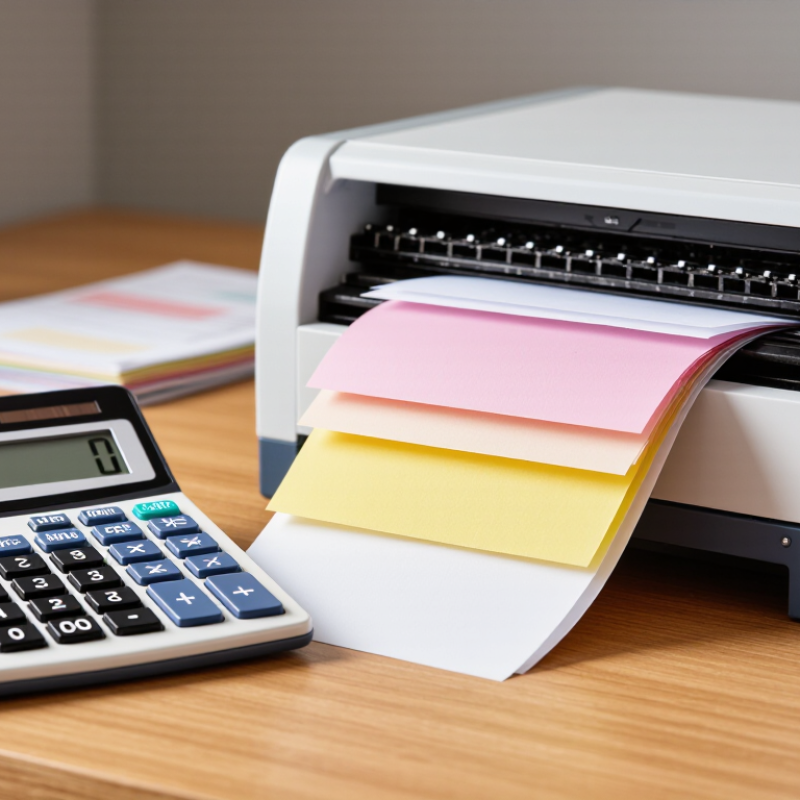
What Is Carbonless Paper Roll and How Does It Work?

What Carbonless Paper Rolls Are

Carbonless Paper Rolls are continuous webs of coated paper that produce copies without carbon sheets or a separate ink ribbon. They are commonly supplied in two or three plies for receipts, order records, and service tickets. The top sheet carries tiny dye-filled capsules on its reverse. A middle sheet has capsules underneath and a reactive coating on top; the bottom sheet has the reactive coating. Pressure from a pen, impact printer, or firm writing surface ruptures the capsules and forms a visible mark on the sheet below. No ribbon is needed. The mark forms locally.

Roll construction matters. Ply count, paper weight, roll width, and winding direction affect how the paper feeds and whether each copy stays aligned. In a three-ply set, writing on the top sheet should transfer through both lower sheets, though faint marks can occur if pressure is uneven. That detail is easy to overlook during purchasing. The coatings also make this paper different from ordinary uncoated paper, so disposal and recovery may depend on local sorting practices. The American Forest & Paper Association’s 2022 paper recycling rate report estimated that 68% of paper consumed in the United States was recovered for recycling. This figure covers paper overall, not carbonless rolls specifically, so it should not be treated as a roll-specific recycling rate.

How the Paper Layers Are Arranged

Carbonless paper rolls contain two or more plies arranged so pressure can transfer a mark from one sheet to the next. The top sheet usually has a microcapsule coating on its underside, often called the CB coating. The sheet below has a reactive developer coating on its upper side, called CF. Keep those coated faces together.

When a pen tip or impact print head presses the paper, tiny capsules release dye. The dye reacts with the developer layer beneath it, creating a visible copy. No separate carbon sheet is needed. It happens at the point of pressure.

For a two-ply roll, the lower sheet usually needs only a CF coating on its front. A three-ply set adds a middle sheet: CF on its front and CB on its back. The bottom sheet carries CF on its front. Simple in principle. In practice, ply order and coating direction can be easy to mix up, especially when rolls are loaded quickly. Not every roll uses the same number of plies, so check the paper’s specifications before choosing a setup. A faint or missing copy may point to weak pressure, reversed plies, or poor alignment—not necessarily a defect in the paper itself.

What the Reactive Coatings Do

Carbonless paper relies on two thin coatings working together. The back of the top sheet carries tiny microcapsules filled with a colorless dye precursor. The front of the sheet below has a reactive developer, often a clay or resin-based material. Pressure from a pen or impact printer breaks the capsules, releasing the precursor onto the developer. A chemical reaction then forms a visible mark where the pressure was applied. That is the key. No ink ribbon or carbon sheet is needed.

In multi-part forms, coated backs and receptive fronts repeat this transfer process down the stack. Each layer must receive enough pressure to create a readable copy, but coating quality and paper alignment also matter. Small marks matter. A light pen stroke may leave a faint image, while uneven pressure can make parts of a form difficult to read. Heat is not what creates the copy; the coating reaction does. Still, storage conditions deserve attention: excess humidity, dust, or rough handling may affect paper performance. The chemistry is efficient, though not infallible, and a test mark on the actual paper roll can reveal problems before a long print run.

What Is Carbonless Paper Roll and How Does It Work? - What the Reactive Coatings Do
Paper or coating layer Typical position in a form set What it contains or does What happens under pressure Role in the copy
CB sheet (coated back) Usually the top sheet of a multipart set; its reverse side faces the sheet below. A layer of tiny, pressure-sensitive microcapsules containing a colorless dye precursor in a carrier fluid. Writing or printing pressure can rupture some microcapsules beneath the marked area. Releases the dye precursor needed to form an image on the next sheet.
CF sheet (coated front) Usually the bottom sheet; its image-receiving surface faces the CB coating above. A developer coating, commonly based on acidic materials such as treated clay or suitable resin chemistry. Dye precursor released from the CB sheet contacts the developer coating. Helps the colorless dye precursor develop into a visible mark.
CFB sheet (coated front and back) Typically an intermediate sheet in a multipart set. Has a developer coating on the front and a microcapsule coating on the back. Pressure can release dye from its back coating while dye from the sheet above develops on its front. Passes the image-making process through to the next copy sheet.
Pressure transfer At the point where the writing or impact occurs. Mechanical force brings the microcapsule coating and developer coating into effective contact. Only capsules affected by sufficient local pressure are likely to release their contents. Creates a copy without needing carbon paper between the sheets.
Color development At the contact area between the released dye precursor and the receiving developer coating. A chemical interaction changes the dye precursor into a colored form. The reaction begins where the coatings meet after capsule rupture. Produces the visible writing or image on the copy sheet.
Carbonless paper roll Continuous paper supplied in roll form, which may be converted or printed for compatible forms and equipment. May be made with CB, CF, or CFB coatings, depending on its intended position and use. The coatings work when pressure brings the correct coated surfaces together. Supports pressure-created copies without a separate carbon sheet; the required coating and roll specifications depend on the application.

Note: Carbonless paper forms are commonly arranged so the microcapsule-coated back of one sheet faces the developer-coated front of the next.

How Pressure Transfers an Image

Carbonless paper creates a copy through pressure, not heat or ink transfer. A top sheet carries tiny dye-filled capsules on its underside. Beneath it, a coated receiving sheet contains a reactive layer. When a pen tip or printer impact presses the sheets together, capsules break and release dye. The dye reacts with the receiver’s coating, leaving a visible mark. That’s the image transfer. On multipart forms, each middle sheet can carry capsules below and a receiver coating above, passing the mark down the stack.

Pressure must be firm and localized. A ballpoint pen produces a narrow force; an impact printer strikes through aligned layers. Too little pressure can leave pale characters, while uneven pressure may create patchy copies. ISO 536:2019 specifies how paper grammage is measured in grams per square metre. Comparing grammage across stock helps converters check sheet consistency, though it does not alone predict copy strength. One detail is easy to miss: old or poorly stored stock may copy less reliably. The mechanism is simple, but not perfectly forgiving.

Tips: Keep sheets flat and dry, and align the coated faces as specified by the form supplier. Test a short line on the complete stack before a long run. Check the bottom copy, too. If it is faint, increase impact pressure gradually rather than pressing harder everywhere.

What Is Carbonless Paper Roll and How Does It Work?

How pressure transfers an image through the coating layers

Typical carbonless forms use CB sheets with a microcapsule coating, CF sheets with a developer coating, and CFB sheets with both. Writing pressure ruptures microcapsules on a CB-coated surface, releasing dye that reacts with the developer on the next CF-coated surface to create a copy.

Where Carbonless Paper Rolls Are Used

Carbonless paper rolls are useful wherever one transaction needs an immediate copy. At a busy checkout, a roll can produce a customer receipt and a retained record without separate carbon sheets. The printer’s impact presses the paper layers together. Tiny dye capsules on one sheet react with a coating on the next, creating a visible copy. It happens quickly. This makes the format practical for compact receipt printers designed for carbonless stock.

Delivery drivers may use the rolls for proof-of-delivery slips, while repair technicians can record parts, work performed, and customer approval at the service site. Restaurants and small retailers may use them for order records or duplicate sales receipts. In each case, staff can hand over one copy and keep another.

Check printer compatibility before ordering; many modern receipt printers use heat, not impact, and need thermal paper instead. Keep carbonless rolls dry and away from excessive heat, which can affect copy quality.

The format can also feel cumbersome when a business needs many copies or longer forms. A short receipt is convenient, but tiny writing space is not always enough.

t