
China Best Carbon Fiber Products Manufacturer?

Choosing China’s best carbon fiber products manufacturer is not as simple as comparing prices or product photos. carbon fiber parts can look similar online, yet differ in fiber grade, resin system, layup direction, curing method, and dimensional accuracy. A glossy surface tells only part of the story. Buyers should ask how a supplier controls each production stage, from incoming material checks to trimming and final inspection. Clear answers matter. So do drawings, sample reports, and documented tolerances. For applications involving loads, heat, or repeated vibration, request test data relevant to the actual use case, rather than broad claims about strength.

A dependable manufacturer should also explain its capabilities honestly. Ask whether it makes custom tubes, panels, enclosures, or molded components, and whether tooling, small batches, and repeat orders fit its process. Confirm who owns the design files, how revisions are approved, and how defects are handled. These details can reveal more than a factory tour video. Still, no checklist removes every risk. Material batches can vary, and a successful prototype may not predict mass-production consistency. That deserves attention. This guide examines practical ways to compare Chinese suppliers, including engineering support, quality systems, communication, lead times, and total project cost. It does not treat one company as best for every buyer. The right choice depends on specifications, evidence, and a supplier’s ability to repeat the result. Start with questions, not promises.
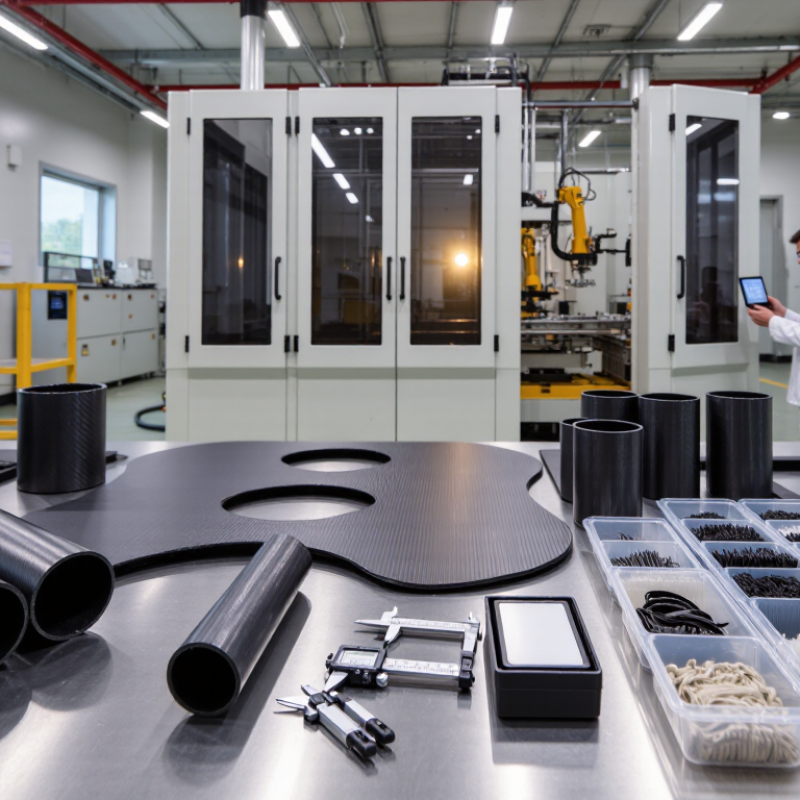
China Best Carbon Fiber Products Manufacturer?

China’s Carbon Fiber Products Industry: Scope and Development

China’s carbon fiber products industry spans raw material processing, composite design, fabrication, and finished components. Manufacturers work with woven fabrics, prepreg, pultruded profiles, and molded parts for transport, sporting goods, wind energy, and industrial equipment. The range is broad. A small bracket and a long structural beam can require very different fiber layouts and production controls.

Development depends on more than increasing output. Engineers must match fiber orientation, resin choice, and curing conditions to each part’s load and service environment. In a workshop, that may mean checking a laminate edge for voids, recording oven temperatures, and testing samples for strength. Small details matter. Automated cutting and forming can improve consistency, while skilled inspection remains important when designs or materials change.

China’s industry continues to develop through process improvements, wider application, and attention to production cost. Recycling and repair also deserve more practical work, since composite products can be difficult to recover at the end of their service life. Progress is uneven, and published product claims should be checked against test methods and use conditions. A carbon fiber part is not automatically lighter, stronger, or more durable; its performance depends on design, workmanship, and verification.

Major Carbon Fiber Products Made by Chinese Manufacturers

Chinese manufacturers produce carbon fiber fabrics, prepregs, tubes, panels, and finished composite parts. Fabrics and prepregs feed into bicycle frames, vehicle panels, sporting goods, and industrial rollers. Tubes and flat panels are common in lightweight equipment and structural assemblies. Some suppliers also make large composite components for wind energy.

Product choice depends on fiber grade, resin system, layup, and curing method. A glossy weave can look impressive. It does not prove strength. Buyers should check test reports, dimensional tolerances, and batch traceability, then inspect a physical sample. Fit matters.

Fortune Business Insights valued the global carbon fiber market at USD 5.48 billion in 2023. That figure describes the worldwide market, not Chinese output. It does signal demand across transport, energy, and consumer goods. Chinese factories offer varied product forms, but quality can differ between suppliers and production runs. A carbon fiber tube may look simple; its wall thickness, fiber direction, and joint design deserve careful review.

China’s Carbon-Fiber Manufacturers: Major Product Types

Typical tensile-modulus ranges for carbon-fiber grades used in products such as tow, fabrics, prepregs, tubes, panels, and molded components.

Ranges are representative engineering values, not specifications for a particular manufacturer or product. Actual properties vary by fiber grade and test method; the appropriate grade depends on the intended application and design requirements.

How Carbon Fiber Products Are Designed and Manufactured

Designing carbon-fiber products begins with the job they must do: carry loads, resist impact, or stay light under repeated use. A manufacturer maps those forces before selecting fiber type, resin, and layer direction. In a bicycle frame, for example, plies may run lengthwise along the tubes, with extra layers around joints. Small details matter.

The U.S. Department of Energy’s 2013 Quadrennial Technology Review describes carbon-fiber composites as capable of reducing vehicle structural weight by up to 50% compared with steel. That potential depends on design and validation, not the material alone. Layup plans are converted into cut fabric, placed in a mold, and cured under controlled heat and pressure. Technicians then inspect dimensions, surfaces, and internal defects. A clean finish is not proof of sound structure.

For companies assessing a carbon-fiber products manufacturer in China, ask how it controls fiber orientation, resin content, cure cycles, and batch traceability. Request test data for the intended load and environment. MarketsandMarkets’ 2023 Carbon Fiber Market report estimated the global market at US$7.5 billion in 2023, forecasting US$12.9 billion by 2028. Demand is growing, but scale alone does not prove process quality. Even a well-documented process can miss a failure mode; prototypes need real-world testing.

Criteria for Evaluating Chinese Carbon Fiber Manufacturers

A Chinese carbon-fiber manufacturer should be judged by repeatable performance, not a polished sample or a low quotation. Request lot-level tensile strength, modulus, elongation, sizing details, and test methods. Compare certificates with independent laboratory results and the relevant application specification. Small differences matter. Ask for evidence. The IEA’s Global EV Outlook 2024 reported nearly 14 million electric-car sales in 2023, about 18% of global sales. That signals a growing lightweighting market, but does not mean every vehicle component needs carbon fiber. Check whether the factory holds filament count, tow quality, and resin compatibility steady across production runs. Review traceability from fiber lots through finished parts, alongside corrective-action records. ISO 9001 certification can support process discipline, but cannot replace product-specific qualification.

For wind applications, the Global Wind Energy Council’s Global Wind Report 2024 recorded 117 GW of new installations worldwide in 2023. That scale makes capacity planning, delivery history, and blade-grade testing worth checking. Request aging, fatigue, and environmental test data where the application requires them. If possible, visit the production line. Inspect creel handling, oven controls, and how rejected material is recorded. Do not accept capacity figures without utilization rates and lead-time context. I would also ask for a failed-batch example and its corrective action. Suppliers may hesitate. That hesitation is worth noting, though one awkward answer alone proves little.

Applications and Supplier Selection Across Key Industries

Carbon-fiber products serve aerospace, electric vehicles, wind energy, and industrial equipment. Each application demands different strength, stiffness, fatigue life, and temperature resistance. The International Energy Agency reported nearly 14 million electric cars sold worldwide in 2023, about 18% of new car sales. That growth makes lightweight materials relevant, but carbon fiber is not automatically the best choice. Tooling costs and repair needs matter.

Wind projects create another demand signal. The Global Wind Energy Council reported 117 GW of new wind capacity installed in 2023. For suppliers, capacity alone is not enough: buyers should check fiber grade, resin compatibility, production consistency, and delivery timelines. Aerospace applications also require rigorous traceability and documented testing. Ask for test results tied to the actual product, not just general material data. Small differences between batches can affect performance.

Tips: Define the part’s load, environment, and service life before requesting quotes. Compare finished-part performance and total cost, not fiber price alone. Request sample panels and inspect their finish. A supplier may look qualified on paper; verify process control with evidence. That extra check can feel slow, but skipping it can be costly.

China Best Carbon Fiber Products Manufacturer? — Applications and Supplier Selection Across Key Industries

Industry Common Applications Typical Product Forms Key Selection Considerations Useful Supplier Checks
Aerospace Aircraft structures, interior components, satellite structures, and other weight-sensitive parts. Unidirectional prepreg, woven fabric, cured laminates, and engineered composite parts. Fiber orientation, laminate design, material traceability, process compatibility, and qualification requirements. Review material and process documentation, quality-system controls, lot traceability, and relevant test data. Confirm that the supplier can meet the project’s applicable aerospace approval requirements.
Automotive and Transportation Body panels, structural reinforcements, drive-shaft components, and lightweight vehicle parts. Prepreg, dry fabric, pultruded profiles, and chopped-fiber compounds. Part performance, production rate, joining method, surface finish, cost, and repair requirements. Ask for process-capability information, dimensional inspection results, material consistency data, and samples made using the intended production process.
Wind Energy Wind-turbine blade components and structural reinforcement in selected blade designs. Unidirectional fabrics, stitched multiaxial fabrics, and pultruded carbon-fiber members. Fiber alignment, resin-system compatibility, fatigue performance, handling, and supply-volume consistency. Check technical data for the specified material and resin system, batch consistency, storage guidance, and the supplier’s ability to support the required delivery schedule.
Sporting Goods Bicycle frames and components, fishing rods, racquets, and other lightweight equipment. Woven fabric, unidirectional tape, prepreg, and finished composite tubes or parts. Stiffness and strength targets, impact behavior, weight, finish, and design flexibility. Request samples, clear material specifications, consistency checks, and evidence that the proposed layup or product form suits the intended design.
Civil Infrastructure Strengthening and repair of concrete, masonry, and other structures; selected structural profiles. Carbon-fiber fabric, pultruded plates, rods, strips, and reinforcing grids. Design loads, substrate condition, anchoring details, installation conditions, and compatibility with the specified adhesive or resin. Confirm dimensions and mechanical-property data, installation instructions, product traceability, and documentation required by the project or local building rules.
Industrial Equipment Robotic arms, machine components, precision fixtures, rollers, and lightweight structural members. Pultruded profiles, tubes, laminates, custom machined parts, and composite components. Stiffness, dimensional tolerance, operating environment, electrical or thermal requirements, and machining needs. Check drawings and tolerance capability, inspect representative parts, and verify that the proposed material is suitable for the operating temperature and environment.

Supplier selection note: “Best” depends on the application, design requirements, production process, and applicable standards. Compare suppliers using the same specification, test methods, quality requirements, and delivery terms; verify performance data for the exact product grade and configuration being considered.

t