
China Top 10 Resonant Capacitor Manufacturers?

China’s resonant capacitor industry supports demanding applications in induction heating, wireless charging, power conversion, and high-frequency equipment. This guide examines China’s top 10 resonant capacitor manufacturers through practical purchasing factors, not promotional claims. The selection considers product consistency, dielectric materials, voltage ratings, thermal performance, customization, certifications, and after-sales support. These details matter when a capacitor operates beside a copper coil, absorbs high ripple current, or faces repeated temperature changes.

Real-world performance can differ from catalogue figures. A factory may report excellent laboratory results, yet field reliability depends on assembly quality, cooling design, operating frequency, and maintenance. Therefore, this overview encourages buyers to review datasheets, test reports, production capabilities, and application references before making decisions. It also considers whether manufacturers can provide water-cooled, air-cooled, polypropylene, ceramic, or other specialized solutions for different resonant circuits.

The ranking is not absolute. That deserves attention.

Some suppliers excel in rapid customization, while others offer stronger mass-production systems or longer industry experience. Several manufacturers may appear similar until engineers compare equivalent series resistance, insulation distance, terminal construction, and service response. This article aims to provide a clear starting point for technical teams, distributors, and equipment builders evaluating Resonant Capacitors from China. The information should support careful supplier discussions, sample testing, and independent verification rather than replace them. Mistakes are possible, especially when product data changes over time. A thoughtful comparison remains essential.
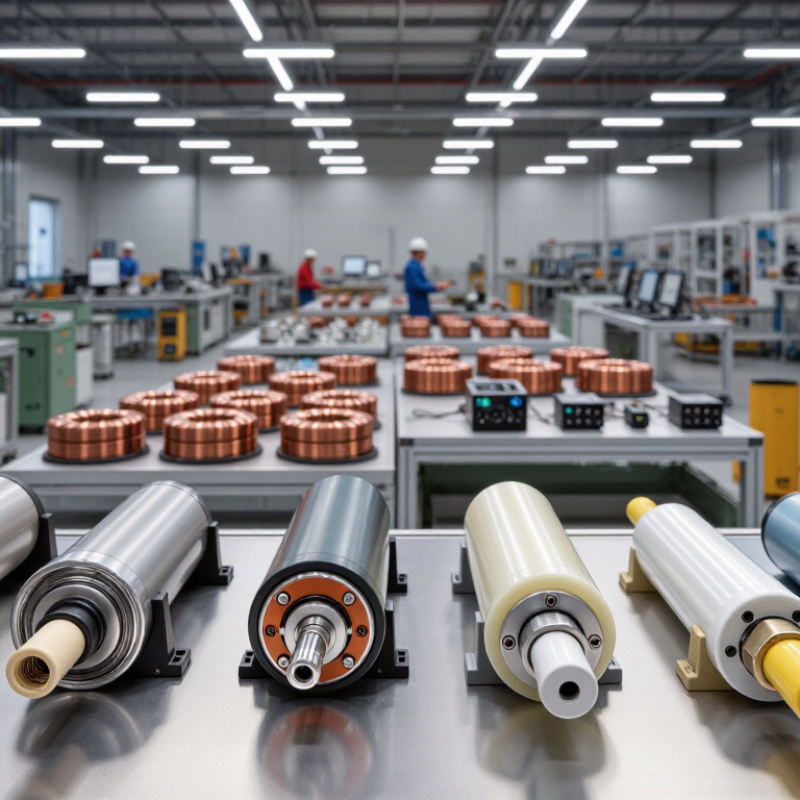
China Top 10 Resonant Capacitor Manufacturers?

What Are Resonant Capacitors and Where Are They Used?

China Top 10 Resonant Capacitor Manufacturers?

What Are Resonant Capacitors and Where Are They Used?

Resonant capacitors work with inductors to create a tuned LC circuit. At a chosen frequency, stored electrical and magnetic energy moves between both components. This behavior supports efficient energy transfer, filtering, and voltage shaping. Many designs use polypropylene film capacitors because they offer low losses and stable performance. Ceramic types can suit compact, high-frequency circuits. Selection depends on capacitance, rated voltage, ripple current, frequency, and cooling conditions.

These capacitors appear in induction heating equipment, wireless charging systems, high-frequency power supplies, and resonant converters. In an induction heater, the capacitor handles strong alternating current while the coil produces a changing magnetic field. In wireless charging, accurate tuning improves power transfer between transmitter and receiver coils. Engineers also use them in lighting circuits and specialized inverter systems. Small errors in frequency can create excess heat. That detail is easy to underestimate.

Tips: Check RMS current, not only capacitance. Review the capacitor’s loss factor and self-resonant frequency. Leave space for airflow around high-power parts. Measure temperature during continuous operation, because laboratory results may not match field conditions. A practical design also needs suitable discharge protection and insulation. I have found that datasheet values rarely tell the whole story; wiring length, mounting pressure, and nearby heat sources can change performance. Test the complete assembly before production.

How to Evaluate China’s Resonant Capacitor Manufacturers

Evaluating China’s resonant capacitor manufacturers requires more than comparing quotations. The application should define the test. For induction heating, wireless charging, or high-frequency converters, request capacitance tolerance, dissipation factor, ESR, ripple-current capability, and self-healing performance at the intended frequency. A low price means little if thermal drift changes the resonant point. IEC 61071 compliance is useful, but a certificate alone does not prove stable production.

Independent market data helps explain the pressure on suppliers. The International Energy Agency reported nearly 14 million electric car sales worldwide in 2023, increasing demand for power-electronic components and high-frequency capacitors. MarketsandMarkets has also identified film capacitors as a growing segment, driven by electric mobility, renewable energy, and industrial inverters. These trends matter because volume growth can improve process control, yet it may also encourage rushed capacity expansion.

Ask for lot-level inspection records, metallized-film specifications, impregnation details, and accelerated-life results. A credible factory should show test curves, not only a product catalogue. Check whether its laboratory measures temperature rise under real ripple current. Visit the production line when possible. Look for clean winding areas, controlled curing, calibrated instruments, and traceable material batches. Sample testing by an independent laboratory adds confidence. Still, no evaluation is perfect. A factory may pass a short endurance test and fail after years of harmonics. That risk deserves a written margin, not optimistic wording.

How to Evaluate China’s Resonant Capacitor Manufacturers

Recommended evaluation weights for comparing qualified manufacturers without relying on brand or company names.

Electrical performance and reliability receive the highest weighting because resonant capacitors must maintain stable capacitance, low loss, voltage endurance, and service life under demanding high-frequency applications. Certification, customization, delivery capability, and after-sales support provide additional evidence of manufacturing suitability.

China’s Top 10 Resonant Capacitor Manufacturers

China’s Top 10 Resonant Capacitor Manufacturers should be judged by measurable performance, not production scale alone. Resonant applications demand stable capacitance, low loss, tight tolerance, and reliable operation under heat. MarketsandMarkets’ 2024 Capacitors Market report identifies electric vehicles, renewable energy, and industrial electronics as major growth drivers. These sectors increasingly require high-frequency and high-voltage capacitor solutions.

A practical top-ten review should examine ten established Chinese manufacturers through the same testing process. Important indicators include dielectric material quality, ESR control, thermal endurance, pulse-current capability, and batch consistency.

ISO 9001 systems and relevant safety certifications also support supplier credibility. The China Association of Electronics Components reports continued expansion in domestic passive-component production, but volume does not always equal engineering strength.

Some suppliers publish impressive specifications, yet provide limited lifetime data. That gap deserves attention.

Tips:

Request test reports for capacitance drift, insulation resistance, and loss tangent. Check samples at the actual switching frequency, not only at 1 kHz. Ask for traceable production records and independent laboratory results. A lower price may hide shorter service life. Also, confirm delivery capacity before approving a supplier. The best choice is rarely the largest factory. It is the manufacturer that can repeatedly match your circuit’s frequency, voltage, temperature, and mechanical constraints. Ranking methods should remain open to revision when new field data appears.

How the Leading Manufacturers Compare by Products and Capabilities

China’s leading resonant capacitor manufacturers differ more in capability than in catalog size. Most supply polypropylene film capacitors for induction heating, wireless charging, welding equipment, and high-frequency power systems. Product choices often include dry-type, oil-filled, water-cooled, and customized designs. The right option depends on operating frequency, RMS current, voltage, temperature, and available installation space.

A stronger manufacturer usually offers more than standard capacitance values. Engineers should examine low-loss performance, self-healing behavior, terminal construction, cooling channels, and discharge safety. Some factories support copper busbar integration and rapid prototype changes. Others focus on high-volume production with stable dimensions and automated winding. During supplier reviews, request impulse tests, capacitance tolerance records, thermal-rise data, and samples from recent batches. Factory experience matters here. A polished datasheet cannot replace a witnessed test.

The best comparison also considers technical support after delivery. Can the supplier analyze a failed capacitor? Can it adjust film thickness or terminal spacing for a revised circuit? These answers reveal practical engineering depth. Certifications help, but they do not prove every operating condition. One weakness remains: published service life is often based on controlled laboratory conditions. Real systems face vibration, dust, cooling interruptions, and uneven load sharing. Buyers should validate samples under actual switching patterns before approving a large order. That step may feel slow, yet it prevents expensive redesigns and unexplained field failures.

How to Choose the Right Chinese Resonant Capacitor Supplier

China Top 10 Resonant Capacitor Manufacturers: How to Choose the Right Supplier

Selecting among China’s leading resonant capacitor manufacturers requires more than comparing prices. Start with your circuit conditions: resonant frequency, working voltage, capacitance tolerance, ripple current, and operating temperature. A suitable supplier should explain how its design supports these values. Vague answers deserve caution.

Request samples from several shortlisted factories. Test capacitance, dissipation factor, insulation resistance, and temperature rise under real operating loads. Check the winding structure, terminal quality, encapsulation, and cooling path. Small details matter. Ask for test records from the same production batch, not only general laboratory data.

Reliable suppliers should provide traceability, consistent process control, and clear quality documents. Verify applicable IEC requirements, material declarations, and factory quality systems. Review their equipment, aging procedures, and failure analysis process through a video audit or site visit. A polished presentation proves little by itself. I once focused too heavily on low defect claims and overlooked slow technical replies. That was a costly warning. Communication speed, engineering judgment, and willingness to adjust samples often reveal more than a sales quotation. Discuss minimum order quantities, tooling ownership, lead times, packaging, and replacement procedures before approval. Leave room for another test cycle; the first sample may look perfect and still fail after thermal stress.

t