
China Top 10 Sock Making Machine Manufacturers

China has become a major source of modern textile equipment, including the Sock Making Machine. Manufacturers now serve small workshops, contract producers, and large hosiery factories. Their equipment may support plain socks, sports socks, compression designs, and customized patterns. However, supplier quality can vary widely.

This introduction presents ten notable Chinese manufacturers for international buyers. The selection considers machine stability, knitting speed, needle options, software control, and maintenance support. It also examines factory experience, export records, product documentation, and customer service. A reliable supplier should explain gauge choices clearly. It should also provide installation guidance, spare parts, and operator training. These details matter when a machine runs for long shifts in a warm production room.

Small details often reveal practical quality. A clean control panel helps operators identify errors quickly. Strong needles reduce interruptions during dense pattern production. Accessible sensors simplify daily maintenance. Energy use also affects long-term operating costs. Certification documents and inspection reports deserve careful checking. Buyers should request sample fabrics before signing an order.

This list is a useful starting point, not a final verdict. Manufacturing capabilities can change over time. Some companies may excel in customization but offer slower after-sales service. Others may provide fast delivery but limited technical support. Therefore, readers should compare current quotations, test results, warranties, and references. A thoughtful decision depends on production goals, budget, and local service conditions. No single Sock Making Machine fits every factory.
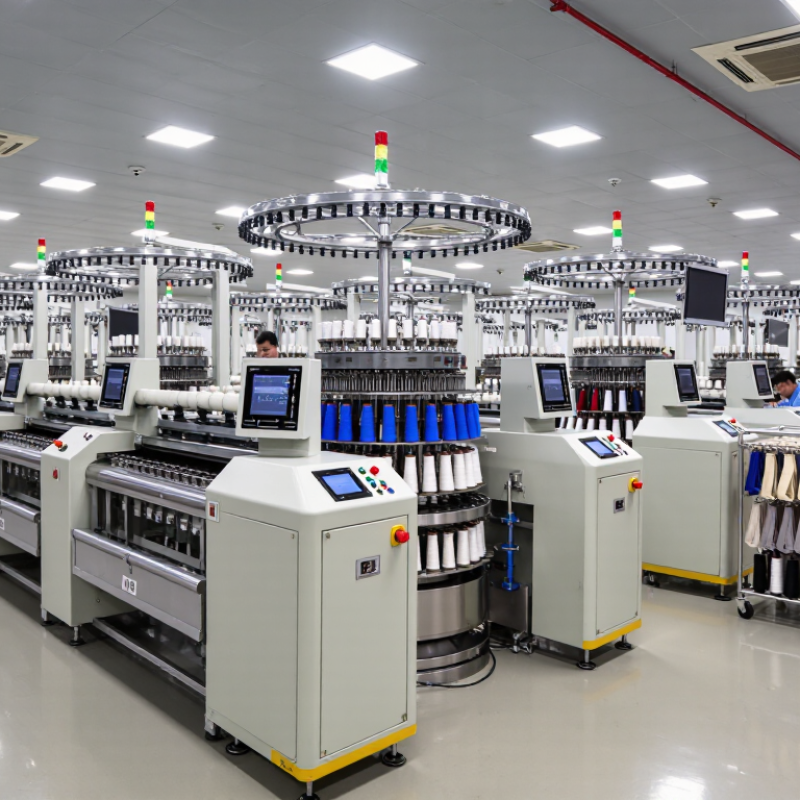
China Top 10 Sock Making Machine Manufacturers

What Defines a Leading Sock Making Machine Manufacturer in China

A leading sock making machine manufacturer in China is defined by more than production capacity. Practical engineering experience matters on the factory floor. The manufacturer should understand how yarn tension, needle selection, and cylinder gauge affect fabric quality. Consistency matters. During machine testing, operators should examine stitch density, toe closing, noise levels, and power consumption. A stable machine should run for extended hours without frequent adjustments.

Technical knowledge also appears in the machine’s construction. Reliable manufacturers use accurately machined cylinders, responsive servo systems, and accessible control panels. They provide clear manuals, electrical diagrams, and operation training. Software should allow precise control of knitting speed, pattern changes, and alarm settings. Small faults spread. Therefore, manufacturers should test machines under realistic production conditions, not only during short demonstrations.

Trust develops through evidence and honest communication. Buyers can request inspection records, spare-part lists, maintenance schedules, and references from comparable factories. A dependable supplier explains both strengths and limitations. I have seen purchasing teams focus heavily on output claims while overlooking operator training and service response times. That is an avoidable weakness. No factory gets every decision right. However, a responsible manufacturer records failures, improves components, and follows up after installation. Fast spare-part delivery, remote diagnostics, and local technical support can protect production when a needle bed or sensor fails unexpectedly. Reliability is built through repeated details.

Key Technologies Used in Modern Sock Making Machines

China Top 10 Sock Making Machine Manufacturers

Key Technologies Used in Modern Sock Making Machines

Modern sock making machines combine computerized needle selection, servo motor control, and precise yarn feeding. These systems create ribbed cuffs, athletic patterns, and reinforced heels with fewer manual adjustments. A digital tension controller keeps yarn movement stable during high-speed knitting. Even a small tension change can cause loose stitches or visible lines.

Many machines now use electronic pattern programming through an industrial control panel. Operators can adjust stitch density, knitting speed, and color changes before production begins. Advanced models also include sensors that detect yarn breaks, needle faults, and abnormal vibration. These alerts reduce material waste and help technicians respond before defects spread across a batch.

Automatic toe closing is another important development. It can produce a smoother finish and reduce sewing labor. Some production lines connect knitting data with monitoring software, allowing managers to review output, downtime, and error frequency. Energy-efficient servo systems may also reduce unnecessary power use during slower cycles. However, software does not replace skilled inspection. A machine may report normal operation while fabric feels uneven by hand. In practical evaluations, buyers should test several yarn types, measure finished socks, and review maintenance access. No system is perfect. That limitation deserves attention.

China Top 10 Sock Making Machine Manufacturers - Key Technologies Used in Modern Sock Making Machines

No. Core Technology How It Works Typical Technical Range Main Product Applications Production Advantages
1 Computerized Jacquard Control Electronic pattern control coordinates needles, yarn feeders, color changes and knitting sequences through programmable software. Commonly supports multi-color patterns, programmable stitch structures and digital pattern storage. Patterned crew socks, athletic socks, fashion socks and logo-style knitted designs. Improves repeatability, shortens pattern-change time and reduces manual setup errors.
2 Electronic Needle Selection Actuators select individual needles or groups of needles to create plain, tuck, miss and transfer structures. Supports fine pattern control across different cylinder gauges and stitch designs. Ribbed socks, mesh panels, terry structures, compression zones and decorative textures. Enables complex constructions without frequent mechanical cam replacement.
3 Multi-Feeder Yarn Management Multiple yarn feeders introduce body, plating, elastic, terry and reinforcement yarns at controlled knitting positions. Feeder quantity varies by machine design, pattern complexity and sock construction. Color-pattern socks, plated designs, cushioned sports socks and reinforced work socks. Allows several yarn types to be integrated in one knitting cycle.
4 Automatic Toe-Closer Integration The toe section is shaped and closed by an integrated transfer, linking or sewing mechanism after the sock tube is knitted. Available as integrated or connected equipment depending on the machine configuration. Seamless-toe casual socks, sports socks, children’s socks and comfort-focused products. Reduces handling operations and improves consistency at the toe seam or closure.
5 Automatic Heel and Pocket Shaping Needle selection and stitch-length control form reciprocated heel and toe pockets for anatomical fitting. Supports standard, reinforced, anatomical and specialized heel constructions. Athletic socks, hiking socks, work socks and shaped performance hosiery. Improves fit while reducing manual intervention and fabric waste.
6 Servo Motor Drive System Servo motors precisely regulate cylinder rotation, stitch movement and auxiliary mechanisms. Variable-speed operation with programmable acceleration, deceleration and synchronization. High-speed production of basic, patterned and performance socks. Provides accurate motion control, lower mechanical shock and more stable quality.
7 Automatic Lubrication and Centralized Oiling A metered lubrication system supplies oil to moving components at scheduled intervals. Programmable or timed lubrication cycles, depending on machine architecture. Continuous production lines requiring stable operation over extended shifts. Reduces friction, wear, heat buildup and unplanned maintenance interruptions.
8 Digital Yarn-Tension Monitoring Sensors and tension-control devices monitor yarn delivery and compensate for changes during knitting. Tension settings are adjusted according to yarn type, stitch structure and fabric density. Fine-gauge socks, plated products, elasticated cuffs and technical hosiery. Helps minimize stripes, loose loops, needle lines and uneven fabric density.
9 Online Fault Detection Sensors detect yarn breakage, missing stitches, abnormal movement, overload or other operating faults. Automatic stop, alarm and error-code functions are common on computerized machines. All automated sock production, especially multi-machine manufacturing lines. Limits defective output and helps operators identify problems quickly.
10 HMI, Pattern Library and Production Data A touchscreen interface stores programs, displays machine status and provides access to production parameters. May include USB or network-based pattern transfer, parameter backup and production counters. Short-run, customized, export-oriented and multi-style sock production. Simplifies operator training, supports quick style changes and improves production traceability.

Note: Technical ranges and functions shown above represent commonly used configurations in modern computerized sock-making machines. Actual specifications vary by machine gauge, cylinder diameter, sock type, yarn composition and automation level.

China’s Top 10 Sock Making Machine Manufacturers

China’s Top 10 Sock Making Machine Manufacturers

China’s sock making machine sector supports a large and export-focused textile industry. According to Grand View Research, the global hosiery market was valued at approximately US$74 billion in 2023. Demand is rising for sports socks, compression products, and seamless designs. This growth increases pressure on Chinese manufacturers to improve speed, precision, and energy use.

The top 10 manufacturers should be assessed through measurable performance, not attractive catalogs. Important indicators include daily output, needle durability, knitting speed, power consumption, and after-sales response time. ITMF reports that global textile machinery investment remains strongly connected to automation and production efficiency. A practical factory test should examine a machine producing ribbed cuffs, reinforced heels, and mixed yarns. Small faults often appear there. Buyers should also verify software stability, spare-parts availability, operator training, and compatibility with local voltage standards.

Tips: Request a sample run before signing a contract. Measure output, noise, fabric tension, and defect rates. Ask for maintenance records from comparable factories. A low purchase price can become expensive when downtime rises. Also, production figures may reflect ideal conditions, not ordinary factory floors. That difference deserves careful questioning. Better evidence comes from repeat testing, independent inspection, and written service commitments.

Machine Types, Production Features, and Industry Applications

China Top 10 Sock Making Machine Manufacturers

Machine Types, Production Features, and Industry Applications

China’s leading sock machine manufacturers generally supply single-cylinder, double-cylinder, terry, and computerized knitting systems. Single-cylinder machines suit everyday cotton socks and athletic styles. Double-cylinder models create rib structures and shaped heels. Terry machines add cushioning under the foot. Computerized systems manage patterns, colors, and size changes with fewer manual adjustments.

Textile Exchange’s Materials Market Report 2024 estimated global fiber production at 124 million tonnes in 2023. This expanding base supports demand for faster, more flexible hosiery production. In practice, buyers should inspect needle quality, gauge range, feeder stability, servo control, and automatic toe closing. A machine running at 300 revolutions per minute is not automatically better. Stitch consistency matters more than a headline speed.

Applications vary widely. Sports factories need breathable mesh zones and reinforced heels. Medical producers require controlled compression and repeatable dimensions. Fashion workshops often prioritize jacquard patterns and rapid style changes. Workwear lines need durable yarn handling and stronger toe construction. According to Grand View Research’s hosiery market analysis, product demand is expected to grow steadily through 2030, but regional forecasts differ.

Tips: Request sample socks before signing a purchase contract. Measure output after eight hours, not twenty minutes. Check power use, spare-part access, software support, and operator training. A perfect shortlist does not exist. Some machines still need careful manual inspection. That weakness deserves attention.

How to Evaluate and Select a Chinese Sock Machine Manufacturer

China’s large manufacturing base offers many sock-machine suppliers, but scale alone proves little. The ITMF International Textile Machinery Shipment Statistics 2023 reported a 29% rise in global shipments of large circular knitting machines in 2022. This growth increases choice, not certainty. Request machine videos, sample socks, and production records from comparable yarns. Check gauge stability, needle selection, knitting speed, and power consumption.

Audit the factory beyond its showroom. Confirm machining equipment, calibration records, spare-parts storage, and final inspection procedures. The ISO Survey 2022 recorded more than 426,000 ISO 9001 certificates in China, yet certification does not guarantee reliable machines. Ask for the certificate scope and recent audit status. Numbers matter. Test independently.

After-sales support deserves equal weight. Require written response times, remote diagnostic procedures, training hours, and a list of critical spare parts. The World Bank’s Logistics Performance Index 2023 placed China 19th globally, with a score of 3.7 out of 5. That indicates strong logistics, but delivery still varies by province and supplier discipline. Compare total ownership cost over five years, including installation, software updates, rejected socks, and downtime. I would also inspect one operating customer site, when possible. A polished factory tour can mislead. My own evaluation would remain cautious if the supplier avoids live testing, even when its quotation looks attractive.

t