How to Choose the Right Industrial Printing Solutions for Your Business?
Choosing the right industrial printing solutions can significantly impact your business's success. The global industrial printing market is expanding rapidly. According to a recent report by Smithers Pira, the market is expected to reach $1 trillion by 2025. This growth highlights the importance of selecting suitable printing technologies for your needs.
Every industry has unique requirements for printing. For example, manufacturers often need high-volume production capabilities, while food packaging companies focus on compliance and safety. Moreover, technology plays a critical role in this selection process. Digital printing has revolutionized the industry, offering flexibility and efficiency.
Evaluating your options requires careful consideration. Not all industrial printing solutions provide the same results. Your choice can affect lead times, production costs, and overall quality. Make sure to assess the capabilities of various printing systems to match your specific demands. Inefficiencies can arise from poor choices, impacting both your output and reputation. Understanding these dynamics is essential for making informed decisions.

Identifying Your Business's Printing Needs and Goals
Identifying your business’s printing needs is crucial. Start by assessing the volume of prints required. Are you producing marketing materials, packaging, or documents? Each type requires different specifications. For example, marketing materials need higher quality and vibrant colors. In contrast, internal documents focus more on clarity than aesthetics.
Consider the types of materials you will print on. Do you need paper, plastic, or fabric? Each material behaves differently in printers. You must analyze your budget too. Some solutions may look appealing but can be costly over time. Evaluate these choices carefully before making a decision.
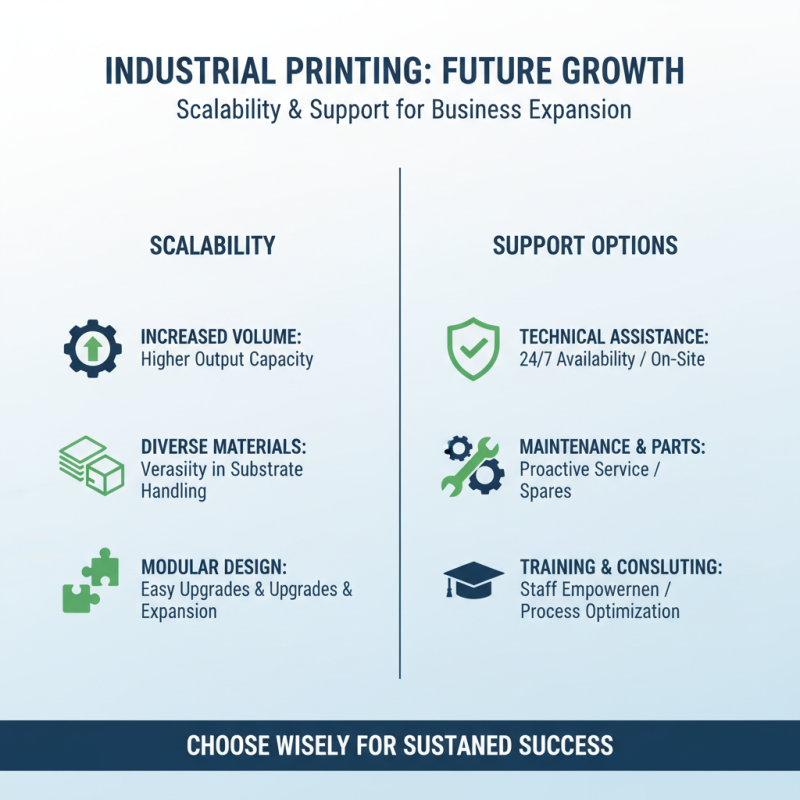
Think about your timelines and distribution methods. Fast production might be essential for some businesses. Others can afford delays. It's also vital to reflect on scalability. As your business grows, will your printing solution adapt? These considerations will lead to a more tailored approach to your printing needs.
Analysis of Industrial Printing Solutions Needs
Understanding Different Types of Industrial Printing Technologies
Industrial printing technologies encompass various methods suited to different applications.
Digital printing offers flexibility and quick turnaround times. It's ideal for short runs and personalized products, allowing businesses to cater to specific customer needs. However, it may not always be the most cost-effective for high-volume jobs.
Flexographic printing stands out for its efficiency in producing large quantities of packaging materials. It uses flexible relief plates, which can reduce waste during the printing process. This method excels in creating vibrant designs on diverse substrates. Yet, it requires significant setup time and investment, which can be a barrier for smaller companies.
Offset lithography remains a go-to choice for high-quality prints. It provides excellent color reproduction and detail, making it suitable for brochures and catalogs. Nonetheless, it is less efficient for smaller batches. Each technology has strengths and weaknesses, and selecting the right one demands careful consideration of your specific needs and output expectations. Evaluation of long-term goals is vital for informed decision-making.
Evaluating Print Quality and Speed Requirements
When evaluating industrial printing solutions, print quality and speed are critical factors. Print quality directly affects your brand image. A clear, sharp print can capture attention and convey professionalism. Monitor resolution and color accuracy closely. Poor quality prints can diminish your credibility. Find a solution that produces consistent results for your specific needs.
Speed is equally essential, especially in a fast-paced environment. Consider your production schedule and volume demands. A solution that meets your speed requirements is vital for keeping operations smooth. Be aware that high speed can sometimes compromise quality. Striking the right balance is key. Evaluate different options and perform tests to understand their performance under varying conditions.
Engage with industry experts to gain insights. Analyze case studies and user experiences to inform your decision. Remember that what works for one business may not work for another. Assess your needs and reflect on past print quality experiences. This will help you avoid mistakes and choose a solution tailored to your goals.
How to Choose the Right Industrial Printing Solutions for Your Business? - Evaluating Print Quality and Speed Requirements
| Printing Technology |
Print Quality (DPI) |
Speed (Pages per Minute) |
Best Use Case |
Cost per Print |
| Laser |
1200 |
30 |
High-volume office printing |
$0.03 |
| Inkjet |
4800 |
15 |
Photo and graphic printing |
$0.10 |
| Thermal |
300 |
50 |
Label and barcode printing |
$0.02 |
| Digital |
1200 |
25 |
Short-run and on-demand printing |
$0.15 |
| Flexographic |
600 |
100 |
Packaging and labels |
$0.05 |
Considering Cost and Budget Constraints for Printing Solutions
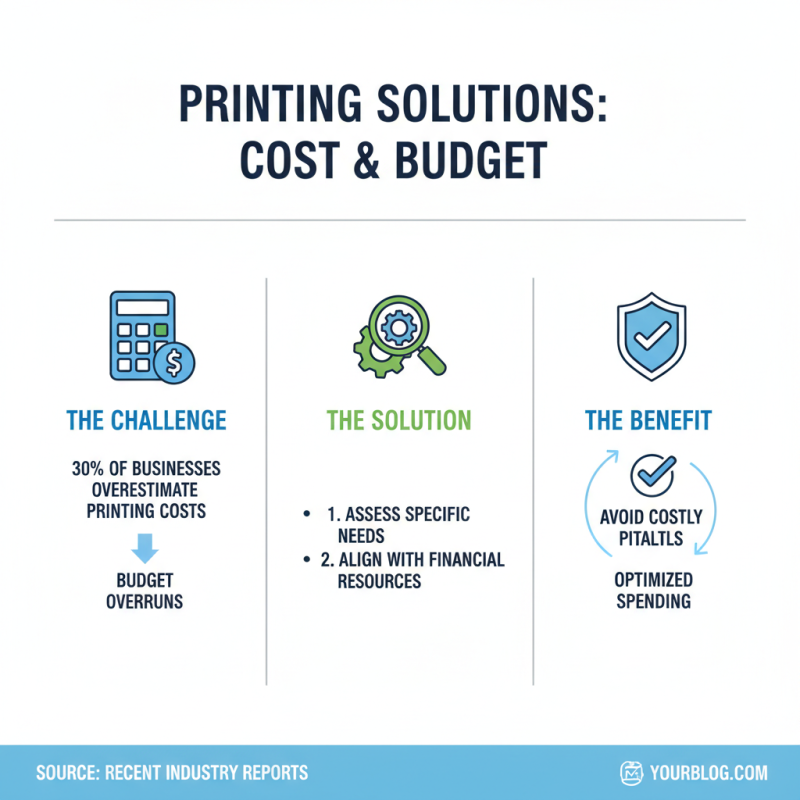
When choosing industrial printing solutions, consider cost and budget constraints carefully. According to recent industry reports, about 30% of businesses overestimate their printing costs, leading to budget overruns. By assessing your specific needs and aligning them with your financial resources, you can avoid this common pitfall.
Evaluate operational costs beyond initial investment. Maintenance, consumables, and energy consumption must also be factored in. A study by Smithers Pira highlights that companies often overlook these additional expenses. For instance, a printer that seems affordable may carry hefty ink costs, impacting your long-term budget. Simply looking at sticker prices can lead to costly mistakes.
Research multiple quotes and seek expert advice. It’s essential to gather information from reliable sources. Some businesses report a 25% reduction in costs after reevaluating their printing strategies. This indicates the importance of understanding all financial implications. Keep in mind that flexibility in your budget can allow for better equipment that meets your quality needs.