
How to Choose Paper Cylinders for Global Sourcing?

Choosing Paper Cylinders for Global Sourcing requires more than comparing catalog prices. These tubes may protect posters, textiles, labels, or engineered components during long journeys. Their performance depends on board grade, wall thickness, inner diameter, closures, and moisture resistance. A supplier can offer attractive pricing yet miss the tolerances your filling line needs. Real purchasing experience shows that small dimensional errors create costly delays.

Measure carefully. Define the use case before requesting quotations. A clear sourcing brief should describe product weight, loading method, storage conditions, shipping route, and expected annual volume. It should also state required certifications, packaging standards, and inspection points.

Reliable global sourcing depends on evidence, not polished promises. Request material specifications, recent test reports, production photographs, and traceable samples. Check whether the factory controls moisture, winding tension, cutting accuracy, and closure fit. Independent pre-shipment inspections can confirm dimensions, appearance, compression strength, and carton quantity. Sustainability claims deserve the same scrutiny. Ask about recycled content, responsible fiber sources, inks, adhesives, and end-of-life options. Trade terms, currency changes, port disruption, and backup production should enter the evaluation. A pilot order often reveals problems that samples hide. The most suitable Paper Cylinders are not always the cheapest. They balance protection, consistency, compliance, and total landed cost. Some assumptions will be wrong. Review them early, and let measured results—not habit—shape the final supplier decision.
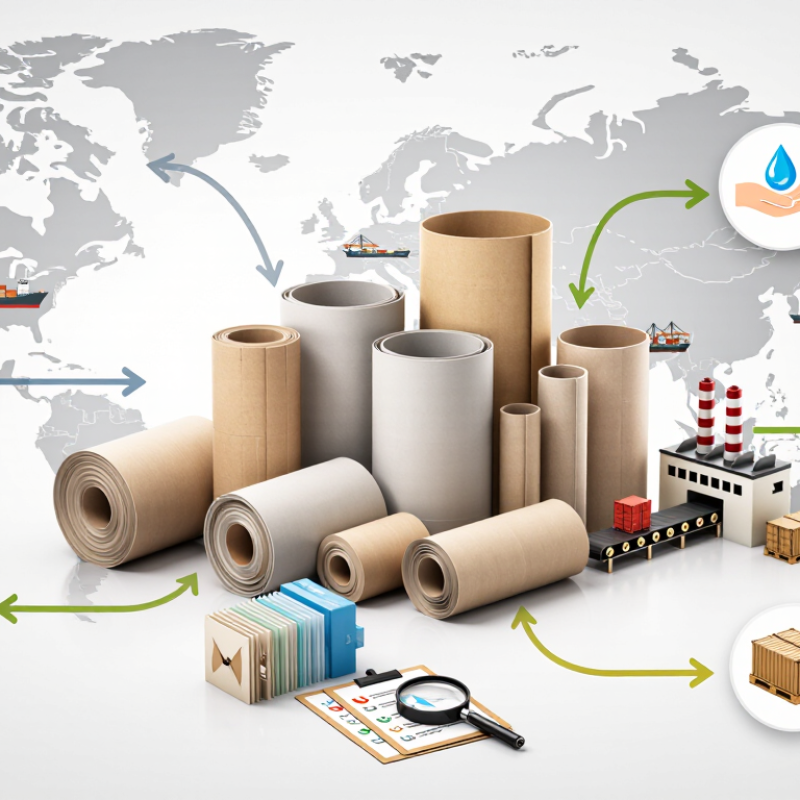
How to Choose Paper Cylinders for Global Sourcing?

Define the Purpose and Performance Requirements of Paper Cylinders

Paper cylinders should be selected by purpose, not appearance. A shipping tube needs impact resistance and compression strength. A winding core needs accurate diameter, smooth edges, and stable rotation. A display tube may prioritize surface quality and opening design. Define the load, storage period, humidity exposure, and filling weight before requesting quotations.

Global volume makes small errors expensive. The FAO’s Global Forest Products Facts and Figures 2023 reported about 423 million tonnes of paper and paperboard production worldwide. CEPI recorded approximately 79.5 million tonnes of European paper and board production in 2023. These figures show the scale of material demand, but they do not guarantee consistent tube performance. Specify paper grade, wall thickness, moisture tolerance, inner diameter, and allowable dimensional variation. Ask suppliers for compression, drop, and moisture-test results. Standards help, but test conditions must match real handling.

A practical trial should include filled cylinders, stacked cartons, rough loading, and temperature changes. Check whether the cap loosens after vibration. Check the edge after repeated handling. I have seen designs pass an empty-tube test and fail after overnight storage. That failure is easy to miss. Supplier samples should also represent the final production process, not a carefully made prototype. Recheck assumptions when recycled fiber content changes; strength can shift, and the “same” specification may no longer perform the same way.

Compare Paper Cylinder Materials, Structures, and Manufacturing Methods

How to Choose Paper Cylinders for Global Sourcing?

Material choice affects strength, recyclability, cost, and transit performance. Virgin kraft paper offers reliable compression strength and cleaner surfaces for printing. Recycled paper lowers fibre demand, but its strength can vary between mills. Barrier-coated paper improves moisture resistance, although recycling becomes more complicated.

The European Paper Recycling Council reported a 79.3% paper recycling rate in Europe in 2023. That figure is encouraging, not universal. Sourcing teams must still check local collection and recycling systems.

Structure matters during shipping. Spiral-wound cylinders suit efficient, continuous production and provide good dimensional consistency. Convolute-wound cylinders use layered paper edges, creating stronger walls for heavier loads. Composite structures may add foil or polymer layers, but they can reduce recyclability.

Test compression, edge crush, humidity resistance, and drop performance. A cylinder that survives a warehouse may fail after ocean freight.

Manufacturing methods also influence quality. Wet adhesives can reduce dust and improve bonding, while hot-melt systems support faster lines. Printing before winding improves registration, but printed layers may show slight distortion. Die-cutting controls openings and closures, yet small errors can affect fit.

Smithers’ packaging forecasts continue to identify sustainability and fibre efficiency as major purchasing drivers.

My practical concern is simple: suppliers often provide impressive laboratory figures, but not enough climate-cycle evidence. Request samples from different production lots. Compare them after heat, moisture, stacking, and handling. That extra work may expose an inconvenient weakness early.

Evaluate Dimensions, Load Capacity, and Product Compatibility

When sourcing paper cylinders globally, start with the job they must perform, not the catalog photograph. Measure inner diameter, outer diameter, wall thickness, and total length in millimeters. These dimensions affect winding tension, machine fit, storage space, and shipping efficiency. A small inner-diameter error can stop a production line. I have seen samples look identical, yet differ under pressure because their core density was inconsistent. Ask for tolerances, moisture limits, and a drawing with clear measurement points.

Load capacity requires more than a simple weight estimate. Check radial compression, axial stacking strength, and bending resistance during transport. A cylinder carrying film may face different stress than one supporting labels or engineered paper. Match the product’s width, roll weight, winding speed, and adhesive behavior to the cylinder grade. Test full-length samples under realistic humidity and temperature changes. Laboratory results are useful, but they can miss rough handling in a busy warehouse. That gap deserves attention.

Tips: Send suppliers your actual product data, not only the requested diameter. Request three to five samples from different production batches. Check fit on your equipment, then inspect crushed edges, ovality, and surface dust. Record failures with photos and load values. Do not approve the cheapest option too quickly; a lower unit price may create waste, delays, or extra freight. Recheck compatibility after changes in paper, coating, core plugs, or winding speed. Specifications are never completely self-explanatory.

Assess Suppliers, Certifications, Quality Control, and Global Logistics

How to Choose Paper Cylinders for Global Sourcing?

Reliable sourcing starts with evidence, not attractive quotations. Ask suppliers for production photos, recent test reports, and references from similar industries. Check paper grade, wall thickness, inner diameter, and length tolerance. A supplier should explain how winding tension and adhesive affect strength. Request samples from regular production, not specially prepared samples.

Certifications need careful review. Confirm the certificate’s scope, issuing body, and expiry date. FSC certification may support responsible material sourcing, while ISO 9001 can indicate a structured quality system. Neither certificate guarantees perfect cylinders. Inspect compression strength, moisture levels, surface smoothness, and edge damage during incoming checks. Record results by batch. A small measuring error can later create large fitting problems. I would not rely on inspection alone; process control matters more.

Tips: Compare suppliers using the same specification sheet. Set acceptable tolerances before requesting prices. Ask how rejected units are separated and reported. For global logistics, review pallet dimensions, container loading plans, export documents, and estimated transit time. Paper cylinders can absorb moisture during ocean transport, so use suitable wrapping and desiccants when conditions require them. Keep a realistic buffer for customs or port delays. A low unit price may become expensive after repacking, damage, or urgent air freight. No sourcing plan is flawless. Review the first shipment honestly, then adjust the specification, packaging, or supplier scorecard.

Calculate Total Costs and Select the Most Suitable Paper Cylinder Supplier

Global sourcing paper cylinders requires more than comparing unit prices. Calculate the landed cost before selecting a supplier. Include cylinder pricing, tooling, packaging, freight, insurance, import duties, storage, and inspection fees. Add the cost of rejected pieces. A low quotation can become expensive after delivery.

Ask suppliers for precise specifications, including inner diameter, wall thickness, length tolerance, moisture resistance, and compression strength. Request production samples from the same materials used for mass orders. Test them under real conditions, such as stacking, vibration, and temperature changes. A paper cylinder that performs well in a showroom may fail during a long sea shipment.

Review manufacturing experience, quality records, response times, and corrective-action procedures. Check whether the supplier can provide traceable material documents and consistent inspection reports. I usually compare at least three complete cost sheets, not three unit prices. The difference matters. Supplier audits can reveal weak storage practices, inaccurate counting, or unstable raw materials. These details affect reliability.

No spreadsheet is perfect. Exchange rates can shift, and freight estimates may change before shipment. Leave a reasonable contingency for these risks. I once underestimated warehouse handling charges, even though the factory price looked excellent. That mistake changed the final decision. A dependable supplier should explain assumptions clearly and accept practical questions about quality, capacity, and delivery. Prompt answers help, but documented performance matters more.

How to Choose Paper Cylinders for Global Sourcing? - Calculate Total Costs and Select the Most Suitable Paper Cylinder Supplier

Comparative sourcing model for standard spiral-wound paper cylinders. Costs are calculated for an annual order of 100,000 units shipped to a North American destination.
Supplier Code Origin Region Paper Cylinder Specification Minimum Order Quantity Production Lead Time EXW Unit Price
(USD)
Export Packing
(USD/Unit)
International Freight
(USD/Unit)
Estimated Duty
(USD/Unit)
Inspection & Compliance
(USD/Unit)
Tooling Allocation
(USD/Unit)
Total Landed Cost
(USD/Unit)
Annual Purchase Cost
(USD)
Defect Rate Quality Rating Recommended Use
Supplier A Southeast Asia 76 mm inner diameter
3 mm wall thickness
1,000 mm length
Spiral-wound kraft paper
5,000 units 28–35 days $0.420 $0.018 $0.026 $0.023 $0.006 $0.010 $0.503 $50,300 1.8% ★★★★☆ Balanced cost and capacity
Supplier B South Asia 76 mm inner diameter
3 mm wall thickness
1,000 mm length
Spiral-wound kraft paper
10,000 units 35–45 days $0.380 $0.022 $0.034 $0.021 $0.006 $0.012 $0.475 $47,500 2.4% ★★★★☆ Lowest-cost volume sourcing
Supplier C Eastern Europe 76 mm inner diameter
3 mm wall thickness
1,000 mm length
Spiral-wound kraft paper
3,000 units 20–28 days $0.460 $0.024 $0.029 $0.020 $0.007 $0.008 $0.548 $54,800 1.2% ★★★★★ Short lead time and high consistency
Supplier D Western Europe 76 mm inner diameter
3 mm wall thickness
1,000 mm length
Spiral-wound kraft paper
2,000 units 18–25 days $0.520 $0.020 $0.014 $0.010 $0.005 $0.005 $0.574 $57,400 0.9% ★★★★★ Premium quality and regional supply
Cost Comparison Summary Best EXW Price: Supplier B Best Landed Cost: Supplier B Best Quality: Supplier D Best Lead Time: Supplier D
Calculation basis: Total landed cost per unit = EXW unit price + export packing + international freight + estimated import duty + inspection and compliance cost + tooling allocation. Annual purchase cost = total landed cost per unit × 100,000 units. Freight, duty, and compliance figures are planning estimates and should be confirmed using the final shipping lane, tariff classification, order volume, and delivery terms before issuing a purchase order.
t