
How to Choose the Best Audi TT Modifications?

Choosing the right Audi Tt Modifications starts with understanding how you actually use the car. A weekend road trip requires different upgrades from daily city driving or occasional track sessions. The Audi TT already offers balanced handling, compact dimensions, and distinctive design. Poorly matched parts can disturb that balance. A louder exhaust may sound exciting in a workshop, yet become tiring during a two-hour commute. Small changes matter.

This guide considers practical upgrades through real ownership concerns, not appearance alone. It examines suspension settings, wheel and tire sizes, braking performance, lighting, interior improvements, and engine-related options. Each modification should suit the TT’s generation, engine, mileage, and maintenance history. A worn control arm should be repaired before installing expensive coilovers. That sounds obvious, but many projects ignore it. A clean inspection creates a safer starting point.

Reliable brands, qualified fitting, and accurate alignment deserve equal attention. After changing ride height, the steering wheel may no longer sit straight. Wider wheels can also reduce comfort or cause clearance problems. Check local road regulations, emissions requirements, noise limits, and insurance conditions before purchasing parts. Professional advice remains valuable, especially for electronic systems and performance upgrades. I have seen attractive builds lose their usefulness because the owner chased specifications instead of driving needs. The best Audi Tt Modifications should improve confidence, comfort, or control without making the car difficult to live with. Not every popular upgrade belongs on every TT. That is worth remembering.
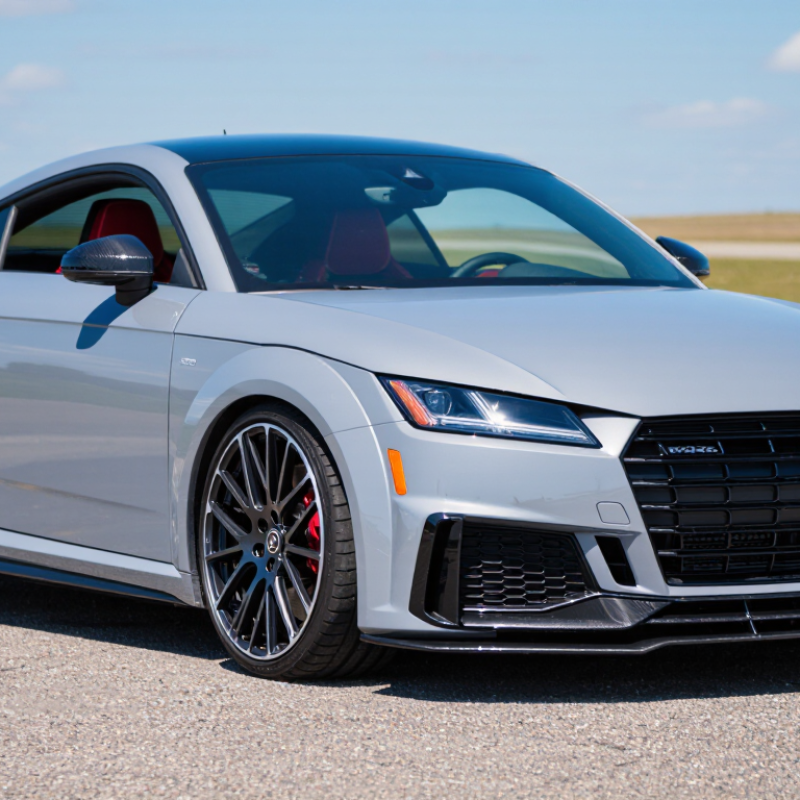
How to Choose the Best Audi TT Modifications?

Define Your Audi TT Modification Goals and Driving Priorities

Choosing the best Audi TT modifications starts with a clear question: how should the car feel on ordinary roads? Daily commuting, weekend touring, and track use demand different priorities. A louder exhaust may excite you briefly, but it can become tiring in traffic. Define your goal before buying parts.

SEMA’s 2023 market report valued the U.S. specialty-equipment industry at about $52.3 billion in 2022. That scale offers many choices, but popularity does not guarantee suitability. For balanced road use, prioritize tires, brake fluid, alignment, and suspension condition. These changes improve steering confidence without making the cabin harsh. The U.S. Department of Energy notes that underinflated tires can reduce fuel economy, so check pressures before judging performance.

Keep comfort measurable. Record tire pressure, fuel use, braking feel, and cornering behavior before each modification. Change one system at a time. This makes cause and effect easier to understand. It also prevents expensive guesswork. A small increase in spring stiffness may sharpen turn-in, yet it can reduce grip on uneven pavement. That trade-off is easy to miss.

Think about reliability, too. Professional installation and post-installation inspection matter as much as the component itself. The EPA’s Automotive Trends reporting shows that efficiency remains an important vehicle-performance measure, not a minor concern. I would question any upgrade that adds power but weakens cooling, drivability, or service access. Sometimes, the best modification is no modification yet.

Assess Compatibility Across Audi TT Generations and Model Variants

Choosing the best TT modification starts with generation and variant compatibility, not appearance. The 8N, 8J, and 8S use different electrical systems, suspension layouts, and engine families. A part designed for one generation may look correct but fail at the mounting points. Check the production year, facelift status, body style, drivetrain, engine code, and transmission before ordering.

Professional data supports this caution. SEMA’s 2023 Market Report valued the United States specialty-equipment market at about $52.3 billion in 2022, showing strong demand for customization. However, S&P Global Mobility reported that the average vehicle age reached 12.6 years in 2024. Older platforms may need extra attention to brittle connectors, worn bushings, and discontinued hardware. A compatibility check should include wheel offset, brake clearance, sensor locations, CAN-bus behavior, and available calibration support.

A practical workshop habit is measuring twice. Compare the original part beside the proposed replacement. Record bolt spacing and connector shape. Confirm whether a suspension kit suits front-wheel drive or all-wheel drive. Engine variants can also change cooling, intake, and exhaust clearance. Some roadster components may not fit a coupe, even within the same generation. A neat fit can still be wrong. I would also question impressive claims without test data, installation notes, or independent inspection results. That step feels slow, but one overlooked sensor can create weeks of troubleshooting.

Compare Performance, Handling, Styling, and Interior Upgrades

Choosing the best Audi TT modifications starts with your driving goals, not a parts catalogue. Performance upgrades can sharpen acceleration, but extra power may expose weak cooling, clutch, or braking components. A professional inspection should come first. Measure boost pressure, fluid condition, and engine temperatures before changing anything.

Handling upgrades often deliver a clearer improvement on real roads. Quality dampers, firmer springs, and adjustable alignment can reduce body roll. However, an aggressive setup may feel nervous over broken pavement. Wider tires can add grip, yet they may increase steering effort and road noise. I once preferred maximum stiffness, but daily driving changed my view.

Tips: Change one system at a time. Record tire pressures, lap times, fuel use, and ride comfort. Use reputable technical data, and have alignment settings checked after installation.

Styling should support the car’s shape rather than overwhelm it. Subtle aerodynamic additions can improve visual balance, while poor fitment creates wind noise and uneven panel gaps. Inside, a supportive steering wheel, clearer gauges, and improved seat bolsters can make every drive more engaging. Avoid heavy interior parts that add weight without useful function. Some choices look impressive online but feel disappointing after a month. Test the material, visibility, and control access before committing.

How to Choose the Best Audi TT Modifications? — Compare Performance, Handling, Styling, and Interior Upgrades
Modification Category Typical Cost Range Primary Benefit Typical Measurable Effect Handling / Comfort Impact Installation Difficulty Best Suited For
ECU Calibration Performance $500–$1,500 Higher engine output and sharper throttle response Approximately 10–25% more power on turbocharged engines, depending on engine condition and fuel quality May improve acceleration but can increase drivetrain stress and fuel consumption Medium Drivers seeking the largest power improvement per dollar
High-Flow Intercooler Performance $600–$1,400 Reduces intake-air temperature and heat soak More consistent power during repeated acceleration; power gains are usually modest without software changes No direct comfort penalty; supports reliable turbocharged performance Medium Turbocharged cars used in warm climates, spirited driving, or track sessions
High-Flow Intake System Performance $250–$800 Improves intake airflow and increases induction sound Usually a small power increase, commonly around 2–8% when correctly matched to the engine May introduce more engine noise; filtration quality is important Low Owners wanting a simple engine-bay upgrade and more audible turbo or intake sound
Cat-Back Exhaust System Performance $700–$2,000 Improves exhaust sound and can reduce back pressure Typically a small power increase, often around 1–5% on a standard engine May add cabin drone or increase exterior noise; emissions compliance varies by location Medium Drivers prioritizing sound, appearance, and moderate performance refinement
Lowering Springs Handling $350–$900 Reduces body roll and lowers the center of gravity Typical ride-height reduction of approximately 20–35 mm Sharper cornering response but a firmer ride and reduced ground clearance Medium Street drivers wanting a lower stance without full suspension replacement
Adjustable Coilover Suspension Handling $1,200–$3,500 Allows adjustable ride height and, on many kits, damping control Can significantly reduce body roll and improve cornering balance when correctly set up Firmness depends on settings; poor adjustment can reduce grip and comfort High Enthusiasts who want adjustable street, mountain-road, or track settings
Performance Anti-Roll Bars Handling $400–$1,100 Reduces lateral body movement during cornering Provides a quicker steering feel and can alter understeer or oversteer balance Limited comfort penalty when moderate settings are used; excessive stiffness can reduce grip on uneven roads Medium Drivers seeking flatter cornering without substantially lowering the car
Performance Tires Handling $600–$1,400 per set Improves braking, cornering grip, and steering precision Can reduce dry braking distance by several meters compared with worn or basic tires, depending on conditions Often increases road noise and may reduce wet-weather or cold-weather performance if an extreme compound is chosen Low Nearly every driver; the most broadly effective handling upgrade
Upgraded Brake Pads and Fluid Handling $250–$900 Improves pedal consistency and resistance to brake fade Better repeated-stop performance; peak stopping distance still depends heavily on tire grip May produce more dust or noise, especially with track-oriented pads Low–Medium Cars used on mountain roads, autocross courses, or track days
Lightweight Alloy Wheels Handling / Styling $900–$2,500 per set Reduces unsprung and rotational mass while updating the exterior appearance A weight reduction of approximately 1–3 kg per wheel is possible with carefully selected wheels Can improve steering response and ride quality; oversized wheels may have the opposite effect Low–Medium Owners wanting a combined visual and dynamic improvement
Front Splitter and Rear Spoiler Styling / Aerodynamics $400–$2,000 Creates a more aggressive appearance and may improve high-speed stability Meaningful aerodynamic benefit requires correct design, balance, and sufficient vehicle speed May reduce ground clearance and increase wind or road noise Medium Owners prioritizing appearance and occasional high-speed or track use
LED Exterior Lighting Upgrade Styling $150–$800 Modernizes exterior lighting and can improve visibility Light output improvement depends on beam pattern, housing design, and legal compliance Little effect on handling or comfort; incorrect installations may cause glare or warning lights Low–Medium Drivers seeking a subtle appearance update and improved illumination
Sport Steering Wheel Interior $500–$1,800 Improves grip, tactile feel, and cockpit appearance No direct power or lap-time benefit; may improve driver control and comfort Flat-bottom or thicker designs can improve legroom and grip, but airbag compatibility is essential Medium–High Drivers who value frequent hands-on interaction and interior personalization
Aluminum or Composite Pedal Set Interior $80–$300 Provides a sportier appearance and more defined foot contact No measurable engine or suspension performance gain Minimal comfort effect; secure fit and correct pedal spacing are critical Low Owners wanting an inexpensive interior detail upgrade
Sound Deadening and Interior Insulation Interior $400–$1,500 Reduces road, tire, and vibration noise Cabin noise reduction commonly ranges from approximately 2–6 dB when applied correctly Improves long-distance comfort but adds weight and installation time Medium–High Daily drivers and touring-focused owners
Cost and performance figures are typical estimates for properly installed parts and can vary by model year, engine, drivetrain, local labor rates, wheel size, vehicle condition, and regional regulations. Always verify compatibility, alignment requirements, airbag safety, and emissions or road-use compliance before installation.

Evaluate Modification Quality, Safety, Cost, and Legal Requirements

How to Choose the Best Audi TT Modifications?

Modification quality starts with traceable materials, correct fitment, and measured results. Choose components with test data, installation instructions, and a warranty. A louder exhaust is not automatically better. Check welds, fasteners, heat shielding, and clearance around brake lines. After installation, inspect the car on a lift and record alignment readings. My own mistake was trusting a perfect-looking part without checking its mounting hardware. It needed re-tightening after one week.

Safety deserves more attention than appearance. The Insurance Institute for Highway Safety reports that electronic stability control reduces fatal single-vehicle crash risk by about 49%. Avoid modifications that weaken stability systems, obstruct lighting, or overload suspension components. Tire width, load rating, and inflation pressure must match the vehicle’s engineering limits. The National Highway Traffic Safety Administration continues to identify tire-related defects as an important crash factor. Small details matter. Test braking, steering, and ride height in a controlled area before normal driving.

Cost includes labor, calibration, maintenance, insurance, and possible inspection fees. SEMA’s 2023 market report valued the U.S. specialty-equipment market at approximately 52.3 billion dollars, showing strong demand but not guaranteed value. Request itemized quotes and compare qualified installers. Legal requirements vary by location, especially for lighting, emissions, noise, wheel spacing, and suspension height. Check the relevant transport authority before purchasing. I would also keep invoices, certificates, and photographs; paperwork can prevent expensive arguments later.

Plan Installation, Testing, Maintenance, and Future Upgrades

Choosing the best modifications for a compact sports coupe requires more than chasing impressive parts.

Start with your driving goals, budget, and mechanical condition. A daily commuter needs comfort, predictable braking, and quiet operation. A weekend car may benefit from sharper suspension and improved cooling.

Record the vehicle’s mileage, service history, and existing faults before ordering anything. This small step prevents expensive guesswork.

Plan installation carefully.

Measure available space, check compatibility, and use torque specifications from reliable technical manuals. Photograph wiring, fasteners, and hose routing before removing components.

After installation, test one change at a time. Listen for rattles, monitor temperatures, and check steering behavior on a quiet private road.

My early mistake was changing several systems together; diagnosing the result became unnecessarily difficult.

Sometimes, more power exposes weaknesses elsewhere.

Tips:

Keep a modification log with dates, part details, settings, and test results. Inspect fasteners after the first few drives.

Check fluid levels and tire wear regularly. If handling feels strange, stop testing and investigate.

Future upgrades should follow evidence, not excitement. Leave room for better cooling, stronger braking, or revised suspension components.

A professional inspection is worthwhile after major work, even when installation seems successful. Not every upgrade improves the car; some create noise, harshness, or new maintenance demands.

t