
How to Choose the Best Coffee Color Sorter Machine

Choosing a Coffee Color Sorter Machine is not just a matter of comparing prices or advertised capacity. It means matching the equipment to your beans, production targets, and quality standards. Green coffee, roasted beans, and specialty lots can present different color and defect patterns. A machine that performs well on one sample may not deliver the same results on another. Details matter.

Start by identifying which defects you need to remove, such as discolored beans, stones, or other visible foreign material. Then compare sorting accuracy, processing capacity, camera resolution, and the machine’s ability to handle your bean size and flow rate. Ask how operators adjust sensitivity and air-ejection timing. Throughput numbers alone can be misleading. Small differences matter.

During supplier evaluation, request a test using representative samples from your own production. Observe the accepted and rejected beans, and check whether good product is being discarded unnecessarily. Ask about cleaning access, routine maintenance, spare parts, operator training, and technical support. Get key performance details in writing, and clarify the conditions under which test results were measured. Ask again if anything is unclear.

No specification sheet can replace a careful trial. Even a well-matched sorter may need adjustment as bean quality or operating conditions change. That is worth planning for. The right choice balances reliable sorting, practical day-to-day operation, and support your team can actually access. Compare machines against your real requirements, not only the most impressive claims.
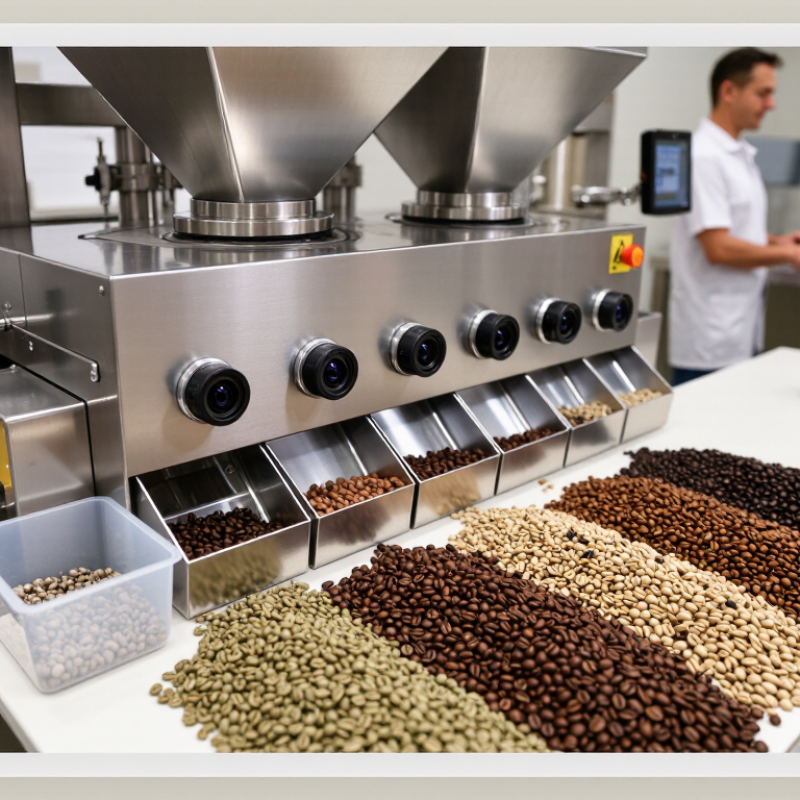
How to Choose the Best Coffee Color Sorter Machine

Identify Your Coffee Sorting Needs and Operating Requirements

Before comparing coffee color sorter machines, define the job the equipment must do. Are you sorting green beans, roasted beans, or both? Note your normal hourly throughput, batch size, bean size range, and the defects you need to remove, such as pale beans, dark beans, or foreign material. Be specific. “Better quality” is not a useful target by itself.

Set measurable expectations for sorting accuracy, acceptable good-bean loss, and daily operating hours. A small roastery may value easy changeovers and a compact footprint, while a larger processor may need steady throughput and simple integration with conveyors. Check the available power, compressed-air supply, dust extraction, and room for cleaning access. Details matter. Poor feeding can undermine even a capable sorter.

Ask for a trial using representative samples from your own supply, not only clean demonstration beans. Compare the accepted and rejected fractions, and record both defect removal and good beans lost. A spreadsheet helps, but it cannot capture every harvest’s variation. I would also ask operators to test recipe changes and routine cleaning; controls that seem obvious during a demonstration may feel less clear during a busy shift. Choose around your real workflow, then leave room for seasonal changes.

Compare Color-Sorting Technologies and Detection Capabilities

A coffee color sorter’s detection capability depends on its sensors, lighting, and calibration. Standard RGB cameras compare bean color and surface appearance, helping identify pale, dark, discolored, or visibly damaged beans. High-resolution imaging can reveal smaller surface defects, but it cannot reliably assess hidden damage. Lighting matters. Uneven illumination may make sound beans appear defective, so compare machines under consistent conditions.

Some systems add near-infrared sensing to distinguish materials with similar visible colors. This can improve separation when color alone is insufficient, though performance depends on the defect and bean variety. Ask what defects the machine can detect, at what throughput, and with what rejection accuracy. Test representative samples, including unevenly roasted beans and beans with subtle blemishes. A polished demonstration can look impressive; actual production results may differ.

Tips: Request a trial using your own coffee and inspect both accepted beans and rejected material. Check whether sensor settings can be adjusted for different batches. Ask how often calibration is needed and how the system handles dust. Compare detection accuracy with processing speed, not just camera specifications. No sensor is perfect. Keep records, review borderline results, and be willing to revise your settings.

Evaluate Sorting Accuracy, Throughput, and Coffee Compatibility

A coffee color sorter should be tested on your own beans, not judged by its headline capacity. USDA Foreign Agricultural Service’s December 2024 Coffee: World Markets and Trade forecast global production at 174.9 million 60-kilogram bags for 2024/25, underscoring the scale processors may face. But a machine’s rated tonnes per hour can fall when feed is uneven or defect limits tighten. Ask suppliers to run a representative batch at your target speed, then record accepted-bean purity and good-bean rejection separately.

Accuracy depends on what the sorter sees as defective. Check its performance on black, insect-damaged, sour, and discolored beans, and compare results with manual grading. ISO 10470 provides a reference for describing green coffee defects. Compatibility matters, too: green and roasted beans differ in color, surface texture, and handling needs. Confirm the machine’s settings suit your bean size, moisture range, and processing stage. A lab test can flatter reality.

Tips: Bring beans from several lots, including one with visible defects. Request before-and-after samples, and count both missed defects and wrongly rejected beans. Test again after changing belt speed or sensitivity; small adjustments can shift the balance.

How to Choose the Best Coffee Color Sorter Machine - Evaluate Sorting Accuracy, Throughput, and Coffee Compatibility
Evaluation Dimension What to Evaluate Green Coffee Beans Roasted Coffee Beans Practical Acceptance Check
Sorting accuracy Check how consistently the sorter removes specified defects while retaining acceptable beans. Results depend on the sample, defect definitions, feed conditions, and machine settings. Test the actual defect mix, such as discolored, insect-damaged, broken, or foreign-material pieces. Test the intended roast profile and identify the color defects that matter, such as scorched, under-roasted, or unusually pale beans. Run a representative sample and separately inspect the accepted and rejected streams. Record defect removal and good-bean loss; do not rely on a quoted accuracy figure without its test conditions.
Throughput Compare sustained processing capacity in kilograms per hour at the required sorting quality, not just the machine’s maximum or nominal rate. Bean size, moisture, feed uniformity, and defect load can affect the rate. Bean size, roast level, surface oil, breakage, and the required separation quality can affect the rate. Ask for a timed trial using your coffee and target settings. Record feed rate, accepted output, rejected output, and any recirculation needed.
Coffee compatibility Confirm the feed system, chutes, optical setup, and product-contact parts suit the coffee being processed. Verify performance across the planned origins, screen sizes, and moisture range. Check gentle handling and reliable feeding. Roasted beans are more brittle; oily dark roasts may require more frequent cleaning. Test each coffee type that will run on the line, including the lightest and darkest planned lots. Check for bridging, bouncing, breakage, and residue buildup.
Detection capability Match the optical system to the defects to be removed. Color sorting is suited to visible color differences; shape or additional sensing options may help with other defect types. Assess whether the system can distinguish target defects from natural bean-color variation. Assess whether the system can distinguish roast defects without rejecting acceptable variation in roast color. Ask the supplier to demonstrate each important defect using your sample. Confirm which defects the selected sensor can and cannot detect.
Feed and separation stability Look for an even, single-layer presentation to the cameras and reliable separation into accepted and rejected streams. Check that beans feed consistently without overlapping or surging. Check that fragile beans are handled smoothly and that light fragments do not disrupt separation. Observe operation at both the intended rate and a reduced rate. Check for uneven distribution, blockages, and unintended good-bean rejection.
Recipe setup and changeover Evaluate how easily settings can be created, saved, and repeated for different lots or product types. Confirm recipes can accommodate changes in origin, screen size, and incoming defect profile. Confirm recipes can accommodate changes in roast level and bean appearance. Time a changeover between two representative coffees and verify that the saved settings reproduce the agreed test result.
Cleaning and maintenance Review access to lenses, chutes, ejectors, and other areas that require routine inspection or cleaning. Check dust control and the cleaning steps needed between lots. Check how easily oily residue and coffee fragments can be removed, especially when processing darker roasts. Request the cleaning schedule, routine maintenance list, and expected downtime. Confirm that cleaning can be performed safely and consistently.
Final selection Choose based on verified performance on your own coffee, required output, operating conditions, and service needs. Prioritize demonstrated defect removal and stable capacity for the green-bean range you handle. Prioritize gentle handling, reliable color discrimination, and practical cleaning for your roast range. Compare shortlisted machines using the same sample, defect definitions, target rate, and acceptance criteria. Request the test results in writing.

Note: Sorting results and throughput vary with coffee characteristics, defect load, feed conditions, and machine settings. Treat supplier figures as product-specific claims and verify them with a controlled test using representative samples.

Assess Machine Usability, Maintenance, and Supplier Support

When choosing a coffee color sorter, judge the daily work, not just the sorting demo. Ask operators to load a sample, change a recipe, clear a simulated jam, and clean the viewing window. Can they do these tasks without special tools? Small details matter. Check whether screens remain readable under bright factory lighting and whether instructions are clear in the languages staff use.

Maintenance access can shape real uptime. Inspect the chutes, ejectors, filters, and inspection doors; ask how often each needs cleaning and how long routine service takes. The U.S. Department of Energy’s Operations & Maintenance Best Practices Guide reports predictive maintenance savings of 8–12% over preventive maintenance, and 30–40% over reactive maintenance. These are broad industrial benchmarks, not coffee-sorter guarantees. Still, they underline the value of service alerts, spare-parts availability, and practical maintenance training.

Supplier support deserves the same scrutiny as sorting accuracy. Ask for written response times, remote-diagnostic procedures, local technician coverage, and a sample spare-parts list. USDA’s Coffee: World Markets and Trade report estimated 2024/25 global production at 174.9 million 60-kilogram bags, making avoidable stoppages costly for busy processors. Yet a polished showroom test can hide awkward cleaning or slow support. Test it. Request a trial with your own beans, including chipped and unevenly colored samples, and speak with a comparable operating site before committing.

How to Choose the Best Coffee Color Sorter Machine

Compare machines across the criteria below, with particular attention to usability, maintenance, and supplier support.

How to use this chart: These suggested weights are a buyer’s evaluation framework, not measured industry averages. Score each machine against the criteria, then adjust the weights to match your production needs.

Match Total Cost and Performance to Your Production Scale

A coffee color sorter should match the volume and quality demands of your production line, not just its maximum advertised speed. A small roastery processing several batches a day may gain little from a high-capacity system that sits idle. Capacity matters. Compare expected hourly output with your busiest shifts, and leave room for seasonal changes. Paying for unused throughput can strain a budget without improving the beans in the bag.

Rated speed is only part of performance. Ask for trials using your own coffee, including beans with subtle color differences and typical defects. Check sorting accuracy, good-bean loss, and how often operators must adjust settings. A few rejected beans are visible. Excessive good-bean loss is costly. Consider whether the machine fits your feed system, available floor space, and cleaning routine. These details can affect output more than a headline specification.

Calculate total cost over several years: purchase price, installation, electricity, compressed air, spare parts, maintenance, and operator time. A lower-priced machine may become expensive if frequent cleaning or downtime slows production. For a smaller line, simple controls and accessible service parts may matter more than advanced features. For larger operations, consistent throughput and quick changeovers can justify a higher investment. Still, estimates are estimates; test real samples and review the results before deciding.

t