How to Choose the Right Switching Power Supply for Your Needs?
Choosing the right Switching Power Supply can be overwhelming. Industry expert Dr. Emily Chen emphasizes, "A well-chosen supply can enhance efficiency significantly." With technological advancements, the options have multiplied. It is crucial to navigate through these choices carefully.
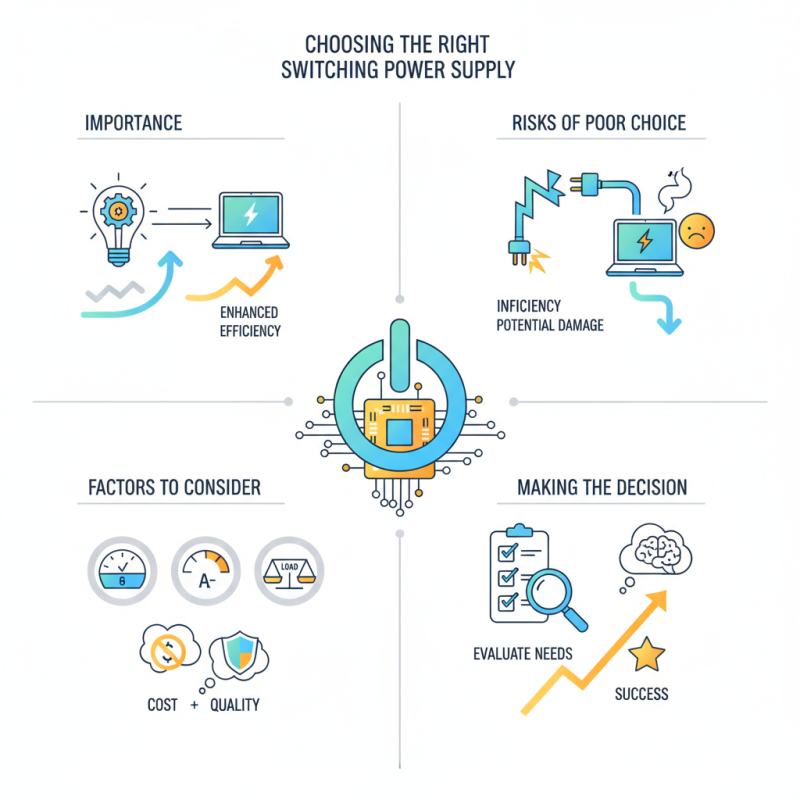
The importance of a Switching Power Supply lies in its role. It affects the performance and longevity of your devices. Poor choices can lead to inefficiencies and damages. A properly matched supply ensures optimal functioning. That’s often overlooked but vital for any project.
However, making the right decision isn’t always straightforward. Many factors need consideration, such as voltage, current, and load requirements. Misjudging one aspect can lead to problems. The balance between cost and quality is also delicate. Often, the cheapest option leads to regrets later. Taking the time to evaluate your needs is critical. A little reflection can go a long way in achieving success.
Understanding Switching Power Supplies: Types and Applications
Switching power supplies are essential in many electronic devices. There are different types available, each with unique applications. For instance, step-down converters reduce voltage to the desired level. They are widely used in personal electronics. They work efficiently and keep energy loss to a minimum.
On the other hand, step-up converters increase voltage for specific applications. These are useful when powering devices that require higher voltage inputs. Then, there are isolated power supplies. These provide electrical isolation between input and output. They ensure safety in sensitive equipment.
Choosing the right type isn't easy. It requires understanding the requirements of your device. It’s easy to overlook important details. Inadequate voltage ratings can lead to device failure. Device specifications often change, so it's crucial to verify them regularly. Testing might be necessary before full implementation. Many overlook this step, leading to costly errors. Understanding the types and their applications is the first step toward making the right choice.
Key Factors to Consider When Selecting a Switching Power Supply
When selecting a switching power supply, there are several key factors to keep in mind. One important factor is the power rating. Make sure it can handle your device's requirements. For example, if your equipment needs 150 watts, don't settle for a 100-watt supply. Underpowering can lead to performance issues.
Efficiency is another critical element. Look for a power supply with high efficiency ratings. This can help reduce energy costs over time. Power supplies operate better at certain loads. If possible, find one that matches your typical usage. Many people overlook this aspect, leading to wasted energy and unnecessary expenses.
Size and form factor also matter. Ensure the power supply fits your installation space. Compact designs can save room, but they may sacrifice cooling. Choose wisely, as thermal management is vital for longevity. Lastly, consider the quality of components used. Cheap materials might save money upfront but can cause problems later. Reflect on these details to find the right fit for your needs.
Evaluating Power Requirements: Voltage and Current Needs
When selecting a switching power supply, understanding your voltage and current needs is essential. It's the foundation of a good decision. Each device has specific requirements for optimal performance. Assess the voltage needed for your application carefully. Too high or too low can damage your equipment.
Current requirements also matter significantly. Each component has a maximum current rating. Exceeding this can lead to overheating. Calculate the total current draw of all connected devices. This step ensures you choose a power supply that can handle the load. Sometimes people underestimate or overestimate their needs.
It’s also important to think about future expansions. You might add new devices later. Have a buffer in your current ratings. This flexibility provides room for growth. Many overlook this aspect, resulting in short-term solutions that may not last. Balancing your needs with potential future demands can lead to better outcomes.
Assessing Efficiency and Heat Dissipation in Power Supplies
When choosing a switching power supply, efficiency is vital. A power supply with higher efficiency reduces energy waste and heat generation. According to a recent report by the International Energy Agency, up to 30% of energy used in electronics is wasted as heat. This inefficiency can lead to increased cooling costs and shorter equipment lifespan.
Heat dissipation directly impacts performance and reliability. A power supply that runs cool can enhance device longevity. Many models today achieve efficiencies over 90%. However, overlooked designs can drastically underperform. Some units are only around 70% efficient, creating more heat and additional load on cooling systems.
Consider your system's power density. Higher power densities may require better thermal management. As reported by the Power Electronics Industry Association, inadequate heat management can reduce lifespan by 20%. Always analyze load requirements and select models that align with your workflow. Your choice affects not only performance but also environmental factors.
Important Safety and Compliance Standards for Switching Power Supplies
When selecting a switching power supply, safety and compliance standards are crucial. Look for certifications like UL, CE, and FCC. These ensure the power supply meets specific safety benchmarks. Each standard addresses different safety aspects. For instance, UL focuses on electrical safety, while CE verifies compliance with European health and environmental regulations.
**Tip:** Always check the specifications for these certifications. They can often be found on the product datasheet. Don't ignore them. Neglecting to choose compliant products can lead to safety hazards.
The environment where the power supply will operate matters too. Consider factors like temperature, humidity, and ventilation. Each can influence performance and longevity. For example, excessive heat can damage components. Inadequate ventilation can lead to overheating, risking failure.
**Tip:** Think about the installation space. Measure carefully. Make sure the power supply fits well in your setup. Sometimes, a poorly chosen model leads to complications. It’s better to be cautious and thorough in your selection process.
How to Choose the Right Switching Power Supply for Your Needs? - Important Safety and Compliance Standards for Switching Power Supplies
| Parameter | Description | Importance |
| Input Voltage | Operating voltage range, typically 85-264V AC. | Ensures compatibility with local power sources. |
| Output Voltage | Desired output voltage needed for devices. | Critical for device operation. |
| Output Current | Maximum current output capacity. | Directly affects the performance of powered devices. |
| Efficiency | Percentage of input power converted to output power. | Higher efficiency reduces heat and energy costs. |
| Safety Standards | Compliance with norms like UL, CE, or FCC. | Ensures safe operation and reduces risk of hazards. |
| Form Factor | Physical size and design of the power supply. | Affects installation and workspace utilization. |
| Cooling Mechanism | Fan-based or convection cooling systems. | Prevents overheating during operation. |