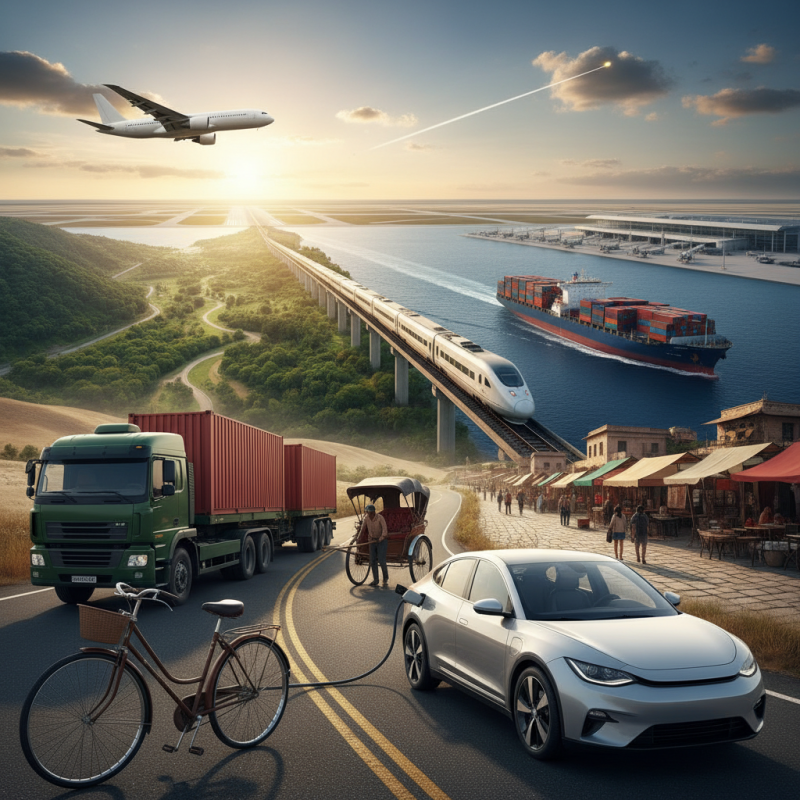
What are the Different Types of Transport Vehicles?
Transport vehicles are essential for moving people and goods. They play a crucial role in our daily lives. These vehicles come in various types, each designed for specific tasks. Some are familiar, like cars and buses. Others are less common, like cargo ships and rickshaws.
Every type of transport vehicle has unique features. For instance, trucks are built to carry heavy loads. Bicycles promote eco-friendly travel. Additionally, planes facilitate swift international movement. However, the reliance on certain vehicles raises questions. Are we prioritizing efficiency over sustainability?
As we explore transport vehicles, we uncover their impact on society. Each has strengths and limitations. Recognizing these factors helps us make informed choices. This exploration also invites reflection on our transport habits and their consequences.
Types of Land Transport Vehicles
Land transport is crucial for connecting people and goods. Different types of vehicles serve unique purposes. They are vital in urban and rural areas alike.
Buses are a popular choice for public transport. They help reduce traffic congestion. Reports show that public buses can carry up to 77 passengers at once. This leads to lower emissions per person. But in some areas, they may be slow and inconvenient. Often, schedules can be unpredictable.
Trucks play a key role in freight transport. They are essential for moving goods across countries. According to industry data, trucks transported 72.5% of all freight in 2020. However, heavy trucks can damage roads. This poses a challenge for infrastructure maintenance. Electric trucks are emerging, but their adoption is still slow. There are concerns about battery range and charging stations.
Types of Water Transport Vehicles
Water transport vehicles play a crucial role in global trade and travel. Various types serve different purposes. Cargo ships, for instance, transport large amounts of goods across oceans. They are often massive and built for efficiency. Ferries provide an essential service by carrying passengers across rivers or lakes. They offer a quick way to cross water without the need for lengthy travel routes.
Sailboats and yachts represent leisure and adventure on the water. Many enjoy sailing for recreation. However, their maintenance can often be overlooked. Then there are fishing boats, which are vital for the fishing industry. They vary in size but share the common goal of supporting livelihoods. Yet, overfishing remains a pressing concern for the ecosystem.
Each type of vessel faces challenges. Cargo ships contribute to pollution through emissions. Ferries can become overcrowded during peak times. Sailboats require regular upkeep that not everyone prioritizes. Fishing boats often face strict regulations to protect marine life. Reflection on these issues is necessary for sustainability.
Types of Air Transport Vehicles
Air transport vehicles play a vital role in global logistics. They offer speed and efficiency, connecting continents in hours. In fact, according to industry reports, air cargo accounts for about 35% of global trade by value, despite being only a small percentage of total trade volume. This highlights air transport's significance in high-value goods.
There are various types of air transport vehicles. Commercial aircraft serve passengers, while cargo planes focus on freight. Helicopters are useful for short distances and emergency services. Drones are emerging as innovative solutions for last-mile deliveries. However, their integration into regular logistics raises regulatory concerns.
Efficiency in air transportation can be misleading. Delays occur due to weather, air traffic, or technical issues. A study showed that nearly 25% of flights are delayed, affecting schedules and costs. Companies often overlook maintenance and protocols, leading to operational errors. The rapid growth in air transport demands a balance between speed and safety.
What are the Different Types of Transport Vehicles? - Types of Air Transport Vehicles
| Type of Air Transport Vehicle | Description | Typical Capacity | Usage |
| Commercial Airliner | Aircraft designed for transporting passengers and cargo. | 100 - 850 passengers | Domestic and international flights |
| Cargo Plane | Aircraft designed primarily for transporting cargo. | 10,000 - 100,000+ kg of cargo | Freight and logistics services |
| Helicopter | Rotary-wing aircraft used for various purposes. | 1 - 30 passengers | Medical transport, tourism, and law enforcement |
| Private Jet | Small aircraft used for private travel. | 2 - 20 passengers | Business and leisure travel |
| Seaplane | Aircraft that is capable of taking off and landing on water. | 1 - 10 passengers | Tourism and remote area access |
Specialized Transport Vehicles
Specialized transport vehicles play a vital role in many industries. These vehicles are designed for specific tasks, ensuring efficiency and safety. They vary in size, shape, and purpose. For instance, refrigerated trucks are essential for transporting perishable goods. Their unique features maintain low temperatures during transit. This is crucial for food safety.
Another example is the use of flatbed trucks. They are ideal for carrying large machinery or construction materials. The open design allows for easy loading and unloading. However, securing cargo can be challenging. Proper tie-down methods should always be employed. Ignoring this detail risks losing valuable equipment during transport.
Tips: Check the specific requirements for each vehicle type. Some may require special licenses or training for drivers. Understand your cargo needs to choose the right vehicle. Choosing poorly can lead to damages or delays. Always conduct regular maintenance checks on specialized vehicles. This helps avoid costly breakdowns during critical operations.
Future Trends in Transportation Vehicles
The future of transportation vehicles is intriguing and complex. Electric vehicles are becoming mainstream, promising cleaner air and reduced emissions. They rely on batteries, which raise questions about recycling. Infrastructure must evolve as charging stations are needed. It’s a major shift in how we think about fuel.
Autonomous vehicles are also on the horizon. They could transform road safety but bring uncertainties too. How will we address ethical dilemmas when accidents occur? Additionally, public acceptance varies. Many are excited, while others are hesitant. A balance must be found as we integrate these new technologies into our daily lives.
Sustainable options are crucial. Trains and bicycles offer eco-friendly alternatives to cars. However, urban spaces often lack the necessary infrastructure. Cities need to adapt to promote diverse transportation methods. It’s a challenge worth investing in for a better future.