
Where to Find the Best Precision CNC Parts in China?

China is a major sourcing destination for Precision Cnc Parts, with suppliers serving industries from automation to medical equipment. Yet a large factory directory does not guarantee a dependable match. The right partner must understand your drawing, tolerances, materials, surface finish, and expected production volume. Small details matter. A 0.02-millimeter tolerance, for example, calls for different equipment and inspection methods than a general-purpose bracket.

A useful search begins with evidence, not promises. Review the supplier’s machining capabilities, quality procedures, inspection reports, and experience with comparable parts. Ask how it checks critical dimensions, and request a sample when the design or fit is sensitive. A clear quote should explain material grades, finishing, tooling costs, lead time, and packaging. Vague answers deserve a pause. So does an unusually low price.

Factory visits or independent audits can help verify equipment and production practices, but they are not always practical for overseas buyers. In that case, video calls, dated workshop photos, sample measurements, and consistent technical communication can offer useful signals. None is perfect. Even a capable supplier may misunderstand one drawing note, so confirm assumptions in writing before production. This guide looks at where to find qualified CNC manufacturers in China and how to compare them with care. The aim is not to choose the biggest name, but to find a partner whose process fits the part.
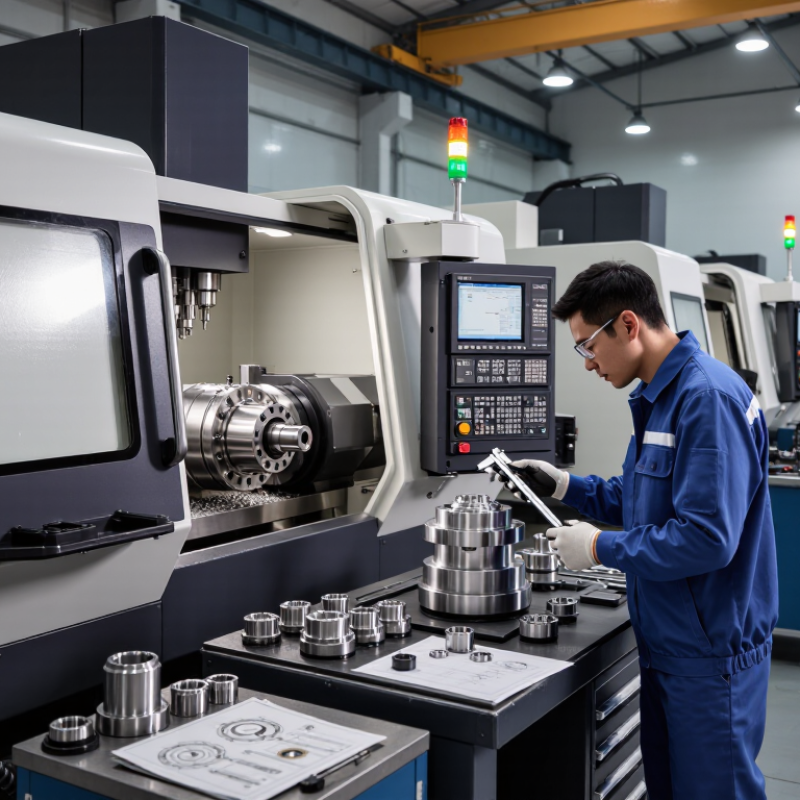
Where to Find the Best Precision CNC Parts in China?

What Defines a High-Quality Precision CNC Part?

What Defines a High-Quality Precision CNC Part?

A high-quality precision CNC part matches its drawing under real inspection conditions. Dimensions matter, but so do material grade, surface finish, edge condition, and repeatability across batches. Ask for measured results, not only a promise of tight tolerances. A shaft may fit one assembly perfectly, yet fail after heat treatment shifts its diameter.

Look for a clear inspection plan, calibrated measuring tools, and traceable material records. For a close-fit bore, useful evidence might include a bore-gauge reading, the specified tolerance, and the instrument’s calibration status. The ISO Survey 2023 recorded more than one million valid ISO 9001 certificates worldwide. That signals broad adoption of quality systems, not proof that any individual part meets its drawing. That distinction matters.

Before placing an order in China, request a sample inspection report and confirm how the supplier handles nonconforming parts. Check critical dimensions at the same temperature and measurement points used for acceptance. A polished report can still miss a weak sampling plan. I would also question vague claims like “high precision” unless they identify tolerances, inspection frequency, and measurement methods. Some requirements may need discussion; not every drawing detail is equally important.

What Defines a High-Quality Precision CNC Part?

ISO 2768-1 fine (f) class general tolerances for linear dimensions

Tighter dimensional control is one measure of CNC part quality. Values show the permitted tolerance in millimeters for each nominal-size range under ISO 2768-1, fine class. These general tolerances apply only when referenced by the part drawing; explicitly specified tolerances take precedence.

Which Regions in China Specialize in CNC Manufacturing?

China’s CNC manufacturing is concentrated in several industrial regions, each with a different supply-chain profile. The Yangtze River Delta, including Shanghai, Jiangsu, and Zhejiang, has dense networks of machine shops, material suppliers, and inspection services. It is well suited to precision components that need repeatable production and close coordination between machining and finishing. Typical capabilities include multi-axis milling, turning, grinding, and dimensional inspection.

Guangdong, especially the Pearl River Delta around Shenzhen, Dongguan, and Guangzhou, is known for fast-moving electronics and hardware supply chains. It can be a practical choice for small, intricate parts, quick prototypes, and frequent design changes. That matters. Nearby suppliers may shorten communication and transport time, though a regional reputation cannot confirm one workshop’s actual capability. Ask about tolerances, material traceability, and how inspection results are recorded.

Shandong and other northern manufacturing centers also offer CNC capacity, often alongside broader machinery and industrial production. Their suitability depends on the part, required process, and available quality controls. Not always. A location alone is a weak buying criterion. Compare sample inspection reports, equipment suited to your geometry, and the supplier’s experience with your material. The regional picture is useful, but imperfect; verify the specific factory before placing a production order.

Where to Find the Best Precision CNC Parts in China? - Which Regions in China Specialize in CNC Manufacturing?

Region Common CNC Capabilities Typical Industry Applications Potential Advantages What to Verify When Sourcing
Pearl River Delta, Guangdong
Shenzhen, Dongguan, Guangzhou and nearby cities
CNC milling and turning; rapid prototyping; aluminum and plastic part machining; surface finishing and assembly coordination Consumer electronics, communications equipment, automation, and product development Dense manufacturing and supplier networks can support short production cycles and coordinated downstream processes. Confirm achievable tolerances, inspection methods, material traceability, finishing capability, and prototype-to-production consistency.
Yangtze River Delta
Shanghai, Jiangsu and Zhejiang
Precision milling and turning; multi-axis machining; tooling and fixture production; machining of metals and engineering plastics Automotive, industrial equipment, electronics, medical-device components, and precision instruments A broad industrial base and established logistics links make the region suitable for varied manufacturing requirements. Check quality-system documentation, measurement equipment, process controls, and whether any required industry-specific approvals apply.
Bohai Rim and Shandong
Including industrial areas in Shandong and Tianjin
CNC machining for machinery, equipment, metal structures, and larger or heavier components Industrial machinery, energy equipment, transportation, marine-related equipment, and general engineering The region has a substantial heavy-industry base and access to major ports and industrial supply chains. Verify machine travel, workpiece capacity, material grades, dimensional inspection plans, and packaging for heavy shipments.
Central China
Including Hubei and Hunan
CNC machining for automotive, machinery, and general industrial components; turning, milling, and production-part machining Automotive supply chains, transport equipment, agricultural machinery, and industrial manufacturing Central location can be useful for serving manufacturing operations across several parts of the country. Assess supplier experience with the specific part geometry, production volume, required tolerances, and delivery route.
Chengdu–Chongqing area
Sichuan and Chongqing
Precision machining for transport equipment, industrial machinery, and specialized engineering components Automotive, aerospace-related supply chains, electronics, and equipment manufacturing A growing inland manufacturing base offers another sourcing option beyond coastal production hubs. Confirm relevant process qualifications, inspection records, export experience, transit time, and after-sales communication arrangements.

Regional specializations are general industry patterns, not guarantees of an individual supplier's capabilities. Evaluate each supplier against the drawing, material specification, tolerance requirements, inspection plan, and production volume.

How to Find CNC Suppliers That Match Your Requirements

Where to Find the Best Precision CNC Parts in China?

How to Find CNC Suppliers That Match Your Requirements

Finding a capable CNC supplier starts with your part, not a search ranking. Share a clear drawing, material grade, critical dimensions, tolerances, finish, and expected annual volume. A supplier should ask about datum selection, inspection points, and how features will be machined. Good questions matter.

Request a sample inspection report alongside a quote. Check whether it lists actual measurements, instrument details, and your drawing’s revision. For a tight bore, ask how the shop controls tool wear and verifies diameter between operations. For anodized aluminum, confirm whether dimensions are checked before and after finishing. Ask for evidence, not just confident promises. A short video of a measuring setup can help, but it cannot replace records.

Compare suppliers using the same part data and delivery assumptions. Clarify setup charges, packaging, lead time, and how changes are approved. A low unit price may hide limited inspection or costly rework. No checklist catches everything. I would also test communication with one technical question and note how clearly it is answered. This can be imperfect; a polished reply does not prove process control. Start with a small, representative order when practical, then review dimensions, finish, packaging, and response time before increasing volume.

How to Compare Supplier Capabilities, Quality, and Pricing

To find precision CNC parts in China, compare suppliers by the work they can demonstrate, not by catalogue claims. Ask whether their machines suit your part: turning for shafts, multi-axis milling for complex housings, or both. Request examples using similar materials, dimensions, and tolerances. A supplier experienced with aluminum prototypes may not be the right choice for a tight-tolerance stainless steel production run.

Look for evidence of process control. Ask for a sample inspection report, measurement methods, and details of how they check the first article. If a drawing calls for a 0.02 mm tolerance, confirm that the supplier can measure it reliably, not merely machine to it. A polished brochure is not proof. Request a physical sample when practical.

Compare quotes line by line. Check material grade, setup fees, tooling, finishing, inspection, packaging, and shipping assumptions. A low unit price can hide extra charges or a different inspection scope. Ask for lead times at both sample and production quantities. Then compare the written answers, not just the totals. Even a careful checklist has limits: samples may not reveal consistency across a full batch, so agree on inspection records and acceptance criteria before ordering.

How to Verify a Supplier Before Placing an Order

Before ordering precision CNC parts in China, verify how a supplier controls dimensions, not just which machines it owns. Request recent inspection reports for parts with similar tolerances, material certificates, and calibration records. Ask how operators measure critical features, such as a narrow bore or a flatness requirement. Ask for evidence.

A first-article sample can reveal whether the process matches your drawing. Check key dimensions independently, and confirm the sample uses the correct material and drawing revision. Ask how revision changes are recorded and shared with production staff. A video call may help you see the shop floor, but it cannot replace inspection. That matters.

Look for consistent process records, clear responses, and traceability from raw material to finished parts. Confirm that the quotation states tolerances, surface finish, lead time, packaging, and how nonconforming parts are handled. I find polished photos persuasive, too, but they prove little about production control. Compare the supplier’s answers with its documents, and note vague or conflicting details. Small details count.

t