
How to Choose an Aluminum Drawing Machine?

Choosing an Aluminum Drawing Machine is a production decision, not a simple equipment purchase. The right model must match alloy grade, rod diameter, target wire size, reduction schedule, and daily output. It also affects surface quality, energy use, maintenance time, and operator safety.

Dr. A. K. Ghosh, a recognized researcher in aluminum manufacturing, offers a useful principle: “The best drawing process is the one that controls deformation while preserving material quality.” This idea should guide every comparison. A machine may advertise high speed, yet speed alone proves little. A unit drawing 9.5-millimeter rod into fine wire needs stable tension, accurate die alignment, reliable lubrication, and controlled cooling. Watch the details. A noisy gearbox, uneven capstan wear, or unstable payoff can create scratches within hours.

Experienced buyers should inspect the machine’s motor rating, drawing block design, die-box arrangement, control system, and spare-parts availability. Ask for verified production data using a similar aluminum alloy. Request sample wire, not only catalog figures. The machine should also support practical cleaning and quick die changes. Downtime is expensive.

There is no perfect specification sheet. I have seen purchasing teams focus on maximum speed and overlook maintenance access. That mistake can become costly. A lower-speed machine with stronger tension control may deliver better long-term value. Consider installation space, power quality, noise levels, and technician training before signing any contract. This guide explains how to compare these factors clearly, avoid attractive but incomplete claims, and select an Aluminum Drawing Machine that fits real factory conditions.
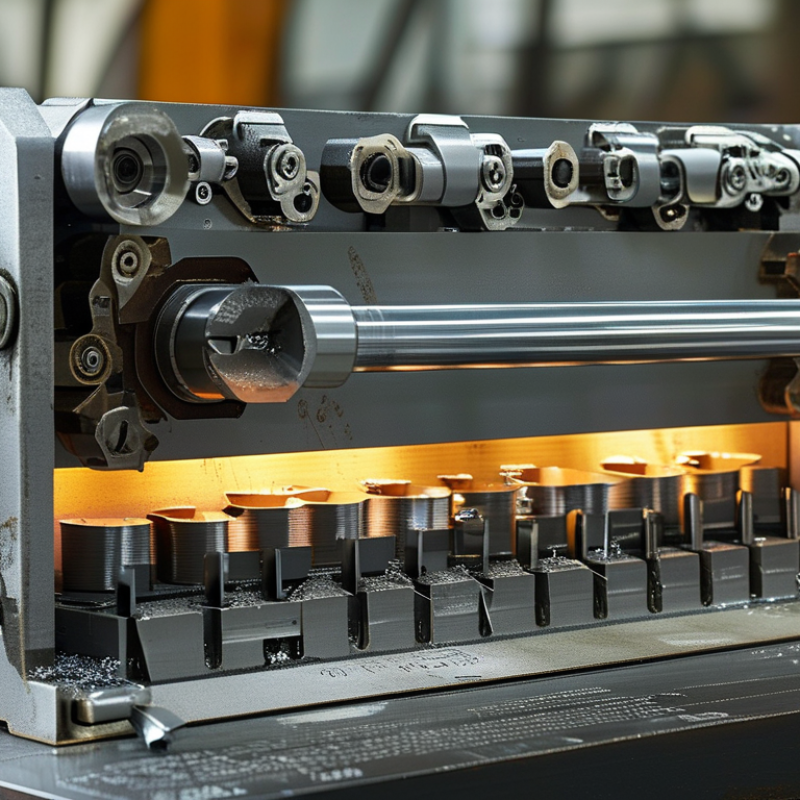
How to Choose an Aluminum Drawing Machine?

Define Product Requirements: Alloy, Diameter Range, and 8–20% Die Reduction

How to Choose an Aluminum Drawing Machine?

Define your product requirements before comparing machine specifications. Start with the aluminum alloy, because strength, ductility, and heat treatment affect drawing behavior. Softer alloys may tolerate higher reductions, while harder alloys often need gentler passes. Record the incoming diameter, finished diameter, acceptable ovality, and required surface quality. A workshop drawing 6 mm rod into 2 mm wire needs a different setup from one producing 20 mm profiles.

Plan each die reduction carefully. An 8–20% reduction per die is a practical starting range for many aluminum drawing applications. However, reduction usually refers to cross-sectional area, not diameter. Confirm this detail with the equipment supplier. Excessive reduction can create cracks, heat, or unstable tension. Too little reduction may increase the number of passes and production cost. In real production, the ideal setting may shift after testing. That is normal. Material batches are not always perfectly consistent.

Tips: Request a trial schedule using your actual alloy and diameter range. Check motor control, capstan alignment, lubrication access, cooling, and emergency stopping. Ask for measured wire samples, not only catalog claims. Keep a simple record of die wear, surface marks, and break frequency. These details reveal whether the machine fits your process. A small mistake in reduction planning can become a costly production habit.

Match Machine Type to Wire Size, with Speeds from 5 to 30 m/s

How to Choose an Aluminum Drawing Machine?

Machine speed must match wire size, alloy condition, and reduction per pass. Fine aluminum wire can require speeds near 20–30 m/s, while larger conductors often run more reliably at 5–12 m/s. High speed is not automatically better. Excessive acceleration can increase heat, surface scratches, and die wear. A practical trial should measure outlet temperature, tension stability, elongation, and spool quality.

The U.S. Geological Survey’s Mineral Commodity Summaries 2025 estimates global primary aluminum production at about 73 million metric tons in 2024. The International Aluminium Institute also reports that roughly 75% of all aluminum ever produced remains in use. These figures reflect sustained demand for efficient processing, including drawn wire for electrical and industrial applications. Choose a machine with adjustable capstan speed, controlled cooling, and compatible die geometry. For medium wire, a stable 10–20 m/s range may provide a better balance between output and quality.

Check the details.

Wire diameter alone is insufficient. Alloy temper, lubrication, incoming surface condition, and pass schedule can change the result. In my experience, a machine rated at 30 m/s may perform poorly if tension control is weak. That assumption needs testing. Ask for actual trial data using your alloy, target diameter, and planned reduction. A slower line with fewer rejects may deliver more saleable wire each shift.

How to Choose an Aluminum Drawing Machine?

Match the machine configuration to the incoming wire size and required drawing speed. The ranges below represent typical operating conditions for aluminum wire production, from larger rod breakdown to fine-wire drawing.

Larger incoming diameters generally require lower speeds because of the higher reduction load. Multi-block machines are commonly selected for intermediate and fine wire, where multiple drawing passes support higher line speeds of approximately 10–30 m/s.

Calculate Motor Power from Tension, Speed, and 95% Transmission Efficiency

How to Choose an Aluminum Drawing Machine?

Calculate Motor Power from Tension, Speed, and 95% Transmission Efficiency

When choosing an aluminum drawing machine, motor sizing should begin with actual drawing tension and line speed. These values describe mechanical work at the capstan, not the motor’s electrical demand. Use this equation: motor power (kW) = tension (N) × speed (m/s) ÷ 1,000 ÷ 0.95 The 95% factor represents assumed transmission efficiency. Keep units consistent.

Suppose measured tension is 1,200 N and production speed is 8 m/s. The load power is 9.6 kW. After allowing for 95% efficiency, required motor input becomes about 10.1 kW. That number is not automatically the correct rated motor size. Acceleration, die friction, cooling fans, and temporary tension peaks can demand more.

In practical checks, I record tension during steady production and coil changes. A single reading can mislead. I also review torque curves, starting methods, duty ratings, and control response. An 11 kW motor may work with stable tension, while 15 kW could provide safer overload capacity. That choice needs thermal and torque verification, not guesswork. Recheck the result. Real aluminum grades, lubrication, and die wear can change tension over time. The 95% efficiency figure is an estimate, so measured losses deserve attention before final selection.

Compare Die Materials, Cooling Systems, and Lubrication for Aluminum Alloys

How to Choose an Aluminum Drawing Machine?

Die material, cooling, and lubrication decide whether an aluminum drawing line stays stable. Carbide dies suit moderate production and offer good wear resistance. Polycrystalline diamond dies generally provide lower friction and longer service life. However, they cost more and can be unforgiving when alignment is poor. ASM Handbook data lists aluminum thermal conductivity near 130–235 W/m·K, depending on alloy and temper. Heat moves quickly, but not always evenly.

Cooling must target the deformation zone, not merely flood the machine frame. A controlled emulsion can reduce die temperature and prevent surface pickup. For high-strength alloys, monitor coolant temperature, flow rate, and filtration together. The International Aluminium Institute reports that recycled aluminum requires about 5% of the energy used for primary production. That encourages more recycled feedstock, yet its mixed chemistry may increase lubrication sensitivity. My test records sometimes disagree with supplier estimates. Real wire cleanliness matters more than expected.

Tips: Start with a smaller reduction per pass. Check die entry geometry under magnification. Use a lubricant designed for aluminum, with stable viscosity and clean separation. Avoid excessive oil; it can hide scratches and overload filtration. Track drawing force every shift. A small rise often appears before visible surface damage. Choose cooling capacity from measured heat, not catalog assumptions. A perfect setup is rare.

Verify Capacity, Safety Compliance, and Payback within 3–5 Years

How to Choose an Aluminum Drawing Machine?

Capacity should be verified from production records, not sales estimates. Measure wire diameter, inlet material, drawing passes, line speed, and expected uptime. The International Aluminium Institute reports that aluminum production remains highly energy intensive, so electricity efficiency deserves close attention. Ask for measured kWh per tonne, motor efficiency, cooling demand, and scrap rates. A machine rated for 2,000 tonnes annually may deliver far less in real conditions. Downtime is often underestimated.

Safety compliance must be documented before purchase. Request risk assessments, emergency-stop tests, guarding details, and electrical certificates. ISO 12100 supports machinery risk assessment, while ISO 13849 addresses safety-related control systems. Local rules still apply. Check noise, access points, lubrication areas, and restart protection during a factory visit. A clean demonstration is useful, but it is not proof of long-term reliability.

Tips:

Build a three-to-five-year payback model. Include machine cost, installation, training, maintenance, energy, labor, scrap, and lost production. Divide total investment by annual net savings. For example, $300,000 divided by $90,000 yearly savings gives a 3.3-year payback. Use conservative output assumptions. IEA energy-price data can improve sensitivity testing. Review the model after six months; the first estimate may be wrong. Ask for service response times and spare-parts availability in writing. These details often decide whether payback stays on paper or reaches the factory floor.

t