Why You Should Order Printed Labels for Your Business Needs?
In today’s competitive market, businesses must stand out. One effective way to do this is to order printed labels. According to Mark Thompson, a branding expert, "Labels are the face of your product." This statement highlights the importance of choosing the right labels for your business needs.
Quality printed labels can enhance product visibility. They convey your brand message and create a professional impression. For example, a custom label can make ordinary products feel special and unique. It gives customers something tangible to associate with your brand. However, not all businesses understand this potential. Many overlook the impact of a well-designed label.
Moreover, ordering printed labels is not just about aesthetics. Practicality matters too. Labels can help customers identify products easily. Yet, businesses sometimes compromise on quality, opting for cheaper options. This can lead to fading colors or poor adhesion. Reflecting on these choices can help businesses make better decisions. Choose wisely when you order printed labels; your brand deserves it.

Advantages of Using Printed Labels for Your Business
Printed labels are vital for businesses of all sizes. They offer numerous advantages that can enhance your brand's image. A well-designed label can communicate vital information quickly. Customers appreciate clarity. Labels help them understand products better.
Using printed labels can improve organization. They can categorize products effectively. This makes inventory management easier. You can reduce errors, save time, and increase efficiency. Labels also protect your products. Clear instructions or warnings on labels prevent misuse.
Some businesses overlook label quality. This can lead to confusion and frustration. Investing in high-quality printed labels is essential. They should be durable and easy to read. If labels fade or peel, customers may have a negative impression. Reflect on your current labeling practices and consider improvements.
Different Types of Printed Labels for Various Industries
Printed labels play a crucial role across various industries. They are not just functional; they enhance brand visibility. In retail, vibrant product labels attract customers. Unique designs can set a product apart, but they must comply with regulations. Missing details can lead to misunderstandings.
In the food industry, labels provide essential information. They include ingredient lists, nutritional facts, and expiration dates. Clear labeling is critical for safety. Mislabeling can result in serious health risks. The healthcare sector also relies on printed labels. They are vital for medication packaging and patient identification. Accurate labels can save lives.
For the logistics industry, labels help track shipments. Each label offers vital data about contents and destination. However, poor label placement or unclear printing can lead to errors. Each industry needs tailored labels. Customization can improve efficiency, but it requires thoughtful planning. Labels should reflect the brand and meet specific needs.
How Printed Labels Enhance Brand Recognition and Marketing
Printed labels play a crucial role in enhancing brand recognition and marketing for businesses. According to a study by the National Association of Manufacturers, over 70% of consumers form their first impression based on product labeling. This highlights the importance of investing in high-quality printed labels. A well-designed label can communicate essential information and create an emotional connection with customers.
Labels should not only be eye-catching but also reflect your brand identity. Consistency in color, font, and design is key. Research indicates that consistent branding can increase revenue by up to 23%. Consider adding unique elements, such as QR codes, to engage customers further. This interaction can lead to better brand loyalty and repeat purchases.
Tips: Use bold colors to stand out. Keep the design simple but informative. Ensure that your labels are adaptable to different products. Regularly review your labels for relevance. What works today may need refreshing tomorrow. Customer feedback can help refine your label designs and marketing strategies. Remember, labels are often the first point of contact with your brand.
Cost Considerations for Ordering Printed Labels
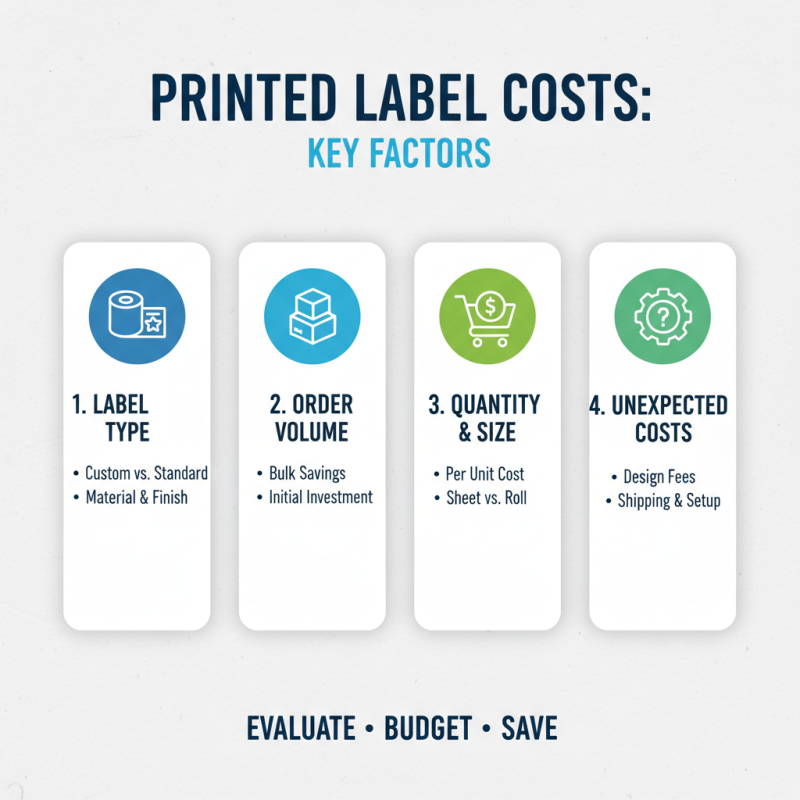
When considering printed labels for your business, cost is a critical factor. First, it’s important to evaluate the type of label needed. Custom labels and standard ones can vary significantly in price. Bulk ordering may provide savings, but the initial investment can seem daunting. Unexpected costs can arise, such as design fees or shipping charges.
You might find some manufacturers offer discounts on larger orders. However, not all offer the same quality. Cheaper labels might save money upfront but could lead to more expenses later. Poor quality may require reordering, increasing overall costs. It’s key to balance quality and price to avoid future regrets.
Shipping costs can also impact your budget. Fast shipping options tend to be more expensive. If time allows, choosing standard shipping can reduce expenses. Additionally, consider storage costs for extra labels. In the end, pricing isn’t just about the label itself. It’s about what it represents for your brand and operations.
Tips for Designing Effective Printed Labels for Your Products
Creating effective printed labels is essential for any business. They serve as the first point of interaction between customers and products. According to a study by the Paper and Packaging Board, 72% of consumers say the label design influences their purchasing decisions. This statistic highlights the importance of a thoughtful design process.
Consider color choices. Colors evoke emotions and can grab attention. For instance, red can create urgency, while blue often conveys trust. However, choosing too many colors can lead to confusion. Simplicity is key. Limit your palette to two or three colors. Ensure your text is legible against the background. A clear font size is crucial; ideally, it should be at least 10 points for easy readability.
Imagery also plays a significant role. High-quality images can enhance appeal, but they must be relevant. Use visuals that accurately represent your brand and products. Overly complex images can distract; they may deter potential customers. A focused image strategy can improve the label's effectiveness. Remember, the ultimate goal is to communicate clearly and attractively to drive sales.
Importance of Printed Labels for Business Needs