What Is a Switch Test and How Does It Work?
A switch can look flawless and still fail at the moment a circuit needs it. A Switch Test checks whether the device changes electrical state reliably, rather than merely looking intact. The method depends on the switch type, its rating, and the equipment around it. A wall switch, relay, and industrial limit switch do not share one universal test.
Electrical-testing author Paul Gill’s maintenance approach can be paraphrased this way: “Test results matter when they support a sound maintenance decision.” This is a paraphrase, not a verbatim quotation. It captures an important point: a reading needs context. A low resistance value may seem reassuring, but loose terminals, worn contacts, or intermittent operation can still cause trouble.
In a basic test, a qualified person isolates the circuit and inspects the switch and its connections. With power safely removed, a meter can check continuity as the switch moves between positions. The display should change consistently. Click. Read. Reset. For equipment that requires it, further tests may assess contact resistance or operation under specified conditions. Results are compared with the manufacturer’s limits, not guessed from a single meter reading.
The details matter. A bench test may miss a fault that appears only under load or after repeated operation. And a passing result is not a lifetime guarantee. This guide explains common Switch Test methods, what their readings can show, and where interpretation requires care. That last part deserves attention. Test equipment, procedures, and safety controls must match the device and the person performing the work.
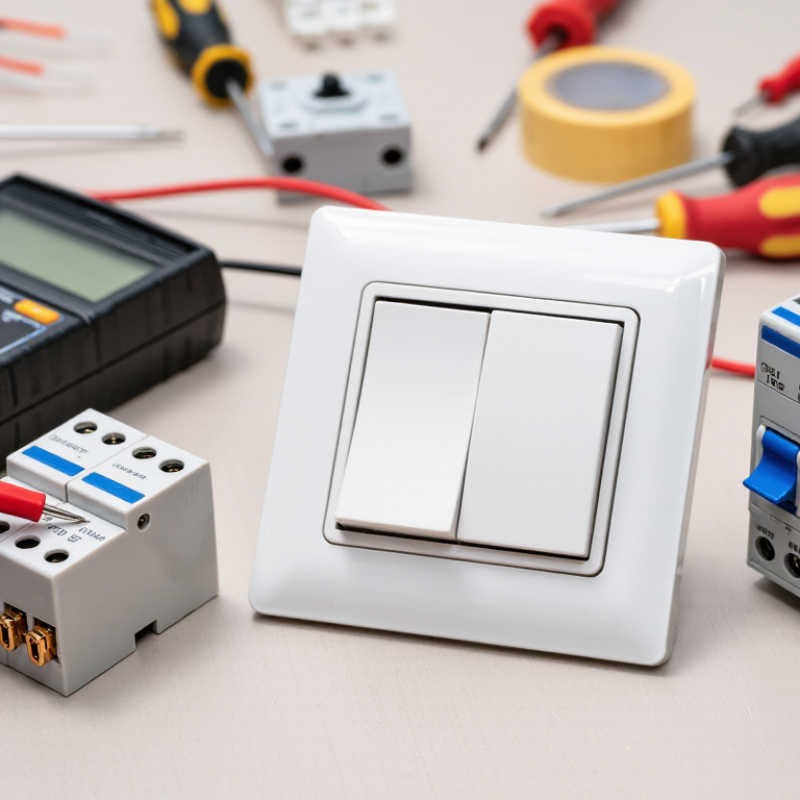
What a Switch Test Is and What It Measures
What Is a Switch Test and How Does It Work?
A switch test checks whether an electrical switch opens and closes a circuit reliably. It can measure continuity, contact resistance, insulation resistance, and operating time. A technician may connect a low-resistance ohmmeter, then record readings with the switch open and closed. The meter’s changing display makes hidden contact problems easier to spot. Useful details.
Test methods depend on the switch type. IEC 60669-1:2017 covers household fixed-installation switches and includes endurance and temperature-rise testing. For electrical power equipment, NETA ATS-2021 provides acceptance-testing guidance, including electrical measurements used to assess equipment condition. There is no single pass value for every switch; results should be compared with its specifications and earlier readings. One limitation: a test taken once, at room temperature, may miss an intermittent fault that appears under load.
Tips: Isolate the circuit before testing, and verify it is de-energized with a suitable tester. Record the switch’s rating, test conditions, and readings. Small differences can matter, but context matters more. A low resistance reading alone does not prove the switch will perform reliably in service.
Why Switch Testing Is Used
A switch test checks whether a switch changes an electrical circuit as intended. Depending on the device, a technician may inspect its movement, measure continuity with a meter, or check contact resistance. In a simple test, an open switch should interrupt the circuit; a closed switch should allow current through. The exact method depends on the switch type and its rated conditions.
Testing helps find faults before they cause unreliable operation or equipment downtime. A worn contact can create excess resistance, heat, or intermittent power. A loose terminal may work during a quick check, then fail when vibration begins. Testing also helps confirm that a replacement part suits the circuit’s requirements. One normal reading is useful, but it is not complete proof; temperature, load, and repeated operation can change results. That caveat is easy to overlook.
Tips: Disconnect power before continuity or resistance checks, and confirm isolation with suitable equipment. Never test beyond the switch’s rating. Record readings and test conditions, even when they seem routine. Small changes can matter.
How a Switch Test Works
A switch test checks whether a switch opens and closes an electrical path as intended. The safest basic method uses a multimeter, with the circuit fully disconnected from power.
Never test resistance on a live circuit. Confirm the power is off with a suitable tester before touching conductors. If you are unsure how to isolate the circuit, ask a qualified electrician.
Set the meter to continuity or resistance mode. For a reliable reading, disconnect at least one wire from the switch; other connected components can affect the result. Touch one probe to each switch terminal, then operate the switch.
In the closed position, the meter should usually beep or show very low resistance. In the open position, it should show no continuity or a very high reading.
That matters. A reading that changes when you gently move the switch may point to worn contacts, though loose wiring can create similar symptoms. Switch designs differ, so check the device’s instructions before judging unusual readings. I’ve found that a simple beep can feel conclusive, but it is only one clue. If results remain inconsistent, stop and have the circuit inspected.
Steps for Performing a Switch Test
A switch test checks whether a switch opens and closes an electrical circuit as intended. For a basic continuity test, the switch must be disconnected from power. Turn off the correct breaker, then verify the circuit is de-energized with a properly rated voltage tester. Do not rely on the switch position or a dark indicator alone. If you cannot confirm that power is off, stop and contact a qualified electrician.
Set a multimeter to continuity or resistance mode. Remove the switch only if you know how to do so safely, and label the wires before disconnecting them. Touch one meter probe to each switch terminal. With a simple on-off switch, the meter should show continuity when the switch is on and no continuity when it is off. The reading may vary by switch type, so check its specifications. No beep? That is not a diagnosis by itself. Poor probe contact, a worn switch, or an incorrect meter setting can affect the result. I’ve found that taking a clear photo before moving wires can prevent confusion later. Still, a test can miss intermittent faults. Reinstall the switch securely, and have a professional assess any heat marks, loose wiring, or uncertain readings.
How to Interpret Results and Follow Safety Precautions
A switch test checks whether an electrical switch changes state as intended. With power isolated, a technician measures continuity or resistance across its terminals. A closed switch should usually show low resistance; an open switch should show no continuity. Exact readings depend on the switch design and manufacturer’s specifications. Do not treat one resistance value as universal. NETA’s Maintenance Testing Specifications emphasize equipment-specific testing and evaluation criteria. A result outside the expected range can point to worn contacts, loose connections, or a faulty mechanism. One caveat: a meter reading alone cannot confirm safe operation under load.
Safety comes first. Turn off the circuit, apply lockout procedures, and verify the absence of voltage with a properly rated tester before touching conductors. Never use continuity mode on an energized circuit. If testing requires live measurements, a qualified electrician should select suitable protective equipment and follow workplace procedures. Keep probes steady; exposed metal terminals can be easy to bridge by mistake. NFPA’s analysis of 2015–2019 home fires estimated 31,647 fires annually involving electrical distribution or lighting equipment, with 430 civilian deaths and 1,070 injuries. Those figures cover broad equipment categories, not switch failures alone, but they underline why careful inspection matters. If readings fluctuate, stop and investigate rather than guessing. Recheck connections, test leads, and the switch’s documentation before replacing parts.