2025 Top 10 Labels Printing Innovations You Can't Miss
The labels printing industry is undergoing a remarkable transformation as we approach 2025, driven by technological advancements and increasing consumer demands for customization and sustainability.
According to a recent report by Smithers Pira, the global labels market is expected to reach $50 billion by 2025, showcasing a compound annual growth rate of 4.5%. This growth underscores the significance of innovation in labels printing, where new methods and materials are redefining the landscape.

Industry expert Dr. Emily Chang, a noted authority in labels printing innovations, articulates the urgency of adaptation, stating, "As brands seek to stand out in a crowded marketplace, the need for innovative and sustainable labels printing techniques has never been more crucial." This sentiment resonates with many in the industry, emphasizing that the future will favor those who leverage the latest technologies to enhance not only aesthetics but also functionality and environmental responsibility.
In this context, our exploration of the top 10 labels printing innovations you can't miss in 2025 will highlight the pioneering solutions that are set to shape the future of the industry. From advanced printing technologies to eco-friendly materials, these innovations promise to elevate brands and meet the evolving expectations of consumers.
Emerging Technologies in Label Printing: What to Expect in 2025
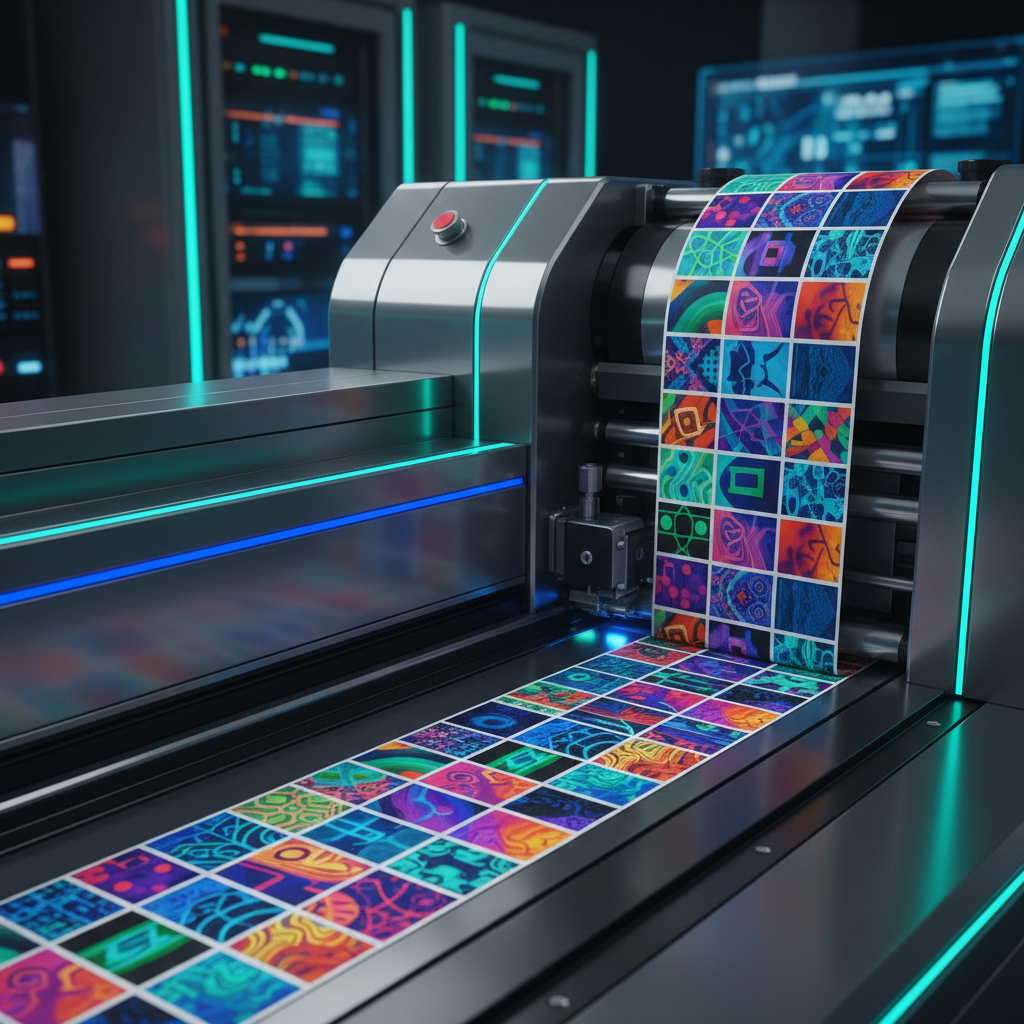
As the global packaging printing market continues to expand, valued at USD 352.1 billion in 2020 and projected to reach USD 433.4 billion by 2025, the label printing industry is at the forefront of innovation. Emerging technologies will play a crucial role in this evolution, with advancements in digital printing processes transforming how labels are produced and used. In particular, companies like Packnology Graphics are adapting to these changes by incorporating digital label presses, thereby enhancing their operational capabilities and responding to the growing demand for customized printing solutions.
By 2025, the number of connected IoT devices is expected to grow by 14% to 21.1 billion globally, marking a significant shift in how manufacturers connect and automate their printing processes. This increasing interconnectivity will not only streamline production but also enhance data-driven decision-making within the label printing sector. Events like Labelexpo Asia 2025 will showcase these innovations, providing a platform for industry leaders to share insights and strategies that leverage emerging technologies. As we look ahead, the integration of advanced automation and AI will likely redefine the label printing landscape, making it essential for businesses to stay ahead of the curve.
2025 Top 10 Labels Printing Innovations You Can't Miss
| Innovation |
Description |
Expected Impact |
Implementation Year |
| Smart Labels |
Integration of sensors to monitor product condition |
Enhanced product safety and tracking |
2025 |
| Eco-friendly Materials |
Biodegradable and recyclable substrates |
Reduced environmental impact |
2025 |
| Augmented Reality Labels |
Labels that provide interactive experiences via AR |
Improved consumer engagement |
2025 |
| Digital Inkjet Technology |
High-quality printing with fewer setup limitations |
Increased production efficiency |
2025 |
| RFID Integration |
Radio-frequency identification technology in labels |
Streamlined inventory management |
2025 |
| Color Changing Labels |
Labels that change color based on temperature |
Enhanced product monitoring |
2025 |
| Self-adhesive Technologies |
Innovative adhesives that enhance usability |
Faster application processes |
2025 |
| 3D Printed Labels |
Utilizes 3D printing for unique label designs |
Customization options for brands |
2025 |
| AI-driven Design |
AI tools for creating smart label designs |
Faster design processes and innovation |
2025 |
Sustainable Innovations in Labeling Materials and Processes
The labeling industry is undergoing a significant transformation as
sustainability becomes a key priority.
Innovations in labeling materials such as biodegradable films
and recycled paper are gaining traction.
These materials not only reduce environmental impact but also meet consumer demand for
eco-friendly products. For example, brands are
increasingly utilizing labels made from plant-based substances,
which decompose more easily than traditional synthetic options.
Additionally, advancements in printing processes
are enhancing the sustainability of labels. Water-based inks
and energy-efficient printing technologies
minimize harmful emissions and energy consumption. Some companies are adopting
digital printing methods that reduce waste
and allow for shorter production runs, catering to the growing desire for personalized and varied labeling solutions.
As businesses strive to align themselves with sustainable practices, the
innovations in labeling can significantly contribute to their
eco-conscious brand image and
overall environmental goals.
Integration of Smart Features in Labels for Enhanced Interactivity
In the evolving landscape of labels, the integration of smart features is revolutionizing how consumers interact with products. The advent of technologies like QR codes, NFC tags, and augmented reality is enabling labels to go beyond simple identification. For instance, QR codes can link consumers directly to a product’s webpage, offering access to detailed information, special promotions, or even user-generated reviews. This capability transforms a static label into an engaging portal, enhancing the overall consumer experience through immediacy and convenience.
Moreover, the use of IoT technology in labels contributes to a more personalized touch. Smart labels can collect data on consumer interactions, allowing brands to tailor their marketing strategies alongside inventory management. NFC technology, which allows consumers to tap their smartphones against a label for instant access to information, further enhances interactivity by providing an effortless way to learn more about a product. As these innovations continue to develop, the future of labeling promises to be more dynamic, bridging the gap between physical products and digital experiences.
2025 Top 10 Labels Printing Innovations
This chart illustrates the anticipated advancements in labels printing technology for 2025, with a focus on the integration of smart features that enhance interactivity. The data showcases the expected percentage increase in various innovative features.
Advancements in Digital Printing Techniques for Customization
The world of labels printing is rapidly evolving, especially with the strides made in digital printing techniques that are tailored for customization. In 2025, innovations in this field will redefine how brands approach label design and production.
State-of-the-art digital printing technologies, such as inkjet and laser systems, now allow for unprecedented precision and detail, enabling brands to create bespoke labels that cater to specific consumer preferences and market demands.
This level of customization not only enhances brand identity but also fosters engagement by allowing businesses to connect more intimately with their customers through personalized packaging.
Moreover, advancements in digital printing techniques are facilitating shorter print runs without compromising quality or increasing costs. Brands are now able to produce limited edition labels or seasonal designs with ease, reducing waste and improving cost efficiency.
Technologies such as variable data printing enable businesses to alter text and graphics on each label, thereby offering tailored messages that resonate with diverse consumer segments.
As a result, the labels of 2025 will not only be visually striking but will also serve as a vital component of a company’s marketing strategy, helping to forge stronger connections with consumers.
Trends in Automation and Efficiency for Label Manufacturing in 2025
In 2025, the label manufacturing industry is set to experience significant advancements driven by automation and efficiency. The demand for plastic blood bags, which are pivotal in healthcare, is projected to grow substantially in the coming years. The global plastic blood bag market is expected to reach a sizable value by 2033, exhibiting a robust CAGR fueled by factors such as increasing healthcare needs and advancements in medical technology. Different types of blood bags, including single, double, triple, and quadruple options, cater to specific requirements in hospitals, blood banks, and other medical applications, emphasizing the importance of customized solutions in this sector.
Moreover, the lightweight conveyor belt market is also witnessing innovative trends that are transforming its landscape. By 2034, this market is anticipated to grow as industries such as food processing, logistics, and packaging increasingly adopt automated solutions. With applications ranging from the chemical industry to aquaculture, the shift towards lighter and more efficient conveyor systems aligns with broader industry trends focused on minimizing costs and enhancing productivity. As manufacturers embrace automation, they are not only modernizing their production processes but also ensuring improved efficiency and reduced operational risks, positioning themselves competitively in the evolving market.