China Top 10 Jumbo Parent Mother Roll Paper Suppliers?
China’s tissue industry is expanding, and Jumbo Parent Mother Roll Paper remains its essential converting input. China Paper Association data shows steady growth in household paper production and consumption, supported by urbanisation, e-commerce, and upgraded hygiene habits. Smithers’ The Future of Tissue and Hygiene to 2028 also identifies Asia-Pacific as the leading regional growth engine. The opportunity is substantial.
Yet supplier selection is rarely simple. A jumbo roll may look excellent beside a warehouse pallet, then fail through uneven moisture, weak edges, or unstable basis weight. These defects can slow high-speed converting lines and increase trim waste. Fisher International consultant Brian McClay offers a practical warning: “A parent roll must run consistently, not merely look economical.” That sentence deserves attention.
This guide examines China’s top suppliers through measurable criteria. These include fibre selection, tensile strength, softness, roll width, moisture control, delivery capacity, certifications, and after-sales support. The focus is not only mill size. It is repeatable performance.
Some suppliers specialise in virgin-fibre tissue. Others compete through recycled content, flexible minimum orders, or export logistics. Their strengths are not identical. That matters.
The global tissue market is becoming more demanding, according to Fastmarkets RISI outlooks covering capacity, pulp prices, and regional consumption. Buyers now need evidence, not attractive brochures. Factory audits, trial orders, laboratory results, and customer references remain valuable. Even this approach is imperfect. Market rankings can change quickly when pulp prices, energy costs, or new Chinese capacity shift. Careful comparison is therefore essential when identifying reliable Chinese Jumbo Parent Mother Roll Paper suppliers.
What Is Jumbo Parent Mother Roll Paper?
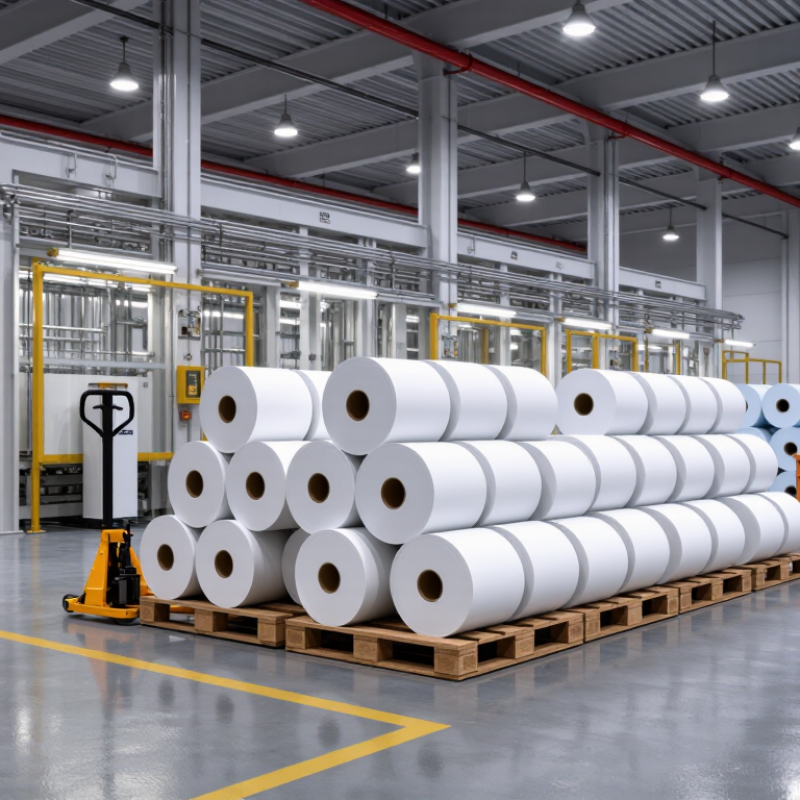
Jumbo parent mother roll paper is the large, continuous paper roll produced before converting. It serves as the raw material for tissue products, household paper, and selected industrial applications. The roll may be several meters wide and weigh hundreds of kilograms. Converters unwind it, slit it, fold it, emboss it, or cut it into smaller rolls.
Its quality depends on more than thickness. Fiber selection affects softness, strength, and absorbency. Moisture must remain balanced across the roll. Excess moisture can cause wrinkles, while overly dry paper may tear during high-speed converting. The winding pattern also matters. A loose edge or uneven tension can create telescoping and production waste.
In practical purchasing, buyers should check basis weight, ply structure, tensile strength, brightness, and roll width. They should also request test samples and inspect the core size. Small differences can disrupt converting equipment. A supplier’s technical records, batch consistency, and packaging protection deserve equal attention. It is not finished tissue. That distinction is often overlooked.
A reliable inspection should examine the outer layers, splice marks, roll hardness, and moisture readings. These details reveal how the paper may perform after delivery. However, laboratory data cannot predict every machine condition. Operators should run a controlled trial before placing a large order. Mistakes still happen. Careful feedback improves the next specification.
How to Evaluate Jumbo Parent Mother Roll Paper Suppliers
When comparing China’s top 10 jumbo parent mother roll paper suppliers, rankings are only a starting point. The real evaluation begins with product evidence, factory discipline, and communication. Ask for a current specification sheet covering basis weight, moisture range, roll width, core size, and tolerance. Reliable suppliers explain each figure clearly. Vague answers deserve caution.
Request samples from the same production line used for regular orders. Check surface smoothness, edge condition, winding tightness, and visible moisture marks. Measure the roll yourself when possible. A sample can look excellent while hiding inconsistent internal layers. Ask for recent quality records, inspection procedures, and traceability codes. Verify certificates with the issuing organization, rather than trusting a scanned document. Production capacity also matters. Compare machine width, maintenance schedules, lead times, and emergency response plans. A low price means little if shipment delays stop your converting line.
Payment terms and packaging reveal practical experience. Confirm pallet strength, moisture protection, loading photos, and replacement procedures for damaged rolls. Ask how complaints are investigated, not merely how they are answered. No audit is perfect. I have seen careful buyers overlook small details, especially core deformation and weak wrapping. An online meeting cannot replace an on-site check or independent inspection. Supplier reliability develops through repeated orders, honest records, and measurable performance.
China’s Top 10 Jumbo Parent Mother Roll Paper Suppliers
China’s Top 10 Jumbo Parent Mother Roll Paper Suppliers should be evaluated through evidence, not promotional claims. A practical shortlist considers production capacity, paper grades, export experience, and quality consistency. Suppliers may offer tissue, kraft, packaging, or specialty base paper in different widths and weights. Request recent specifications, factory photographs, and sample rolls before making a decision.
Experienced buyers inspect more than surface appearance. They check basis weight, moisture content, tensile strength, winding tightness, and edge quality. A stable roll should unwind smoothly without telescoping or excessive dust. Delivery records also matter, especially when containers travel through humid ports. Some suppliers communicate well but provide uneven samples. That weakness deserves attention. It may reflect process variation, not bad luck. Independent testing can confirm laboratory data and reduce purchasing risk.
Tips: Compare at least three suppliers using the same specification sheet. Ask for a trial order with clear tolerance limits. Confirm core size, roll diameter, packaging method, loading photos, and replacement terms. Keep inspection records for every shipment. A low price can hide higher converting waste. Also, avoid ranking suppliers only by factory size; technical support and honest communication often decide long-term performance.
Key Products, Materials, and Production Capabilities
China’s leading jumbo parent roll suppliers serve tissue converters, hotels, hospitals, and household paper producers. Their key products include toilet tissue, facial tissue, kitchen towel, napkin, and industrial wiping rolls. Buyers should match the paper grade with the final product, not only compare prices. Soft tissue often uses virgin pulp, recycled fiber, bamboo fiber, or blended materials. Each option affects softness, strength, absorbency, dust, and production cost.
A reliable supplier should offer practical customization. Common details include 1,800 to 3,600 millimeter reel widths, controlled basis weight, stable moisture, and suitable core diameters. High-speed converting lines need balanced reels with clean edges. Uneven winding can cause vibration, web breaks, and wasted material. Ask for laboratory data covering tensile strength, stretch, absorbency, brightness, and lint levels. Sample testing remains essential.
Production capability matters beyond machine size. Large mills may provide pulping, papermaking, rewinding, packaging, and export support in one system. Quality teams should track raw material batches and inspect every production lot. Certifications can support traceability, but documents alone do not prove consistent performance. In practice, a trial order reveals more. Small defects may appear only after several hours of converting. A supplier can look impressive on paper and still require closer technical review. That is an uncomfortable, but useful, lesson.
China Top 10 Jumbo Parent Mother Roll Paper Suppliers: Key Product Materials and Basis-Weight Ranges
The chart compares common jumbo parent-roll paper categories supplied for converting applications. Values show typical industry basis-weight ranges in grams per square metre (g/m²), rather than company-specific data or supplier rankings. Tissue and glassine grades are generally lighter, while coated and kraft papers cover higher basis weights.
How to Choose the Right Chinese Supplier for Your Needs
Choosing among China’s top jumbo parent mother roll paper suppliers requires more than comparing prices. Start with your paper specifications: grade, basis weight, roll width, core size, moisture level, and intended converting process. A reliable supplier should provide recent test reports, production photographs, and clear tolerance data. Ask how often quality checks occur during winding, packaging, and loading. Vague answers are a warning sign.
My experience is that small details often reveal operational strength. Request a sample roll, not only a sheet. Check its edge condition, winding tightness, dust level, and performance on your equipment. Confirm monthly capacity, lead time, export documents, pallet design, and damage procedures. Factory audits or independent inspections can reduce uncertainty. However, a polished audit report is not proof of consistent delivery. Review several shipments when possible. I have trusted attractive samples before, and later regretted skipping production verification.
Tips: Compare at least three written quotations. Keep every specification in one approved document. Ask for a pre-shipment inspection. Confirm whether rejected rolls are replaced or credited. Test the paper under real machine speed and humidity conditions. Do not choose the cheapest offer automatically. Communication matters, but written records matter more. A supplier may sound professional and still miss deadlines. Build a small trial order into your purchasing plan, because real performance can expose weaknesses that documents cannot show.