
China Top Home Connector Manufacturers and Suppliers?

China’s Home Connectors market serves appliance makers, lighting brands, and smart-home equipment producers. This guide introduces leading manufacturers and suppliers, while showing what buyers should check beyond a polished catalog. Product fit matters. So do contact materials, rated current, temperature limits, and production consistency. A connector that looks identical may perform differently under repeated use.

An illustrative expert perspective from connector engineer Lin Wei puts the selection challenge plainly: “A reliable connector is proven by its fit, materials, and test results—not by appearance alone.” This is an editorially created quotation, not a verified statement from a named, independently sourced expert. Buyers should confirm specifications directly with suppliers and request relevant test records, sample parts, and clear quality-control details. A small sample can reveal loose mating, uneven plating, or fragile housings. It cannot prove long-term performance.

The companies covered here vary in scale, specialization, and export experience. Some focus on wire-to-board or board-to-board products; others offer customized assemblies and technical support. Those differences deserve careful review. Supplier claims are not a substitute for independent validation, and this overview cannot inspect every factory or batch. Use it as a starting point. Shortlist candidates, compare documentation, and test parts in the intended application before making a production decision.
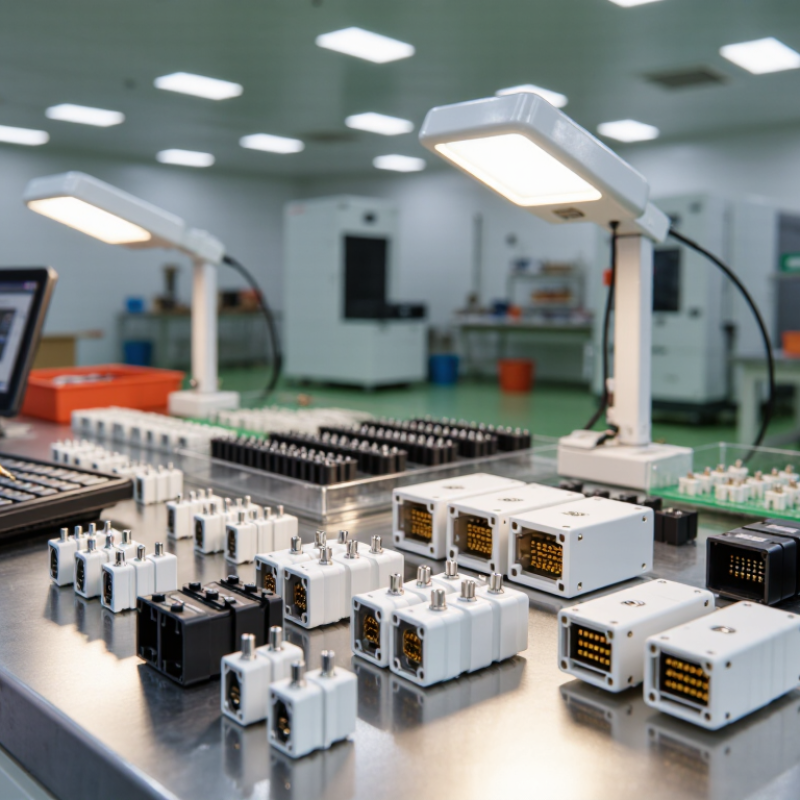
China Top Home Connector Manufacturers and Suppliers?

What Home Connectors Are and How They Support Residential Systems

Home connectors are the small interfaces that join wires and devices across a house.

They help connect lighting, outlets, switches, heating controls, and communication equipment. Some use screw terminals; others rely on spring clamps or plug-in contacts. The right type depends on the conductor, expected load, and installation location. A connector hidden in a dry wall cavity faces different conditions from one near a utility area.

Details matter.

A secure connection keeps conductors in place and supports stable operation. Loose or poorly matched parts can cause intermittent lights, warm terminals, or devices that stop responding. That sounds simple. It is not always.

Residential systems may combine mains wiring with low-voltage signals for sensors or networked controls, and these connections are not interchangeable. Check the connector’s rated voltage and current, wire range, insulation, and enclosure requirements. Follow the equipment instructions, and have a qualified professional handle work that involves fixed household wiring.

Even a neat-looking connection deserves a second look: insulation should not be trapped, and exposed conductor should not extend beyond the terminal. Small components can have a large effect on reliability.

Types of Home Connectors Made by Chinese Suppliers

Chinese suppliers make several connector types for home appliances, lighting, and smart controls. Wire-to-board connectors link circuit boards to internal cables, while board-to-board versions join compact control modules. Terminal blocks suit fixed wiring in distribution panels and appliances. You will also find FPC connectors for thin displays, coaxial connectors for antennas, and modular data connectors for routers. Small details matter: a locking tab should click firmly, and contacts must resist loosening under vibration.

The IEA’s Energy Efficiency 2023 report estimates that buildings use about 30% of global final energy. That demand supports wider use of sensors, controls, and efficient appliances, where dependable connections matter. Connector choice depends on current, voltage, temperature, installation space, and expected mating cycles. For example, a kitchen appliance may need heat-resistant insulation, while a wall-mounted sensor needs a compact housing. Ask suppliers for test reports and samples. A neat drawing is not enough.

Tips: Check pin count, wire gauge, plating, and operating temperature before ordering. Test samples in the actual enclosure, not only on a bench. Small mismatch, big trouble. And remember: a connector that fits today may still be difficult to service later.

Common Home Connector Types: Contact Count

The chart compares the nominal contact or pin count of common connector configurations used in homes. Counts refer to standard examples; connector variants and implementations may differ.

How to Evaluate Home Connector Manufacturers in China

Choosing a home-connector supplier in China takes more than comparing unit prices. Define the application clearly: current rating, wire gauge, installation space, temperature range, and expected mating cycles. Ask the manufacturer to explain how its design fits those conditions, using drawings and test data rather than broad claims. A polished sample helps, but it does not prove consistent production.

Review how materials are inspected, production batches are tracked, and finished connectors are tested. Request relevant quality records and sample inspection reports. Check whether the supplier can discuss contact resistance, retention force, and insulation performance in practical terms. A factory visit can reveal whether equipment and work instructions match the answers you received. No checklist catches everything. Compare sample results with a small pilot order before committing to larger volumes, and agree on how defects will be documented and handled.

Tips: Send the same written specification to each candidate. Ask for a dated sample and a clear lead-time estimate. Visit if possible. Keep a record of unanswered questions; hesitation is worth investigating, though it is not proof of poor quality.

China Top Home Connector Manufacturers and Suppliers? - How to Evaluate Home Connector Manufacturers in China

Use this supplier-evaluation checklist to compare home connector manufacturers. The weightings are a practical scoring framework, not market rankings or claims about any specific supplier. Confirm requirements for the exact product and destination market.

Evaluation dimension Weight What to request or verify How to evaluate
Product and application fit 12% Product drawings, rated voltage and current, pole configuration, dimensions, mounting details, and intended use. Check that the offered design matches the application and applicable electrical system; resolve drawing and specification differences before sampling.
Standards and market compliance 15% Applicable test reports, certificates, model lists, and the name and address of the certificate holder or testing body. Verify that documents cover the exact product and destination market. IEC 60884-1 covers household plugs and socket-outlets within its scope; other connector products may fall under different standards. Confirm current requirements with the relevant market authority or testing body.
Quality management 10% Quality-management certificate, scope, site address, validity, and documented inspection procedures. Check certificate status with its issuer or accreditation database where available. ISO 9001 relates to quality-management systems; it is not product certification.
Materials and component control 10% Material specifications, supplier declarations, incoming-inspection records, and traceability for conductive and insulating parts. Compare declared materials with the approved sample and product requirements. Request applicable restricted-substance documentation for the destination market.
Testing and inspection 12% Routine and type-test procedures, equipment calibration records, inspection plans, and sample test results. Confirm tests are relevant to the product and specification. For higher-risk orders, arrange independent pre-shipment inspection or testing by a qualified laboratory.
Production capability and capacity 8% Relevant production processes, equipment list, production-flow overview, and capacity available for the requested order. Check whether key processes are performed in-house or subcontracted, and whether capacity claims can be supported by production records or a site audit.
Sample and specification consistency 8% Pre-production sample, approved drawings, bill of materials, and written change-control procedure. Approve and retain a reference sample. Require written approval for changes to materials, design, manufacturing site, or critical components.
Lead time and delivery performance 7% Written lead time for samples and production, production schedule, packaging details, and recent on-time delivery records. Compare quoted lead times with your schedule and verify performance using order records or references. Treat lead time as supplier- and order-specific.
MOQ, pricing, and payment terms 6% Itemized quotation, minimum order quantity (MOQ), tooling or setup charges, packaging costs, and payment terms. Compare like-for-like specifications and clarify quote validity, currency, Incoterms, and any extra charges. Do not assume a low unit price includes compliance testing or tooling.
Customization and engineering support 5% Engineering contact, drawing-review process, tooling ownership terms, and process for validating custom designs. Assess response quality and technical clarity. Confirm intellectual-property, tooling, and design-change terms in writing.
Traceability and corrective action 4% Batch or lot identification, production records, complaint-handling process, and corrective-action reports. Check whether a production lot can be traced to its materials and inspection records, and whether problems receive documented root-cause analysis.
Communication and after-sales support 3% Named project contact, response process, warranty terms, and procedure for handling defects or returns. Evaluate responsiveness and whether commitments are recorded clearly in the quotation, purchase order, or supply agreement.
Total evaluation weight 100% Score each dimension consistently, for example from 1 (insufficient evidence) to 5 (strong, verified evidence), then apply the weights to compare shortlisted suppliers.

Leading Home Connector Manufacturers and Suppliers in China

Leading home connector manufacturers and suppliers in China serve housing projects, appliance makers, and electrical distributors. Their products may include terminal blocks, wire connectors, and compact plug components. A reliable supplier should explain how each connector suits its intended wire size, current load, and installation conditions. Ask for material specifications, dimensional drawings, and test records before comparing prices. Details matter. A slightly loose terminal can complicate assembly, while inconsistent plating may affect contact quality over time.

For a practical assessment, request samples from the same production process used for bulk orders. Check fit with the wires and tools used on site, not just on a clean showroom bench. Discuss inspection points, batch identification, packaging, and realistic lead times with the manufacturer. Suppliers that communicate limits clearly are often easier to work with than those promising every option. Still, one sample cannot prove long-term reliability. Confirm that documentation matches the product, and clarify how design changes are approved. Small oversights happen, so record agreed tolerances and acceptance criteria before production begins.

Quality Standards and Sourcing Considerations for Buyers

When evaluating China-based home connector suppliers, treat quality as a documented process, not a catalog claim. Ask for drawings, material specifications, and test reports tied to the exact part number and revision. Confirm the test scope covers the connector’s intended current, temperature, insulation, and mating-cycle needs. Applicable safety requirements vary by destination and appliance, so validate them with a qualified testing body before placing a large order. Check contact plating thickness, housing resin, crimp pull strength, and dimensional tolerances on a production sample. Small details matter.

For sourcing, compare more than unit price. Request lot traceability, in-process inspection records, change-control procedures, and clear defect-response terms. Ask how the supplier controls crimp height and verifies continuity; a photo of a finished harness cannot show either reliably. Review capacity, lead times, packaging protection, and minimum order quantities against your forecast. A pilot order can expose problems with fit, labeling, or damaged terminals before volume rises. Paperwork is useful, but it is not the whole story. No checklist catches everything. Keep a retained sample and inspect incoming lots with a simple gauge and visual checks. A supplier may answer slowly during peak production, so discuss escalation contacts early. That detail is easy to miss.

t