Top 10 Industrial Printing Techniques You Need to Know?
Industrial printing is a vital component of the manufacturing landscape. According to a report by Smithers Pira, the global market for industrial printing is projected to reach $20 billion by 2025. This growth highlights the increasing importance of this technology in various sectors. Experts agree that understanding different printing techniques is crucial for businesses looking to enhance efficiency and quality.
John Smith, an authority in industrial printing, states, "The choice of printing technique can significantly impact production costs and product quality." This statement reinforces the need to explore the top techniques available today. From screen printing to digital, each method offers distinct advantages and potential challenges. Businesses often overlook the importance of selecting the right process for their unique needs.
As the industry evolves, it is essential for companies to stay informed. Familiarizing themselves with the latest printing technologies can lead to improved outcomes. However, not all techniques may be suitable for every application. Understanding these nuances is key to making informed choices in the ever-changing world of industrial printing.
Overview of Industrial Printing Techniques
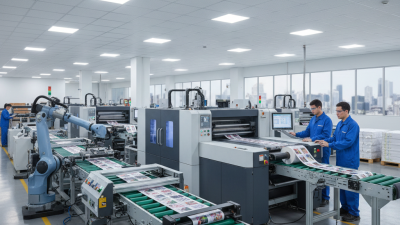
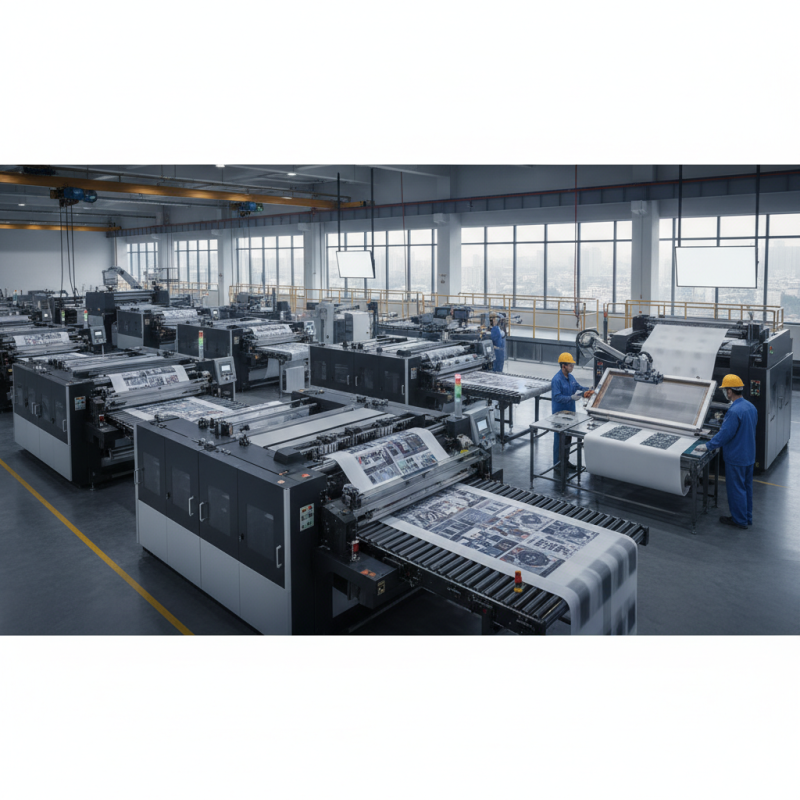
Industrial printing techniques play a crucial role in manufacturing. They transform diverse materials into customized products. These methods vary significantly, each catering to specific applications and needs.
One essential technique is flexography, known for its speed and efficiency. It uses flexible relief plates, allowing for high-volume printing on various substrates. Another vital method is screen printing, often used for textiles and promotional items. This technique involves pushing ink through a mesh screen, creating vibrant designs.
Digital printing has gained popularity for its precision and flexibility. It allows for short runs and quick turnaround times. However, sometimes the color accuracy may not match traditional methods. Offset printing remains a reliable choice for bulk jobs, offering superior print quality but requiring longer setup times. Understanding these techniques helps industries choose the right one for their projects. Each method has its strengths and weaknesses, leading to reflections on what works best for individual needs.
Top 10 Industrial Printing Techniques You Need to Know
| Technique |
Description |
Materials Used |
Best For |
| Flexography |
A relief printing technique that uses flexible plates. |
Plastic films, paper, metal foils |
Packaging, labels |
| Offset Printing |
Uses an intermediate carrier to transfer ink onto the substrate. |
Paper, cardboard |
Books, magazines, brochures |
| Digital Printing |
Direct printing from digital files to various media. |
Paper, vinyl, fabric |
Short runs, custom jobs |
| Screen Printing |
Ink is pushed through a mesh screen onto the substrate. |
Textiles, plastics, glass |
Apparel, signage, labels |
| Gravure Printing |
Involves incising an image onto a surface to create a printing plate. |
Plastic, paper |
High-volume printing, magazines |
| 3D Printing |
Additive manufacturing process to create three-dimensional objects. |
Plastics, metals, ceramics |
Prototype creation, customized products |
| Pad Printing |
Transfers ink from a silicone pad onto a surface. |
Various substrates |
Complex shapes, small items |
| Letterpress Printing |
Relief technique where the design is raised above the printing surface. |
Paper, cardstock |
Stationery, invitations |
| Lithography |
Printing based on the immiscibility of oil and water. |
Paper, offset plates |
Art prints, education materials |
Screen Printing: Advantages and Applications
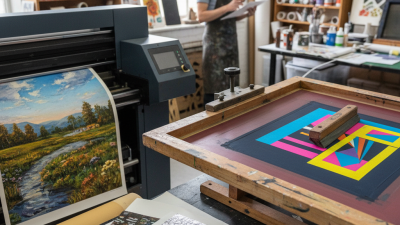
Screen printing is a versatile technique widely used in industrial applications. It offers unique advantages that make it a popular choice for various products. One key feature is its ability to print on diverse surfaces, including textiles, plastics, and metals. This flexibility allows designers to explore innovative ideas.
The process involves transferring ink through a mesh screen onto the desired material. This method can create vibrant colors and intricate designs. It also supports large-scale production, making it efficient for bulk orders. However, it is essential to consider potential limitations, such as the need for specialized equipment and skilled operators.
Despite its strengths, screen printing can sometimes lead to inconsistencies. Ink flow may vary, affecting the final product. Understanding these challenges is crucial in achieving high-quality results. Embracing imperfections can drive creativity and improvement in the final outputs. Using screen printing properly can open new horizons in the industrial realm.
Digital Printing: Innovations and Benefits
Digital printing has revolutionized the way industries approach printing. Its rapid growth is backed by a CAGR of over 6.5% from 2021 to 2026, according to industry reports. This technique allows for quick turnaround times and lower setup costs, which attracts businesses looking to optimize production efficiency. Additionally, digital printing produces vibrant colors and high-resolution images, making it ideal for a variety of applications.
One promising innovation in digital printing is the emergence of eco-friendly inks. These inks reduce environmental impact while maintaining quality. For example, water-based inks have gained traction due to their reduced volatile organic compounds (VOCs) and sustainable production methods. Trade publications highlight these advancements, noting that up to 40% of printers now prioritize eco-conscious options in their operations.
Despite the advantages, challenges remain. Many industries still rely on traditional printing methods due to concerns about durability and long-term performance of digital prints. Furthermore, some businesses struggle with transitioning to digital printing systems, fearing high initial investments and technical learning curves. Addressing these concerns is essential for wider adoption in the market.
Flexographic Printing: Characteristics and Use Cases
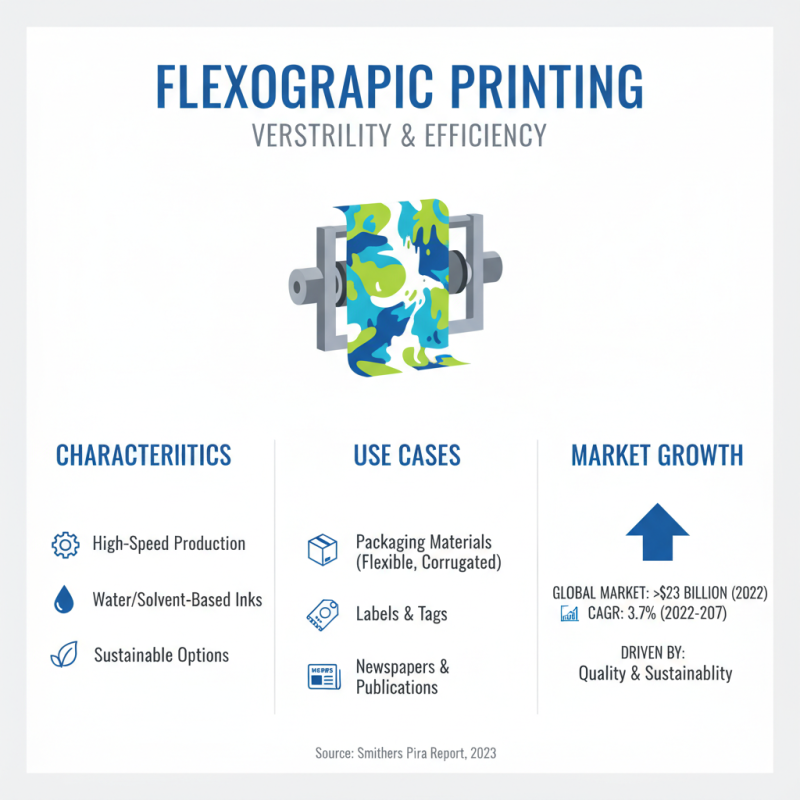
Flexographic printing stands out in the industrial landscape due to its versatility and efficiency. This technique is widely used for packaging materials, labels, and even newspapers. According to a report by Smithers Pira, the global market for flexographic printing exceeded $23 billion in 2022 and is expected to grow at a compound annual growth rate of 3.7% through 2027. This highlights the increasing demand for high-quality prints and sustainable printing solutions.
One notable characteristic of flexographic printing is its ability to work with various substrates. It effectively prints on paper, film, and other flexible materials. This adaptability is crucial in today's fast-paced market. For instance, food packaging requires both durability and flexibility. However, ensuring color accuracy can sometimes be challenging. A mismatch in ink formulation or roller settings may lead to quality issues. Brands must continuously refine their processes to achieve the desired results.
Flexographic presses often operate at high speeds, making them efficient for large production runs. Yet, it's essential to monitor wear and tear. Regular maintenance can prevent delays and ensure quality. The technology uses water-based inks, making it an eco-friendlier option. However, not all materials respond well to these inks. Continuous research is necessary to enhance performance and ensure broader compatibility, underscoring the need for ongoing innovation in this field.
Offset Printing: Process and Industrial Relevance
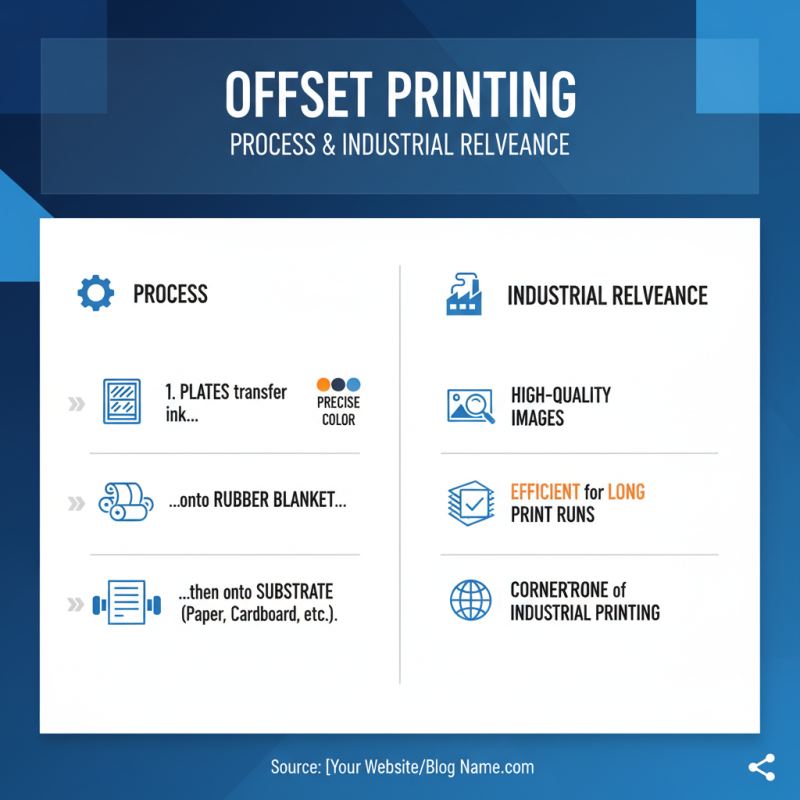
Offset printing is a cornerstone of the industrial printing landscape. This technique uses plates to transfer ink onto a substrate. It allows for high-quality images and precise color reproduction. The process is efficient for long print runs. Paper, cardboard, and other materials are commonly used.
One critical aspect of offset printing is the setup time. Preparing the plates and aligning the press can take considerable effort. This might discourage smaller print jobs. However, the cost-effectiveness for larger volumes often outweighs the drawbacks. Printers can achieve stunning results, but they must manage material waste.
Another challenge lies in maintaining consistency throughout the print run. Variations can occur due to ink viscosity or paper quality. Regular calibration is necessary to ensure each print meets standards. Understanding these nuances is vital for achieving industrial quality. Offset printing's reliability makes it a preferred choice in many sectors. Yet, it requires continuous learning and adjustment.