
Top 10 SUS304L Stainless Plate Suppliers Worldwide?

Choosing among the Top 10 SUS304L Stainless Plate Suppliers Worldwide requires more than comparing online prices. Sus304l Stainless Plates are low-carbon austenitic materials designed for corrosion resistance, weldability, and demanding fabrication work. Their performance still depends on chemistry, thickness, surface finish, heat treatment, and production control.

As metallurgist Joseph R. Davis puts it, “Stainless steel performance depends on composition, structure, and processing.” That principle should guide every supplier comparison. Reliable manufacturers provide mill test certificates, heat numbers, chemical analysis, mechanical results, and traceable inspection records. Buyers should also check whether suppliers support PMI testing, ultrasonic inspection, precise cutting, and export-ready packaging.

Details matter.

A plate may look bright and clean, yet contain dimensional variation or incomplete documentation. A reputable supplier should explain whether the material meets ASTM A240, EN 10088, or another required specification. Surface options may include 2B, No. 1, brushed, or polished finishes. Each choice affects appearance, fabrication, cleaning, and cost.

This worldwide supplier review considers product consistency, technical support, production capacity, delivery reliability, and customer experience. It also examines practical issues, including wooden crate protection, moisture control, and communication during shipment. Rankings are useful, but never absolute. Prices change, lead times move, and one supplier may suit a food-processing project better than a chemical-processing plant.

That is the uncomfortable part.

No list can replace independent verification. Before placing an order, confirm certificates, samples, tolerances, and after-sales responsibility. A careful decision begins with evidence, not an impressive catalog.
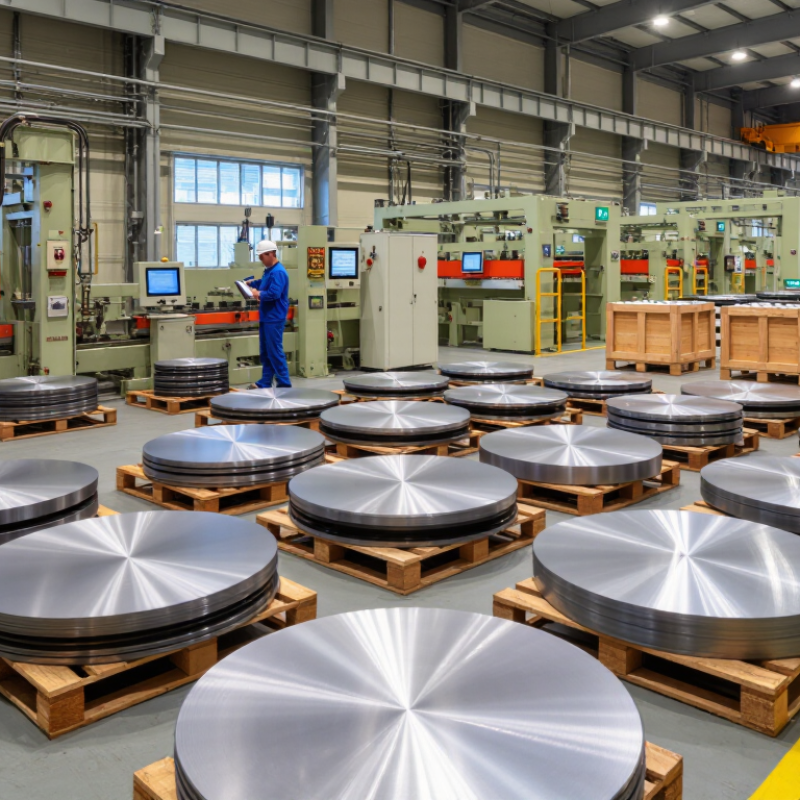
Top 10 SUS304L Stainless Plate Suppliers Worldwide?

What Is SUS304L Stainless Plate?

SUS304L stainless plate is a low-carbon austenitic stainless steel. The “L” means carbon content is limited to 0.030% maximum under JIS G4304 and ASTM A240/A240M practices. Its typical composition contains about 18% chromium and 8% nickel. This structure provides good formability, toughness, and resistance to atmospheric corrosion. It is widely used for tanks, food-processing equipment, welded frames, and architectural panels.

SUS304L is especially useful after welding. Lower carbon reduces the risk of chromium carbide precipitation near welds. That detail helps protect corrosion resistance in heat-affected areas. However, it is not immune to pitting, saltwater attack, or contamination from carbon steel tools. The International Stainless Steel Forum reported global stainless crude steel production at about 58.4 million tonnes in 2023. This figure shows strong industrial demand, but it does not prove every plate suits every environment. Test conditions matter. Supplier certificates should confirm thickness, surface finish, heat number, and mechanical properties. ASTM A240/A240M commonly specifies a minimum tensile strength near 515 MPa for Type 304L plate.

Tips: Check the mill certificate before cutting. Keep SUS304L tools clean. Avoid confusing it with ordinary 304 when welding requirements are strict. A careful buyer should also review chloride exposure, plate flatness, and dimensional tolerances. Some assumptions fail in real service.

How Global SUS304L Plate Suppliers Are Evaluated

Top 10 SUS304L Stainless Plate Suppliers Worldwide?

How Global SUS304L Plate Suppliers Are Evaluated

A global SUS304L supplier should be judged beyond price and polished photographs. The International Stainless Steel Forum reported global crude stainless steel production of about 58 million tonnes in 2023. That scale creates choice, but also inconsistent quality between mills, traders, and processors. I compare suppliers through traceable heat numbers, recent mill certificates, and independent inspection records.

Material compliance comes first. SUS304L plates should match the agreed chemical range and mechanical requirements under standards such as ASTM A240 or EN 10088-2. Carbon content matters because the low-carbon grade supports welding performance. I request sulfur, phosphorus, nickel, chromium, tensile strength, yield strength, and elongation data. Vague certificates are warning signs. So are test results without laboratory identification.

Delivery capability needs equal attention. The World Steel Association’s steel market reports repeatedly show how freight disruption and regional demand affect supply planning. Reliable suppliers therefore disclose production location, plate thickness tolerance, surface finish, packing method, and realistic lead times. They should explain whether the material is mill-produced, cut from stock, or sourced through another party. That detail often reveals the real risk.

My evaluation is not perfect. A strong certificate cannot prove every plate is identical. I also check sample markings, packaging photographs, and third-party inspection options before large orders. Lower prices can reflect efficient production, but they can also hide thinner plates, mixed heats, or weak after-sales control. Supplier rankings should remain flexible. Data must be refreshed.

Top 10 SUS304L Stainless Plate Suppliers Worldwide

Top 10 SUS304L Stainless Plate Suppliers Worldwide

The top ten SUS304L stainless plate suppliers worldwide are usually judged by more than production volume. Reliable suppliers provide clear mill certificates, stable chemistry, and accurate thickness control. SUS304L plates should meet recognized standards, such as ASTM A240, EN 10088, or JIS G4304. Buyers should verify the exact grade, surface finish, plate size, and heat number before placing large orders.

Leading suppliers serve markets across Asia, Europe, North America, and the Middle East. Their strongest facilities use spectrometers, ultrasonic testing, and calibrated laser measurement systems. Practical buyers often request 2B, BA, or No.1 finishes, depending on fabrication needs. Protective film, moisture-resistant wrapping, and wooden supports matter during long-distance shipping. Small details can prevent costly scratches.

Delivery records also separate dependable suppliers from ordinary traders. A serious supplier should explain production capacity, inspection timing, minimum order quantities, and replacement procedures. I would not treat a low quotation as proof of value. A supplier may offer excellent steel but weak documentation. That mistake happens. Site audits, sample testing, and recent customer references can reduce the risk. Even then, forecasts remain imperfect, especially when nickel prices and freight costs change quickly.

What Differentiates the Leading Suppliers?

Choosing among the top ten SUS304L stainless plate suppliers requires more than comparing prices. Leading suppliers control chemistry, heat treatment, surface quality, and delivery evidence. The ISSF Stainless Steel in Figures 2024 report recorded about 60 million tonnes of global crude stainless production in 2023. That scale increases choice, but not consistency. SUS304L typically limits carbon to 0.03%, reducing sensitization risk after welding. Buyers should verify this value through heat-level certificates, not website claims. Reliable suppliers provide ASTM A240 or EN 10088 compliance, plus EN 10204 3.1 documentation. Small detail. Big consequence.

The strongest suppliers also show process discipline. Ask for furnace traceability, plate identity, dimensional inspection, and ultrasonic testing when thickness requires it. Independent inspection can confirm thickness tolerance, flatness, tensile strength, and surface condition. The OECD Steel Market Developments report continues to highlight global excess capacity, so low pricing may reflect aggressive utilization rather than better efficiency. Delivery reliability matters too. Regional stock, careful packing, and documented claims handling reduce project delays. Still, certificates can contain errors. Review them.

Tips: Request a recent mill certificate before placing a trial order. Match the heat number on the plate, tag, and certificate. Specify finish, thickness tolerance, edge condition, and packing. For welded vessels, ask for solution-annealing details and independent PMI testing. Compare at least three quotations using identical specifications. Otherwise, the “cheapest” offer may not be comparable. Keep one sample for visual and dimensional checks; simple checks often expose larger weaknesses.

Top 10 SUS304L Stainless Plate Suppliers Worldwide? – What Differentiates the Leading Suppliers?
Profile Primary Supply Region Relevant Material Designations Common Plate Thickness Availability Typical Surface Finishes Common Width Availability Quality Documentation Key Differentiating Capability
01 East Asia SUS304L; UNS S30403; EN 1.4307 Approximately 0.5–100 mm, subject to mill capacity 2B, BA, No. 1, No. 4, HL Commonly 1,000–2,000 mm; wider formats may be available Mill test certificate, chemical analysis, mechanical test results, dimensional report Broad stock range and competitive production of standard cold-rolled and hot-rolled plate
02 South Asia SUS304L; ASTM A240 Type 304L; UNS S30403 Approximately 0.6–80 mm, depending on rolling route 2B, No. 1, No. 4, HL, polished finishes Typically 1,000–2,000 mm EN 10204 3.1 certificate, PMI reports, tensile and hardness results Flexible export packing, project cutting, and customized plate processing
03 Western Europe EN 1.4307; X2CrNi18-9; ASTM 304L equivalent Approximately 0.5–60 mm in standard distribution channels 2B, 2R/BA, 1D, 2J, 2K, 2P Frequently stocked in 1,000–1,500 mm widths EN 10088-2 compliance, EN 10204 inspection certificate, traceability records Strong European standards compliance and detailed material traceability
04 North America UNS S30403; ASTM A240 Type 304L Approximately 0.018–4 in, with heavier plate available by order No. 1, 2B, 2D, BA, No. 4 Commonly 48–60 in; wider products depend on source ASTM/ASME test documentation, MTR, heat traceability, PMI when specified Fast regional distribution and strong support for ASTM-based engineering projects
05 Japan and South Korea SUS304L; JIS G4304; JIS G4305; UNS S30403 Approximately 0.4–50 mm for common plate and sheet products No. 1, 2B, BA, No. 4, HL Typically 1,000–1,524 mm JIS inspection records, heat numbers, mechanical and chemical test data Consistent surface quality, tight dimensional control, and strong JIS expertise
06 Southeast Asia SUS304L; ASTM A240 Type 304L; EN 1.4307 Approximately 0.5–40 mm from regular stock programs 2B, BA, No. 1, No. 4 Commonly 1,000–1,500 mm Mill certificates, packing lists, dimensional inspection reports Efficient regional logistics and service for fabrication and construction projects
07 Middle East ASTM A240 Type 304L; UNS S30403; EN 1.4307 Approximately 1.0–50 mm through regional stock and import channels 2B, No. 1, No. 4, brushed finishes Usually 1,000–2,000 mm, depending on imported source MTC, third-party inspection reports, PMI, origin and conformity documents Project-oriented supply, inspection coordination, and heavy-plate sourcing
08 Oceania AS/NZS 3678-related project requirements; ASTM A240 Type 304L; UNS S30403 Approximately 0.8–50 mm, often supplied through distributors 2B, No. 1, No. 4, BA Commonly 1,000–1,500 mm MTC, heat traceability, dimensional reports, and project compliance documents Local inventory, cutting services, and support for remote project delivery
09 Latin America SUS304L; ASTM A240 Type 304L; EN 1.4307 Approximately 0.6–40 mm through local and imported supply 2B, No. 1, No. 4, polished finishes Typically 1,000–1,500 mm MTC, chemical composition, tensile data, and import conformity documents Import coordination, multilingual technical support, and regional fabrication access
10 Global Stockholding and Service Centers SUS304L; UNS S30403; EN 1.4307; ASTM A240 Type 304L Approximately 0.5–100 mm, depending on inventory and sourcing network 2B, BA, No. 1, No. 4, HL, custom polished surfaces Standard widths plus cut-to-size formats Original mill certificate, re-certification records, PMI, and cutting traceability Multi-region inventory, rapid cutting, smaller minimum quantities, and consolidated delivery
Technical note: SUS304L is the low-carbon 304 stainless steel grade, commonly identified as UNS S30403 and EN 1.4307. The listed thicknesses, widths, finishes, standards, and documentation represent commonly available industry ranges; actual availability depends on the supplier’s mill, service center, country, order quantity, and project specification.

How to Select the Best SUS304L Plate Supplier

Selecting a SUS304L stainless plate supplier requires more than comparing a price sheet. In practical purchasing, the first question is whether the supplier can match your required standard, thickness, width, and surface finish. Ask for the applicable specification, such as ASTM A240 or EN 10088, before discussing volume. SUS304L normally carries a low-carbon limit, but the certificate should show the actual chemistry, not only the grade name. Small details matter.

Request a heat-by-heat mill test certificate with carbon, chromium, nickel, tensile strength, yield strength, and elongation results. Check whether an independent laboratory can verify samples when the order is critical. A serious supplier should explain testing methods, tolerance control, edge condition, and flatness in plain language. Ask for heat numbers on plates, bundles, labels, and shipping documents. Traceability must survive transport.

Visit the production site when possible, or arrange a video inspection of the rolling, cutting, finishing, and packing areas. Look for dry storage, protected corners, and clear identification. Confirm lead time, replacement terms, export packing, and corrosion protection during sea freight. A low quote can be attractive, yet it may exclude testing or careful packing. I have seen specifications assumed rather than written; that mistake is expensive. No checklist is perfect. Leave room for a pre-shipment inspection and a final review of the first delivery.

t