Top 10 Thermal Shipping Labels 4x6 Types for Buyers?

The humble label carries a surprisingly heavy responsibility. In a crowded fulfillment center, a 4x6 label must survive conveyor friction, cold storage, rain, scanning, and rushed handling. Thermal Shipping Labels 4x6 remain popular because they print quickly, require no ink cartridges, and fit common parcel workflows. Still, “popular” does not always mean “best.”

Pitney Bowes’ 2024 Parcel Shipping Index reported 161.1 billion parcels worldwide in 2023, a 3.6% annual increase. That volume makes readable, durable labeling more than a small purchasing detail. It affects sorting speed, delivery accuracy, labor time, and customer experience. Zebra Technologies’ 2024 Warehousing Study also points toward faster technology adoption and stronger operational visibility. Labels sit inside that system, even when buyers overlook them.

Adrian Gonzalez, founder of Talking Logistics, often says, “Supply chain is a team sport.” The same principle applies here. A label must work for printers, warehouse staff, carriers, scanners, and customers. Small failures become expensive quickly.

This guide examines the Top 10 Thermal Shipping Labels 4x6 types for buyers, including direct thermal, premium adhesive, recycled, waterproof, removable, and fanfold formats. We compare material, adhesive strength, roll capacity, printer compatibility, and practical cost. Some choices look similar. They are not.

A sensible buyer should test labels on the actual printer, carton, and shipping route. Paper may perform perfectly indoors, then disappoint in humidity. That is the uncomfortable part. No single label wins every application. The best choice depends on handling conditions, scanning demands, and honest operational testing.

Top 10 Thermal Shipping Labels 4x6 Types for Buyers?

Understanding 4x6 Thermal Shipping Labels and Their Main Uses

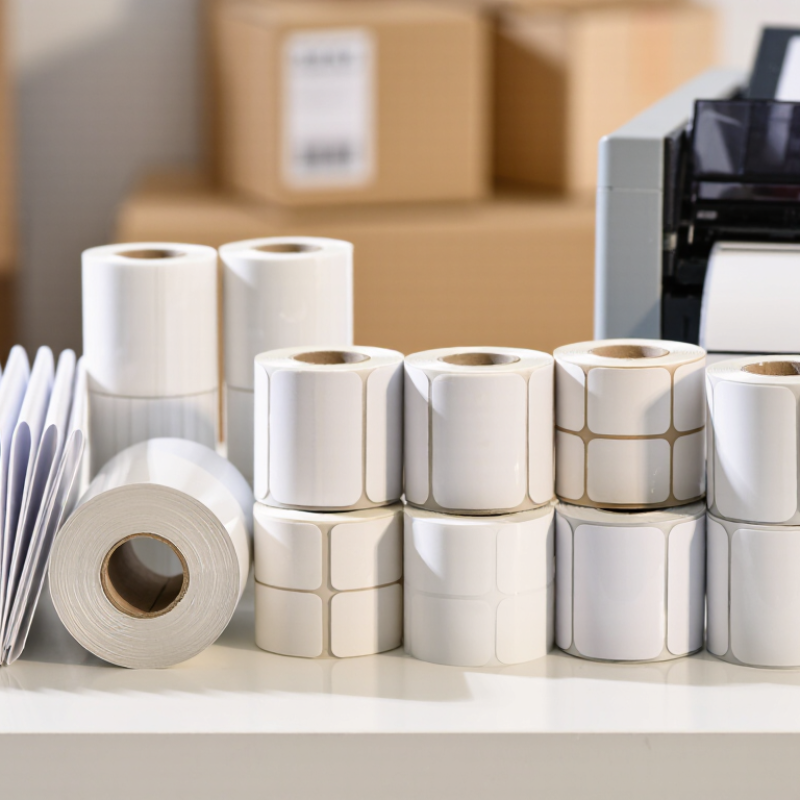
A 4x6 thermal shipping label measures six inches by four inches, fitting many standard parcel containers. Its size leaves room for addresses, tracking codes, service details, and handling information. Direct thermal labels create images through heat, so they need no ink cartridge or ribbon. They are convenient for busy packing stations. Short-term shipments often suit them well. Thermal transfer labels use a ribbon and usually resist heat, moisture, and abrasion better. That durability can matter when packages face outdoor delays or rough handling.

The label’s physical format also affects daily work. Roll labels feed smoothly through compatible printers and suit steady packing lines. Fanfold labels arrive stacked, making them useful when storage space is limited. Permanent adhesive labels stay attached to cardboard, while removable versions can reduce residue on reusable containers. In hands-on packing work, I have found that adhesive strength depends on surface dust, temperature, and cardboard texture. A clean, dry box helps. Small details matter.

Buyers should check printer compatibility, core size, label thickness, and perforation spacing before ordering. A test print can reveal poor alignment or clipped barcodes. Scan it from different angles, not only directly above the box. Weather-resistant materials may help for parcels exposed to rain, but they can cost more. I once assumed every 4x6 label would feed identically; that was a poor assumption. Slight backing differences caused jams. Comparing a small sample before bulk purchasing is slower, yet it prevents waste and interrupted packing.

Comparing Direct Thermal and Thermal Transfer Label Types

For 4x6 shipping labels, buyers usually compare ten practical types: standard direct thermal, premium direct thermal, top-coated direct thermal, removable direct thermal, freezer direct thermal, wax thermal transfer, wax-resin transfer, resin transfer, synthetic transfer, and linerless thermal labels. Direct thermal prints without ribbons, reducing setup time and waste. It suits short-term parcel labels, especially indoor shipments. However, heat, sunlight, and friction can darken or fade the image. That weakness is easy to underestimate.

Thermal transfer uses a ribbon to create a more durable image. Wax ribbons work well on ordinary paper. Wax-resin improves resistance to smearing and moisture. Resin performs best on synthetic stock and demanding surfaces.

Smithers’ label industry analysis identifies pressure-sensitive labels as the largest label technology by volume, while logistics and e-commerce remain major demand drivers. The 2024 Pitney Bowes Parcel Shipping Index also reported U.S. parcel volume above 20 billion shipments in 2023. That scale makes reliable scanning important.

For warehouses, freezer rooms, or long storage, transfer labels often justify their higher material cost. For fast-moving parcels, direct thermal can be simpler and cheaper. Not always, though. Printer settings, adhesive quality, and storage conditions can change the result.

Buyers should test a printed 4x6 sample under heat, rubbing, moisture, and cold before ordering thousands. A label that looks perfect on a desk may fail beside a loading dock.

Reviewing the Top 10 4x6 Label Materials and Formats

Choosing a 4x6 thermal shipping label starts with the material, not the printer. That size dominates parcel workflows because scanning surfaces must stay readable during fast handling. The Pitney Bowes Parcel Shipping Index reported 161.1 billion parcels worldwide in 2022. That scale makes adhesive failure expensive, even when each label costs only cents. However, volume alone does not justify buying the thickest stock.

Direct-thermal paper is economical for short-term shipping. It prints without a ribbon and keeps operations simple. Thermal-transfer labels suit longer storage, outdoor exposure, or rough surfaces. They use a ribbon and usually deliver stronger image durability. White paper works for ordinary cartons, while synthetic polypropylene or polyethylene handles moisture better. Polyester offers higher resistance, but it can cost more than the application needs. Smithers’ 2024 label-market analysis projects the global labels market to exceed 50 billion dollars by 2028, reflecting continued demand for reliable identification materials.

Format choices deserve equal attention. Roll labels support automated applicators and reduce manual feeding. Fanfold stacks can work better in compact workstations. Perforated sheets simplify separation, but poor perforations can interrupt packing speed. A permanent adhesive fits corrugated cartons; removable adhesive may protect reusable containers. Check the 3-inch core, outside roll diameter, liner stiffness, and printer calibration before ordering. Small details matter.

I would not call paper the universal winner. It is often the practical winner. Test labels on cold cartons, dusty boxes, and curved surfaces before committing to a full purchase. That step is sometimes skipped, and the mistake becomes visible too late.

Evaluating Printer Compatibility, Adhesive Strength, and Durability

Top 10 Thermal Shipping Labels 4x6 Types for Buyers

Choosing a 4x6 thermal shipping label starts with printer compatibility. Direct thermal labels usually need no ribbon, but printer settings still matter. Check the supported label width, core size, roll direction, and sensor type. Fanfold, roll, perforated, continuous, and removable formats can behave differently inside the same machine. A test sheet is essential. Small alignment errors can waste an entire stack.

Adhesive strength deserves practical testing, not just a product description. Permanent adhesive suits corrugated boxes, while removable adhesive works better for reusable containers. Stronger glue is not always better. It may tear paperboard or leave residue on plastic surfaces. Apply samples to cardboard, poly mailers, and recycled cartons. Then rub, bend, and peel them after several hours. Humidity can expose weaknesses quickly.

Durability depends on heat, friction, moisture, and storage time. Standard paper labels often suit indoor shipping routes with limited exposure. Synthetic labels can resist splashes, abrasion, and rough handling more effectively. Freezer-grade, weather-resistant, colored, and security-style options serve narrower needs. I once trusted a clean indoor test too much. Outdoor handling revealed edge lifting. That mistake changed my process. Test printed barcodes after storage, not immediately. Dark, sharp images should remain readable under ordinary warehouse lighting. Even then, no label type fits every shipment.

Top 10 Thermal Shipping Labels 4x6 Types for Buyers

Comparative evaluation of common 4×6 direct thermal label types by printer compatibility, adhesive strength, and durability. Scores use a 1–5 category index based on typical material and adhesive performance; actual results vary by printer, surface, temperature, and storage conditions.

Higher scores indicate broader compatibility, stronger adhesion, or better resistance to moisture, abrasion, heat, and aging. Standard paper labels generally provide the best value, while synthetic and freezer-grade constructions offer improved durability in demanding environments.

Choosing the Right 4x6 Thermal Label for Your Shipping Needs

Top 10 Thermal Shipping Labels 4x6 Types for Buyers

Choosing the Right 4x6 Thermal Label for Your Shipping Needs

A 4x6 label measures about 102 × 152 millimeters. It fits most parcel workflows and supports clear barcodes. Pitney Bowes’ Parcel Shipping Index 2024 recorded 161.8 billion global parcels in 2023. That volume makes dependable label selection important. Direct thermal labels suit short-term shipments and need no ribbon. Thermal transfer labels use a ribbon and resist heat, moisture, and abrasion better. Choose rolls, fanfold stacks, or linerless formats based on printer design and packing speed. Adhesive strength also matters on corrugated boxes, recycled cartons, and plastic mailers.

Check the printer’s core size, maximum roll diameter, print density, and sensor position. A glossy coating may look attractive, yet it can reduce scan consistency. Test blackness, edge sharpness, and peeling after 24 hours. Smithers’ report, The Future of Thermal Printing to 2028, identifies logistics and retail as continuing demand centers for thermal printing. Still, market growth does not guarantee every label performs well in your warehouse. I have seen cheap stock curl near loading doors. Small details matter.

Tips: Match the adhesive to the carton surface and storage temperature. Use direct thermal stock for routine labels with limited exposure. Select thermal transfer stock for outdoor handling or long storage. Print a sample barcode before purchasing a full case. Leave space for carrier data and quiet zones. Review failed scans weekly. That habit often reveals poor calibration, not poor labels.

Top 10 Thermal Shipping Labels 4x6 Types for Buyers? - Choosing the Right 4x6 Thermal Label for Your Shipping Needs

No. 4x6 Thermal Label Type Best For Typical Construction and Format Durability and Environmental Performance Main Advantages Potential Limitations Key Buying Checks
1 Most versatile
Standard direct thermal paper labels
Routine parcel shipping, online orders, warehouses, and carrier-compliant address labels. Usually a 4 x 6 inch sheet or roll; heat-sensitive paper with permanent pressure-sensitive adhesive; commonly available on 1-inch cores. Suitable for normal indoor distribution and short-to-medium shipping cycles. Sensitive to prolonged heat, direct sunlight, friction, and some chemicals. No ink or toner required; simple printer setup; low operating complexity; widely compatible with 4 x 6 thermal printers. Printed images can fade or darken when exposed to heat, sunlight, plasticizers, or abrasion. Confirm printer compatibility, roll orientation, core size, outside diameter, adhesive type, and the paper's heat and light resistance.
2 High-volume choice
Fanfold direct thermal labels
High-volume fulfillment stations, palletized case shipments, and operations that prefer easy stack feeding. Connected 4 x 6 inch sheets folded into a stack, often with perforations between labels; supplied in counted packs. The label face has similar thermal sensitivity to standard direct thermal paper. The folded stack is convenient but needs dry, clean storage. Fast loading; compact storage; easy label counting; reduced roll changes; useful for batch printing. Requires a printer designed for fanfold media or a suitable rear-feed path; folded edges can be damaged by poor handling. Check feed-path clearance, stack height, perforation quality, print-side orientation, and whether the printer supports fanfold stock.
3 Longer-term use
High-sensitivity direct thermal labels
Fast printing, high-throughput parcel lines, and printers operated at lower heat or speed settings. Heat-sensitive coated paper formulated to produce a readable image with less thermal energy than standard grades; available in 4 x 6 formats. Print longevity still depends on the thermal coating. It is not automatically resistant to ultraviolet light, heat, or chemicals. Can support faster throughput or lower print energy; often produces strong black contrast at suitable printer settings. May cost more; excessive print-head heat can cause darkening or reduce image stability. Request print samples at the intended speed and darkness; compare barcode contrast, smudge resistance, and storage-life requirements.
4 Outdoor handling
Weather-resistant synthetic thermal labels
Parcels exposed to rain, condensation, cold storage, rough handling, or short outdoor staging. Synthetic face stock, commonly polypropylene or polyester, with a thermal-receptive surface and permanent adhesive. Better resistance to moisture, tearing, and abrasion than ordinary paper. The thermal image may still be affected by ultraviolet exposure and extreme heat. Does not readily absorb water; resists tearing; maintains label integrity on difficult delivery routes. Higher material cost; some synthetic surfaces require compatible printer settings; adhesive performance varies by temperature. Verify moisture, abrasion, temperature, and UV ratings; test adhesion on corrugated cartons, plastic totes, or poly mailers.
5 Easy removal
Removable direct thermal labels
Reusable bins, returnable transport packaging, rental equipment, and temporary shipment identification. Direct thermal paper or synthetic face stock paired with a removable pressure-sensitive adhesive; commonly supplied in 4 x 6 rolls. The adhesive is designed for clean or easier removal, but performance changes with surface energy, storage time, temperature, and humidity. Helps reduce residue and surface damage; useful when labels must be removed after delivery or inspection. May adhere less strongly to dusty, cold, rough, or highly textured surfaces; not ideal for every long-transit application. Test removal after the planned dwell time; check residue, edge lift, carton fiber pull, and performance on the actual packaging material.
6 Secure attachment
Strong-adhesion direct thermal labels
Corrugated cartons, recycled cardboard, dusty warehouse surfaces, and shipments requiring firm label attachment. Thermal-coated paper or synthetic stock with a higher-tack permanent adhesive; available in roll and fanfold 4 x 6 formats. Good attachment depends on surface cleanliness, pressure, dwell time, and temperature. The paper face remains vulnerable to moisture unless protected. Improves adhesion on challenging shipping surfaces; reduces edge lift and label loss during handling. Can tear fibers or leave residue during removal; difficult to reposition once applied. Review peel and shear data, application-temperature limits, carton compatibility, and whether the adhesive is approved for recycled corrugated surfaces.
7 Returns workflow
Two-per-sheet or integrated return labels
E-commerce orders that need a shipping label plus a return label, packing slip, or customer-facing document in one print cycle. A 4 x 6 shipping label combined with one or more additional thermal sections, separated by perforations or release liners. Performance depends on the paper and adhesive used in each section. Extra seams and perforations require careful handling. Reduces manual insertion; supports organized returns; can combine multiple documents in one production step. Uses more media per order; requires correct software templates and printer calibration; not suitable for every thermal printer path. Confirm panel dimensions, perforation placement, software compatibility, liner direction, and whether all sections need permanent or removable adhesive.
8 Cold-chain use
Freezer- and cold-temperature adhesive labels
Refrigerated or frozen products, temperature-controlled logistics, and parcels applied in cold rooms. Thermal paper or synthetic face stock paired with an adhesive formulated for low-temperature application or service. Designed to retain adhesion under specified cold conditions. Condensation, frost, and wet surfaces can still reduce bonding. Better initial tack and holding power in cold environments than general-purpose adhesives. Usually more expensive; standard labels may fail if applied below their recommended temperature range. Check minimum application temperature, service temperature, moisture resistance, freezer dwell time, and required surface preparation.
9 Sustainability option
Recycled-content thermal paper labels
Shipping programs seeking reduced virgin-fiber use while retaining conventional paper-label processing. Thermal-coated paper containing a stated proportion of recycled fiber, typically with permanent or removable adhesive and a standard 4 x 6 format. Suitable for ordinary dry shipping conditions. Moisture, heat, and image life depend on the coating and adhesive specification. Can reduce virgin material consumption; generally compatible with standard direct thermal workflows. Recycled content, surface smoothness, stiffness, and print performance vary by specification; not automatically recyclable with every package stream. Request the verified recycled-content percentage, coating information, adhesive composition, disposal guidance, and barcode print samples.
10 Long-life identification
Top-coated synthetic thermal labels
High-abrasion logistics, reusable containers, long-retention records, and labels requiring stronger surface protection. Polyester or polypropylene face stock with a thermal-receptive layer and a protective top coat; usually paired with permanent adhesive. Offers strong tear and abrasion resistance. Depending on the top coat, it may provide improved resistance to moisture, oils, and handling wear. Durable face material; suitable for demanding environments; supports clearer identification when paper labels would be damaged. Higher cost; not all top coats are compatible with every print head or ribbon-free thermal process; disposal can be more complex than paper. Confirm direct-thermal compatibility, chemical and abrasion resistance, adhesive temperature range, print-head requirements, and end-of-life handling.
t