
What Does a Ring Mechanism Manufacturer Make?
A Ring Mechanism Manufacturer turns formed metal components into the opening and closing hardware inside binders and presentation folders. Its work may include stamping steel strips, shaping rings, fitting levers, and attaching the mechanism to a metal baseplate. A finished unit can look simple. The fit must still be precise: rings should meet cleanly, open without excessive force, and remain aligned after repeated use.
The scale of steel production provides useful context, though it does not measure binder hardware output. World Steel Association’s World Steel in Figures 2024 reports that global crude steel production reached 1,892.2 million tonnes in 2023. That figure describes the wider material supply chain, not ring mechanisms specifically. This distinction matters. A manufacturer’s quality depends on its own tooling, material specifications, and inspection routines—not on steel output alone.
In practice, buyers may compare ring shape, capacity, mounting-hole spacing, finish, and compatibility with the binder cover. Manufacturers often produce different configurations, such as round-ring and D-ring mechanisms, for different filing needs. They may also inspect samples for smooth movement, secure rivets, and consistent alignment. Small flaws show up quickly. A stiff lever or uneven ring gap can frustrate users, even when the binder looks polished. It is worth noting that testing methods and quality thresholds vary between suppliers. This article explains what manufacturers make, how the components are produced, and which details buyers should verify before choosing a supplier.
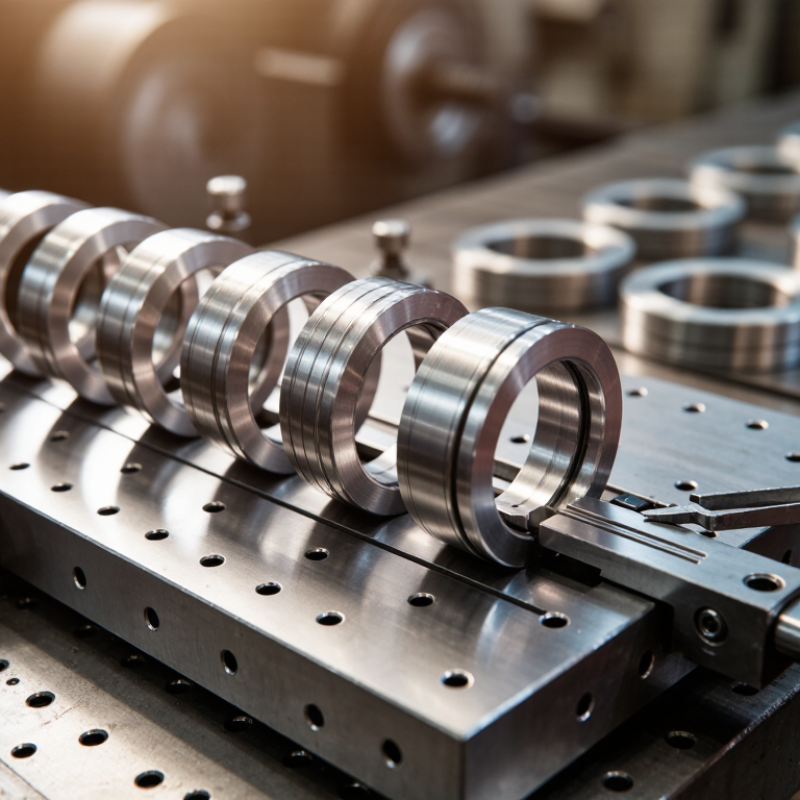
What a Ring Mechanism Manufacturer Produces
A ring mechanism manufacturer produces the metal assembly that holds punched sheets inside a binder. Its main parts are steel rings, a mounting plate, and an opening lever. Depending on the design, the mechanism may have two, three, or four rings. Ring diameter and spacing determine how much paper the binder can hold and which punched pages will fit.
Production often involves cutting and stamping sheet steel, then forming each ring into a smooth curve. Workers or automated equipment join the rings to a base plate and fit the release lever. Edges are checked for burrs that could catch paper or scratch fingers. Some mechanisms receive a protective finish to limit corrosion and improve appearance. The details matter. A ring that sits slightly out of line may make pages turn unevenly.
Manufacturers also inspect opening and closing action, ring alignment, and attachment strength. A practical check is to load sample pages, operate the lever several times, and look for gaps where paper might slip out. Small details count. A mechanism can look polished and still feel stiff in use, so real handling reveals issues that a quick visual check may miss. The finished assembly is then supplied for installation in a binder cover.
What Does a Ring Mechanism Manufacturer Make? — What a Ring Mechanism Manufacturer Produces
| Product or Component | Typical Materials | Common Configurations | Purpose | Typical Applications |
|---|---|---|---|---|
| Ring mechanisms | Formed steel rings attached to a metal mounting plate | Two-, three-, and four-ring layouts; round or D-shaped rings | Hold loose sheets in place while allowing pages to be added, removed, or rearranged | Ring binders, presentation folders, planners, and document files |
| Ring assemblies | Steel rings, a base plate, and a movable opening mechanism | Lever-operated or manually opened designs; ring spacing matched to the intended binder format | Provide a complete page-holding unit ready to be mounted inside a cover | Office binders, school folders, and archival filing products |
| Mounting plates and backplates | Stamped or formed steel, sometimes with a protective finish | Different lengths, widths, hole patterns, and plate profiles | Support the rings and provide attachment points for installation in a binder cover | Hard-cover binders, portfolio folders, and custom document holders |
| Ring-opening hardware | Steel components, including levers, hinges, and linkages | Lever-actuated or direct manual opening, depending on the mechanism design | Open and close the rings so users can insert or remove punched sheets | Binders designed for frequent page changes |
| Fastening and attachment parts | Metal rivets, eyelets, or other mechanical fasteners | Fastener size and placement selected to suit the mechanism and cover construction | Secure the mechanism assembly to the binder or folder | Production of finished binders and folders |
| Custom mechanism specifications | Material and finish selected for the intended product requirements | Specified ring count, ring shape, plate dimensions, mounting-hole pattern, and finish | Match the mechanism to a particular cover format, paper size, or product design | Special-format binders, planners, and presentation products |
Note: Exact dimensions, ring spacing, finishes, and sheet capacity vary by mechanism design. Sheet capacity also depends on paper weight, hole punch pattern, and how the pages are used.