
What Is a Cone Mantle Liner?

A Cone Mantle Liner is a replaceable wear component installed on the moving mantle of a cone crusher. It works with the bowl liner to compress rock inside the crushing chamber. As the mantle rotates and approaches the concave, large stones break into smaller, controlled sizes. This process supports aggregate, mining, and recycling operations where stable crushing performance matters.

The liner’s profile affects feed entry, crushing pressure, product shape, and power use. Its material must resist repeated impact and abrasive contact. Common choices include manganese steel and other engineered wear alloys, selected according to rock hardness and operating conditions. Experienced operators inspect the mantle surface for uneven wear, cracks, loose seating, and changes in product grading. Small wear patterns can reveal larger issues. Poor alignment or unsuitable closed-side settings may shorten liner life.

Selecting a Cone Mantle Liner requires more than matching a model number. Feed size, moisture, chamber design, liner profile, and expected production should be reviewed together. Manufacturer specifications remain essential, but field measurements often expose details that catalogues cannot show. A worn liner may still appear usable while reducing capacity and increasing energy demand. That assumption deserves careful checking. Safe replacement procedures, proper tightening, and routine inspections help protect both equipment and personnel. Actual service life varies widely, so reliable decisions should come from operating records rather than promises. The best liner is not always the hardest one. It is the one that fits the crusher, the material, and the intended product consistently.
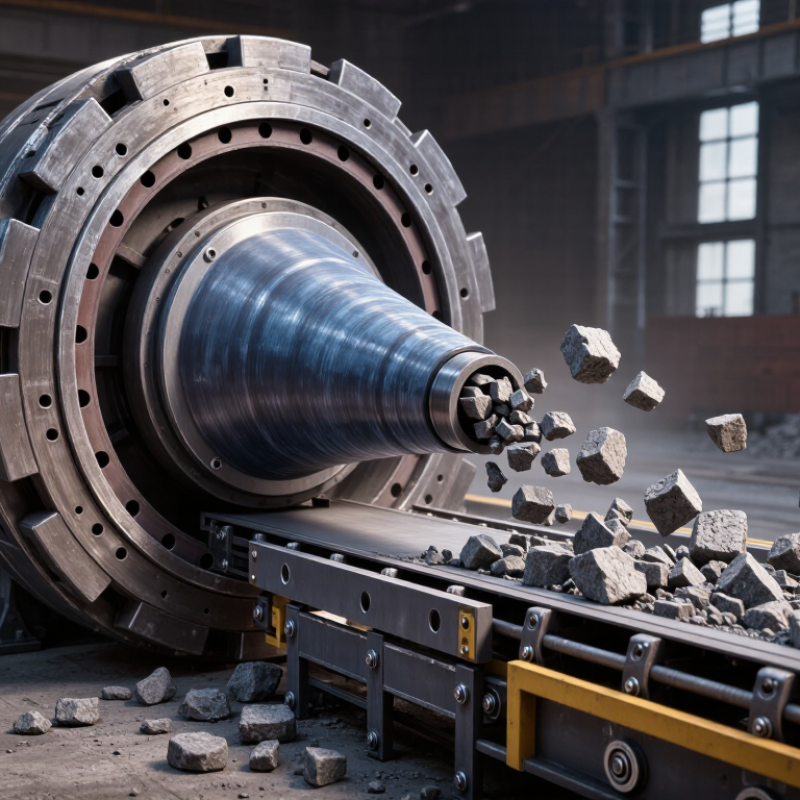
What Is a Cone Mantle Liner?

What Is a Cone Mantle Liner? Definition, Role, and Crusher Position

What Is a Cone Mantle Liner?

A cone mantle liner is a replaceable, hardened wear component inside a cone crusher. It covers the moving crushing cone. During operation, the mantle rotates and gyrates close to the fixed bowl liner. The narrow gap compresses rock and reduces it to smaller pieces.

Its main role is controlled wear protection. The mantle receives repeated impact, pressure, and sliding abrasion from feed material. Its curved surface also helps maintain the intended crushing chamber profile. If the profile changes too much, product size and power demand may shift. That change is easy to miss during a busy production day.

The mantle sits on the central head assembly, below the feed opening and opposite the bowl liner. A locking arrangement holds it firmly while the crusher operates. Correct seating matters. A small gap or uneven contact can create local stress, heat, and premature damage. Maintenance teams should check thickness, cracking, backing condition, and feed distribution. Field inspections often reveal an important detail: a liner can look usable but perform poorly after its profile has worn away. Replacement timing is therefore not based on appearance alone. It depends on measurements, operating data, material hardness, and the required product size. In practice, the definition sounds simple. The decision is not.

How the Mantle Works: Crushing Chamber Geometry and CSS in Millimeters

What Is a Cone Mantle Liner?

How the Mantle Works: Crushing Chamber Geometry and CSS in Millimeters

A cone mantle liner is the replaceable wear surface mounted around the crusher’s moving cone. It works against the fixed concave liner inside the crushing chamber. As the mantle travels through its eccentric motion, rock enters the narrowing space between both surfaces. Compression breaks the feed into smaller pieces.

Chamber geometry controls this process. The mantle angle, liner profile, and feed opening affect how rocks move downward. A steep profile may encourage faster crushing, while a flatter profile can increase retention. These effects depend on material hardness and moisture. The drawing may look precise. Field conditions are less cooperative.

CSS means closed-side setting. It is the smallest distance between the mantle and concave during one rotation. Even a 2 mm change can alter product size, circulating load, and power demand. A tighter CSS usually produces finer material, but it can increase pressure and wear. A wider setting may improve capacity, although oversize particles can rise.

Technicians should verify CSS with a suitable measurement method and record liner wear separately. The initial setting is not the operating setting after several hours. Uneven wear can create a misleading measurement. I have found that checking only one point is a weak habit. Multiple readings, feed samples, and current trends provide better evidence. The liner profile should be inspected when product grading changes unexpectedly.

Material Standards: 12–14% Manganese Steel and Work-Hardening

What Is a Cone Mantle Liner?

A cone mantle liner is the replaceable crushing surface inside a cone crusher. It protects the main cone and shapes the crushing chamber. Its steel must resist repeated impact, sliding abrasion, and sudden load changes. The key specification is usually manganese steel containing about 12–14% manganese. ASTM A128/A128M material tables place many Hadfield steel grades within the broader 11–14% manganese range. That range is deliberate. Carbon content commonly remains near 1%, supporting strength and toughness. Too little manganese can reduce impact resistance. Excessive alloying may complicate casting and raise production costs.

Freshly cast manganese steel is relatively tough and moderately hard. Impact changes everything. The ASM Handbook reports that Hadfield steel surfaces may harden from roughly 200 Brinell hardness to more than 500 Brinell under severe deformation. The working layer becomes hard, while the inner section remains comparatively tough. This balance helps a mantle survive repeated rock contact without cracking easily. Field inspection matters. A liner that looks intact may have developed uneven hardening or localized deformation. Operators should compare wear profiles, feed conditions, and liner life against certified chemistry results. Laboratory hardness alone can mislead. Actual ore size, moisture, chamber pressure, and discharge settings also influence work-hardening. This is where specifications meet imperfect plant reality.

What Is a Cone Mantle Liner? – Material Standards: 12–14% Manganese Steel and Work-Hardening
Data Dimension Typical Specification or Value Engineering Significance
Component Definition Replaceable concave-shaped wear liner fitted around the crushing chamber of a cone crusher It forms one side of the crushing cavity and works against the opposing bowl liner to compress and fracture rock.
Primary Function Protect the supporting crusher body while maintaining the intended crushing profile The liner controls the chamber geometry, product-size reduction, throughput, and wear pattern.
Typical Material Family Austenitic manganese steel, commonly referred to as Hadfield steel This material combines high toughness with the ability to harden during impact and compressive service.
Manganese Content Approximately 12–14% manganese by mass This range supports a stable austenitic structure and provides the basis for impact-induced work-hardening.
Carbon Content Typically about 1.0–1.4% carbon, depending on the casting grade and specification Carbon contributes to strength and wear resistance, but its level must be balanced with toughness and weldability requirements.
Applicable Material Standard ASTM A128/A128M for austenitic manganese steel castings; equivalent national or international specifications may also be used The exact grade should be selected according to the required chemical composition, mechanical properties, casting quality, and service conditions.
As-Cast Hardness Commonly approximately 180–240 HBW after solution treatment; the certified value depends on grade and section thickness Manganese steel is not normally supplied at its maximum service hardness. Its performance develops through work-hardening in operation.
Work-Hardened Surface Often approximately 400–550 HBW in high-impact zones, with local values varying by operating conditions Repeated impact and compressive loading can substantially increase surface hardness while the interior remains relatively tough and ductile.
Work-Hardening Mechanism Plastic deformation caused by repeated impact, compression, and high contact stress The deformed surface resists further abrasive wear, while the tougher core helps reduce brittle fracture.
Recommended Feed Condition Hard, competent rock with sufficient impact and compressive loading to activate work-hardening Very abrasive but low-impact conditions may produce wear before the surface reaches its potential hardened state.
Typical Wear Mechanisms High-stress abrasion, low-stress abrasion, gouging, impact deformation, and localized fatigue Actual liner life depends on feed abrasiveness, feed size, moisture, chamber selection, reduction ratio, and crusher operation.
Heat Treatment Solution treatment followed by rapid water quenching is commonly used for manganese steel castings The treatment helps dissolve unwanted carbide networks and retain a tough austenitic matrix. The supplier’s certified procedure should be followed.
Magnetic Behavior Generally non-magnetic or only weakly magnetic in the fully austenitic condition Cold work, deformation, or local phase changes can increase magnetic response in some areas.
Liner Profile Profile varies by crusher chamber, feed size, target product size, and operating setting A correct profile helps maintain even wear, stable capacity, and an appropriate particle-size distribution.
Minimum Working Thickness Determined by the liner design and crusher manufacturer; replacement is required before structural support or retention is compromised Operating with an excessively thin liner can increase the risk of damage to the seating surfaces and supporting components.
Inspection Parameters Thickness loss, cracking, deformation, seating condition, loose material, and wear-profile symmetry Regular inspection helps prevent liner breakage, chamber distortion, unplanned shutdowns, and secondary equipment damage.
Common Quality Checks Chemical analysis, hardness testing, dimensional inspection, casting-surface examination, and non-destructive testing when specified These checks verify that the liner meets the required material grade, geometry, and casting-quality criteria.
Key Selection Factors Feed abrasiveness, maximum feed size, impact level, closed-side setting, throughput, liner profile, and expected wear life Material composition alone does not determine performance; liner geometry and operating conditions are equally important.
Important Limitation Work-hardening manganese steel is not universally optimal for every duty Low-impact, highly abrasive applications or severe corrosion may require a different wear-material strategy after engineering evaluation.

Wear Measurement: 10–15% Profile Loss and Liner Replacement Criteria

What Is a Cone Mantle Liner?

A cone mantle liner is the replaceable wear surface fitted around a crushing cone. It shields the cone from abrasive stone and repeated impact. During operation, feed pressure gradually changes the liner’s original profile. Its shape affects crushing efficiency, product size, power demand, and chamber balance. A worn liner may look usable while performing poorly.

Wear Measurement: 10–15% Profile Loss and Liner Replacement Criteria

A practical inspection starts with a clean, stopped, and isolated machine. Technicians compare the remaining profile with an approved new-liner template or recorded measurements. Measure it cold. Useful checks include mantle height, key profile points, liner thickness, and visible seating gaps. Ultrasonic thickness testing can support the inspection, but surface measurements alone may miss local damage. Small errors matter.

Ten to fifteen percent profile loss should trigger a detailed review, not an automatic replacement.

The actual limit depends on the liner design, feed material, operating conditions, and approved maintenance data. Replace the liner when wear reaches the specified limit, the crushing chamber loses its intended profile, or cracks and movement appear. Uneven wear deserves attention too. It can signal poor feeding, incorrect settings, or an installation problem.

In field work, relying on one percentage is tempting, but it can be misleading. Record measurements at consistent locations and compare them with production changes, power readings, and vibration trends. A liner that still has metal left may already be economically finished.

Selection Guide: Feed Size, Reduction Ratios, and Service Life

What Is a Cone Mantle Liner?

A cone mantle liner is the moving wear surface inside a cone crusher. It compresses feed against the fixed bowl liner. Selection starts with feed size, not liner price. The U.S. Geological Survey’s Mineral Commodity Summaries 2024 estimated 1.9 billion metric tons of crushed stone were produced in the United States during 2023. That volume makes small liner decisions expensive when they cause recirculation or downtime.

Measure the largest feed, its hardness, moisture, and shape. Keep the feed within the crusher’s rated top size, with practical designs often targeting 80–90% of that limit. A primary application commonly uses a 3:1 to 5:1 reduction ratio. Secondary duty may reach 4:1 to 6:1, but chamber geometry changes the result. ASTM C136/C136M sieve testing can confirm the actual product curve. Do not trust the label alone. Field measurements sometimes disagree with the plant drawing.

Service life depends on abrasion, crushing pressure, feed distribution, and choke feeding. Track operating hours, throughput, power draw, and liner thickness. A flattened mantle profile can increase circulating load before visible damage appears. Replace it when the crushing chamber loses its intended shape, not only when metal looks thin. In my experience, wear estimates are often too optimistic because operators record hours but ignore tonnes processed. That is an imperfect habit. A short daily inspection, with photographs at the same locations, usually reveals uneven wear earlier than a monthly spreadsheet.

t