
Choosing an Oem Fibc For Pharmaceutical Supplier can influence product safety, handling efficiency, and batch consistency. Pharmaceutical powders often move through controlled processes where dust, moisture, and foreign particles create serious concerns. A suitable supplier understands these risks before fabric production begins.
In practice, an experienced OEM partner can design the bag around your filling equipment, discharge method, and storage conditions. The specification may include a conductive fabric, a clean inner liner, food-grade stitching, or a defined safe working load. Small details matter. A liner that fits poorly can wrinkle near the outlet and slow material flow. Weak documentation can create confusion during supplier audits.
Reliable suppliers support traceability through material records, production controls, inspection reports, and retained samples. They should explain how fabrics are tested and how contamination risks are managed. Certifications can be useful, but certificates alone do not prove consistent performance. Site visits, sample evaluations, and clear quality agreements provide stronger evidence.
The best partnership is not always the cheapest option. It should connect technical knowledge with practical manufacturing experience. Ask how the supplier handles design changes, nonconforming bags, and urgent replacement orders. These questions reveal operational maturity. Still, no supplier is perfect. Even a carefully approved design may need adjustment after real filling trials. That uncomfortable lesson is valuable. Continuous review helps ensure the FIBC remains suitable as your process, equipment, or packaging requirements change. A transparent OEM relationship creates confidence without promising more than the evidence supports.
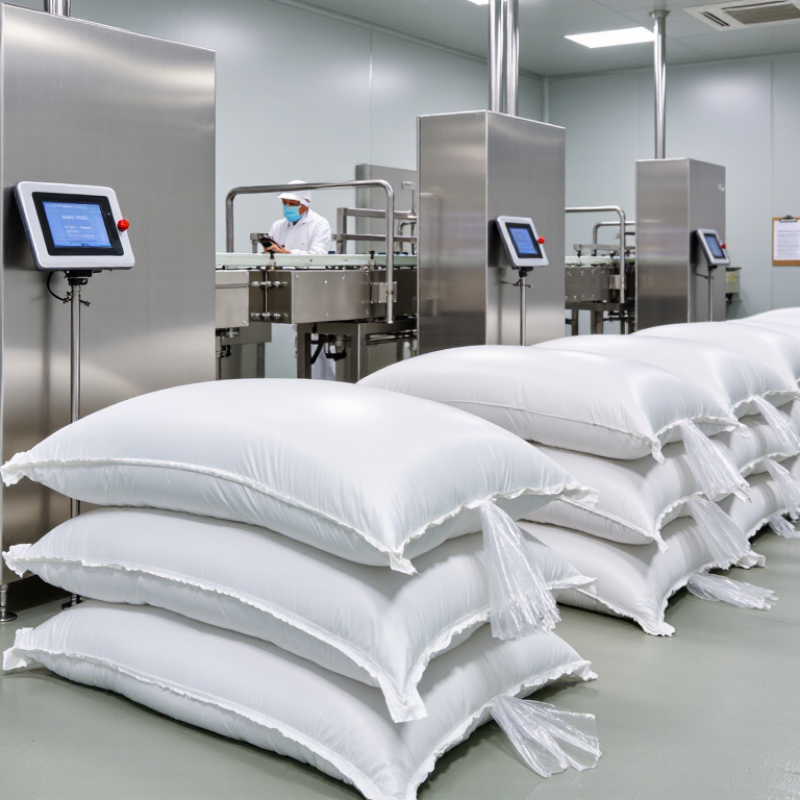
An OEM FIBC pharmaceutical supplier designs and manufactures flexible intermediate bulk containers to a pharmaceutical company’s specific requirements. FIBC means Flexible Intermediate Bulk Container, often used for powders, granules, and other controlled materials. The supplier may customize dimensions, fabric weight, filling ports, discharge outlets, liners, lifting loops, and closure systems.
In pharmaceutical production, customization must support product protection and process control. Suitable suppliers use documented raw materials, controlled manufacturing areas, and trained inspection teams. They may provide material certificates, batch records, cleaning procedures, and test results for strength, leakage, electrostatic performance, and particulate control. Traceability should connect each container to its production batch. That detail matters during an audit.
An experienced supplier also studies how operators handle the container. A poorly positioned outlet can slow discharge or create unnecessary contact risks. A liner that fits badly may wrinkle inside. Small design choices matter. Technical discussions should cover filling equipment, storage conditions, transport routes, and disposal requirements. Samples and trial runs are useful before full production.
No supplier is perfect. A written specification can still overlook a real factory problem. I have seen teams focus on fabric strength while missing awkward lifting access. Regular reviews, documented corrective actions, and clear communication help expose these gaps. The right OEM partner offers more than a printed logo; it provides controlled customization, reliable records, and practical support for pharmaceutical operations.
Pharmaceutical powders demand more than a strong outer container. OEM FIBC bags can be engineered around the product, filling line, discharge method, and storage environment. The supplier should understand powder flow, moisture sensitivity, static control, and contamination risks.
A suitable bag may include a clean inner liner, controlled fabric construction, secure closures, and documented lifting tests. Food-contact materials are not automatically suitable for pharmaceutical handling. Material certificates, batch traceability, inspection records, and cleaning procedures should be available for review. Production areas must also support controlled handling and practical sampling. These details help operators move bulk materials with fewer interruptions and less exposure.
Tips: Define the powder’s density, flow behavior, filling temperature, and discharge equipment before requesting a design. Ask for liner specifications and test evidence, not general promises. Confirm how the supplier manages stitching, foreign particles, and packaging during transport. A trial filled bag can reveal problems that drawings miss.
No design is perfect. A qualified OEM supplier should acknowledge limitations and recommend adjustments when testing exposes them. For example, a discharge spout may work well in trials but empty slowly at full scale. That result deserves investigation, not concealment. Experienced teams review handling data, revise dimensions, and document each change. Reliable communication matters because pharmaceutical requirements can vary between products, rooms, and processes. A carefully specified FIBC supports cleaner handling, consistent performance, and more confident quality decisions.
A pharmaceutical FIBC supplier must follow documented quality and compliance standards. ISO 21898 defines requirements for flexible intermediate bulk containers, including design, testing, and safe handling. GMP principles under FDA 21 CFR Parts 210 and 211 also require controlled manufacturing, traceability, and contamination prevention. The container should have a clear batch number, material specification, and certificate of analysis.
Material safety needs closer attention. Pharmaceutical-grade fabrics should support extractables and leachables assessments, bioburden control, and suitable cleaning validation. USP packaging standards can guide material evaluation, while EU GMP Annex 1 strengthens expectations for contamination control in classified areas.
According to a WHO global surveillance report, about 10.5% of medicines in low- and middle-income countries were estimated to be substandard or falsified.
Packaging does not cause every quality failure, but weak supplier controls can increase avoidable risks.
An experienced OEM supplier should provide audit records, change-control procedures, and supplier qualification evidence. Factory inspections should examine sewing areas, liner insertion, grounding systems, and storage conditions.
Small details matter.
A loose thread can become a process concern.
A missing inspection record can become a larger compliance issue.
ISO 9001 certification supports system control, but certification alone is not proof of pharmaceutical suitability. Some suppliers pass audits yet lack strong process understanding. Buyers should challenge that gap through sample testing, technical agreements, and periodic requalification.
Why Choose an OEM FIBC Pharmaceutical Supplier?
How Custom Design Supports Pharmaceutical Packaging Operations
Pharmaceutical packaging operations rarely fail because a bag is too large. They struggle when handling steps do not match the container. A custom-designed flexible intermediate bulk container (FIBC) connects the bag with filling, storage, transfer, and discharge equipment. Dimensions can follow a controlled room layout. Inlet and outlet positions can reduce manual lifting. A suitable liner can support powder protection and limit moisture exposure. These details matter during routine production.
An experienced OEM supplier should convert process data into a documented design. This includes material characteristics, target fill weight, lifting method, discharge speed, and cleaning controls. Fabrics, seams, liners, closures, and grounding features need defined specifications. Production in controlled conditions can reduce particulate risks. Sampling plans, visual inspections, seam checks, and load testing provide practical evidence. Traceability should link raw materials, production records, test results, and release decisions. Qualification samples should run with actual filling and discharge equipment. A drawing alone is not proof.
Custom work can expose weak assumptions. A liner chosen for barrier performance may create static concerns. A fast discharge port may increase dust when the receiving system is poorly matched. Not always. Pilot trials, risk reviews, and change control remain necessary. We review these trade-offs with engineering and quality teams before routine supply. Still, no supplier can predict every plant variation. The most useful design is practical, repeatable, and easy for operators to verify. It should support batch records without adding confusing steps.
Key design dimensions, recognized standards, and operational benefits for pharmaceutical powder and intermediate-material handling
| Design Dimension | Typical Pharmaceutical Packaging Requirement | Custom OEM Design Options | Relevant Standard or Control | Operational Benefit | Verification Evidence |
|---|---|---|---|---|---|
| Container Capacity and Dimensions | FIBC dimensions must match the available filling, weighing, storage, and discharge equipment. | 500–2,000 L formats Custom height and base Defined fill ratio | Design qualification based on approved user requirements; dimensional control documented in the product specification. | Improves equipment compatibility, warehouse utilization, and material-flow consistency. | Approved drawing, dimensional inspection report, and incoming-quality specification. |
| Fabric and Inner-Liner Material | Materials should be suitable for contact with the product and controlled for cleanliness, composition, and traceability. | Virgin polypropylene fabric PE or multilayer liner Product-specific thickness | Applicable product-contact requirements may include USP <661.1>, USP <661.2>, EU GMP expectations, and customer material specifications. | Supports contamination control, product protection, and consistent barrier performance. | Material certificates, supplier declarations, lot traceability, and extractables or compatibility data when required. |
| Dust-Tight Construction | Powder handling operations require controlled containment during filling, transport, storage, and discharge. | Closed seams Dust-proof top Bottom spout with cover Gasketed liner connection | Leakage and containment performance should be defined in the user requirement specification and verified by an agreed test method. | Reduces powder loss, operator exposure, housekeeping requirements, and cross-contamination risk. | Seam inspection, liner integrity testing, visual inspection, and documented leak-test results where applicable. |
| Filling and Discharge Configuration | The bag must connect securely to filling heads, isolators, split butterfly valves, mills, or transfer systems. | Top inlet spout Bottom discharge spout Iris closure Conical or flat bottom | Connection dimensions and closure methods are controlled through approved engineering drawings and process qualification. | Improves powder recovery, reduces manual handling, and supports repeatable material transfer. | Fit checks, discharge trials, closure inspection, and process-performance records. |
| Electrostatic Control | Electrostatic risk must be assessed when powders, flammable solvents, combustible dusts, or sensitive materials are handled. | Type C conductive FIBC Type D dissipative FIBC Grounding tabs Conductive yarns | IEC 61340-4-4 provides test methods for electrostatic classification of FIBCs; the selected type must match the site risk assessment. | Helps control electrostatic discharge and supports safer powder-transfer operations. | Electrical resistance or discharge test report, grounding instructions, and inspection of conductive components. |
| Mechanical Strength and Safety Factor | The FIBC must withstand lifting, filling, stacking, transport, and repeated handling without loss of containment. | Rated safe working load Four lifting loops Reinforced seams Baffle construction | ISO 21898 covers flexible intermediate bulk containers for non-dangerous goods; design tests should reflect the intended load and handling cycle. | Reduces handling damage, deformation, material loss, and unplanned disposal. | Top-lift test, seam-strength test, stacking assessment, and batch-release inspection. |
| Cleanliness and Bioburden Control | Packaging cleanliness must be appropriate to the product, manufacturing area, and contamination-control strategy. | Controlled manufacturing area Low-lint materials Double-bagging Gamma-compatible options | Cleaning and microbiological requirements are established through the pharmaceutical quality system and product risk assessment. | Supports controlled introduction of packaging into production and reduces cleaning and rejection risks. | Cleaning certificate, bioburden or particulate data when specified, packaging inspection, and release documentation. |
| Extractables and Leachables Risk | Plastic films, coatings, inks, and additives should be evaluated for potential interaction with the pharmaceutical material. | Material selection Low-additive films Reduced-print areas Product-specific studies | Assessment may be aligned with USP <1663> and USP <1664> principles, together with the product-contact risk assessment. | Supports material compatibility and helps prevent avoidable product-quality investigations. | Supplier composition statement, extractables screening, compatibility assessment, and change-control records. |
| Identification and Traceability | Each packaging unit should be identifiable through receipt, use, storage, and investigation activities. | Lot number Manufacturing date Barcode or QR code Product-contact status | Traceability fields are defined in the approved specification and the pharmaceutical quality-management system. | Accelerates line clearance, inventory control, deviation investigation, and targeted recall activities. | Label approval, barcode verification, batch records, certificate of conformity, and retained samples. |
| Packaging and Shipping Protection | FIBCs should arrive protected from moisture, dust, mechanical damage, and uncontrolled handling. | Polyethylene overbag Pallet configuration Moisture barrier Tamper-evident closure | Shipping configuration is established through transport-risk assessment and approved packaging instructions. | Preserves cleanliness and usability from the OEM facility to the pharmaceutical production site. | Packaging configuration record, pallet inspection, transport simulation where required, and delivery inspection checklist. |
| Documentation and Change Control | Pharmaceutical operations require controlled specifications, reproducible manufacturing, and notification of relevant changes. | Technical agreement Approved drawings Change-notification procedure Sample retention | Documentation should support applicable GMP, supplier-qualification, deviation, CAPA, and change-control processes. | Improves audit readiness, supply continuity, and consistency between development and commercial production. | Quality agreement, certificate of analysis or conformity, audit records, deviation reports, and change-control notices. |
| Process Qualification and Sampling | Critical design features should be evaluated under the actual filling, storage, transfer, and discharge conditions. | Pilot lots Factory acceptance samples Performance trials Defined sampling plans | Qualification scope is determined by the pharmaceutical manufacturer’s quality risk management and validation strategy. | Confirms that the custom FIBC performs reliably before routine procurement and full-scale use. | Design qualification, installation or fit assessment, performance test report, and approved validation protocol. |
Why Choose an OEM FIBC Pharmaceutical Supplier?
Selecting an OEM FIBC supplier requires more than comparing prices. Pharmaceutical bulk bags must protect powders from moisture, contamination, static, and handling damage. Review the supplier’s quality system, production experience, and traceability records before discussing volume discounts. Ask for batch-level documentation, material specifications, certificates of analysis, and test results for liners, stitching, and lifting loops. A reliable supplier should explain how raw materials are approved and how production changes are controlled.
Tips: Request a sample and inspect it closely. Check seam uniformity, liner fit, discharge spout closure, labeling, and packaging cleanliness. Ask whether the facility supports controlled manufacturing areas and documented cleaning procedures. Verify load testing and electrostatic-control methods for your filling and transport conditions. Do not accept vague answers. Details matter.
Evaluate communication, too. Can the engineering team understand your filling line, powder density, and unloading process? Can they provide drawings, inspection reports, and corrective-action records quickly? A polished brochure is not proof. In practice, small gaps often appear in tolerance control or document revision management. These issues may seem minor until a bag fails during handling. Arrange a technical review, define acceptance criteria, and confirm an approved sample before mass production. A strong OEM relationship should include transparent feedback, realistic lead times, and support when specifications need thoughtful revision.