Why Choose No Tear Drawstring Garbage Bags?
A full kitchen bin can turn a routine chore into a messy, frustrating task. Thin plastic may split near the bottom, while weak handles can snap during lifting. A No Tear Drawstring Garbage Bag is designed to reduce these common failures through stronger film, reinforced seams, and a secure drawstring closure. It helps contain wet food scraps, sharp packaging edges, and heavier household waste with greater confidence.
Packaging engineer Dr. Laura Chen explains, “A reliable garbage bag should protect the user from the waste, not create another problem during removal.” Her observation reflects a practical concern. Strength matters, but usability matters too. A drawstring should tighten smoothly, remain attached, and provide enough grip for carrying the filled bag. The bag should also fit the container properly.
No bag is completely indestructible. That deserves honest attention. Overloading, dragging, or placing pointed objects inside can still cause damage. Even so, a well-made No Tear Drawstring Garbage Bag offers a more dependable balance between flexibility and resistance. Imagine lifting a full bathroom bin without wet residue leaking across the floor. That small improvement can make daily cleaning noticeably easier.
Material quality, sealing technology, and tested load capacity all influence performance. Buyers should examine these details instead of trusting bold packaging claims. The best choice depends on household size, waste type, and bin dimensions. A stronger bag may cost slightly more, yet fewer spills can save time, cleaning effort, and unnecessary replacements. That practical value is why many households consider upgrading.
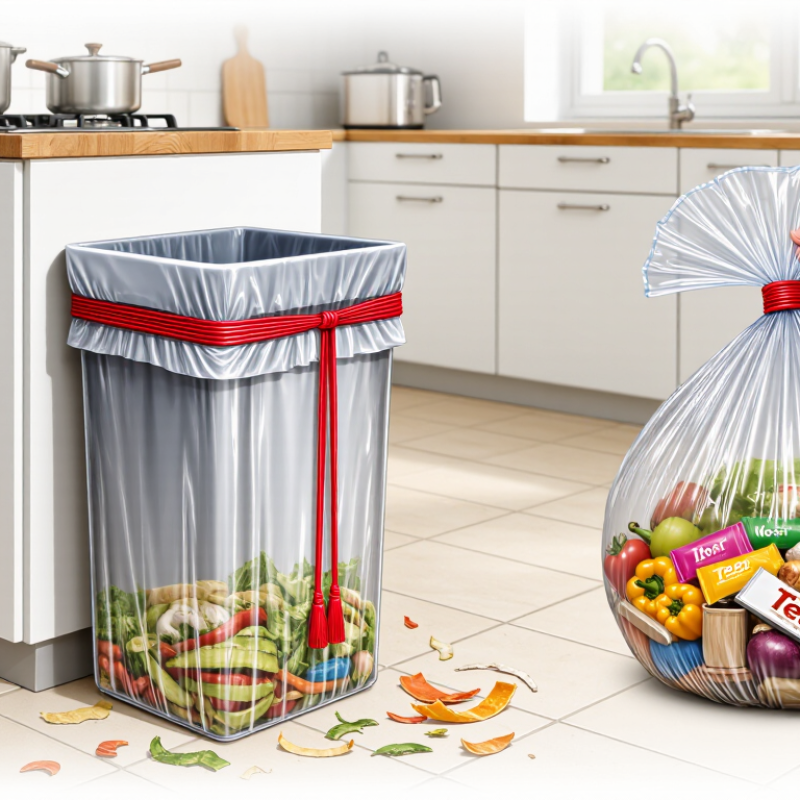
What Are No Tear Drawstring Garbage Bags?
No tear drawstring garbage bags are heavy-duty waste liners designed to resist splitting, punctures, and stretched seams. They are usually made from flexible polyethylene film with reinforced edges and a stronger drawstring channel. The drawstring closes the opening and creates a handle for lifting or tying. They are practical.
The phrase “no tear” should not be taken literally. No plastic bag is impossible to damage. A sharp corner, excessive weight, or rough surface can still cause a failure. That distinction matters. Reliable bags spread pressure across the film instead of allowing one small point to carry the entire load. Thicker material, flexible construction, and carefully sealed seams help reduce sudden ripping during daily use.
In my experience, the right size matters as much as the bag’s thickness. A liner stretched tightly over a full bin may tear sooner than a slightly larger one. These bags work well for food packaging, paper, light household waste, and office cleanup. They should not be treated as suitable for medical, chemical, or other specially regulated waste. Moisture can also change how the load behaves, especially when wet items slide toward the bottom. I once underestimated that detail, and the bag became difficult to lift safely. A better approach is to avoid overfilling, keep sharp objects contained, and test the drawstring before carrying a heavy load.
How Their Tear-Resistant Design Prevents Leaks and Breakage
Why Choose No Tear Drawstring Garbage Bags?
A tear-resistant garbage bag protects more than the bin liner. It helps contain wet food scraps, sharp packaging edges, and heavy bathroom waste. The U.S. Environmental Protection Agency reported 292.4 million tons of municipal solid waste in 2018. Plastic materials represented about 35.7 million tons, or 12.2 percent. Small design improvements can therefore reduce messy handling across many households.
A stronger bag usually combines thicker film, controlled stretch, and a reinforced drawstring channel. A star-sealed base spreads pressure instead of concentrating it at one corner. This matters when a half-filled bag scrapes against a rough bin edge. The drawstring also closes the opening without twisting the film. Less twisting can mean fewer weak points. Still, no bag is indestructible. Overloading it with glass, wet soil, or sharp metal can defeat even good construction. That practical limitation deserves more attention.
Tips: Match bag capacity with the bin, not the maximum advertised load. Keep sharp objects away from the walls. Pull the drawstring gently, then lift from the tied top and bottom support. Check for stretching before carrying. A small leak caught early is easier to manage than a split bag on the floor.
How to Choose the Right Size, Thickness, and Capacity
Choosing a no tear drawstring garbage bag starts with the bin, not the bag label. Measure the container’s width, depth, and height. Add extra length for a secure fold over the rim. A bag that barely reaches the edge may slip when filled. A slightly larger size usually handles daily use better.
Thickness should match the waste, not just the bin size. Lightweight bags suit tissues, packaging, and dry office waste. Medium-thickness bags work well for kitchens with food scraps and damp materials. Heavy-duty bags are more suitable for sharp-edged packaging, garden debris, or dense loads. However, thicker does not always mean safer. Overfilling can strain the bottom and drawstring.
Capacity estimates can be misleading. A 30-liter bag may fit a 30-liter bin, but the usable space decreases when the bag folds over the rim. Test the fit with a small load first. Check whether the drawstring closes smoothly and whether the base stays stable. Pulling the tie too hard can damage even a no tear design. That detail is easy to miss.
Wet waste deserves extra attention. Place it gently, and avoid dropping heavy objects from a height. If leaks or stretching appear during normal use, the size or thickness may be wrong. Personal routines matter too; a busy kitchen may need more capacity than a quiet office, even with identical bins.
Why Choose No-Tear Drawstring Garbage Bags?
Choosing the right bag depends on the bin capacity, the expected load, and the sharpness of the waste. As a general household guide, larger bags and heavier or rougher waste require greater film thickness for improved tear resistance.
The chart shows typical household-use recommendations. Capacity refers to the approximate bag volume, while thickness is measured in microns. Actual performance can vary with bag material, drawstring design, moisture, and the type of waste.