Why Are Product Labels Important for Global Buyers?

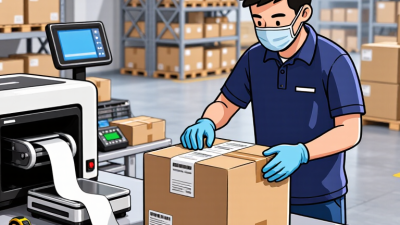
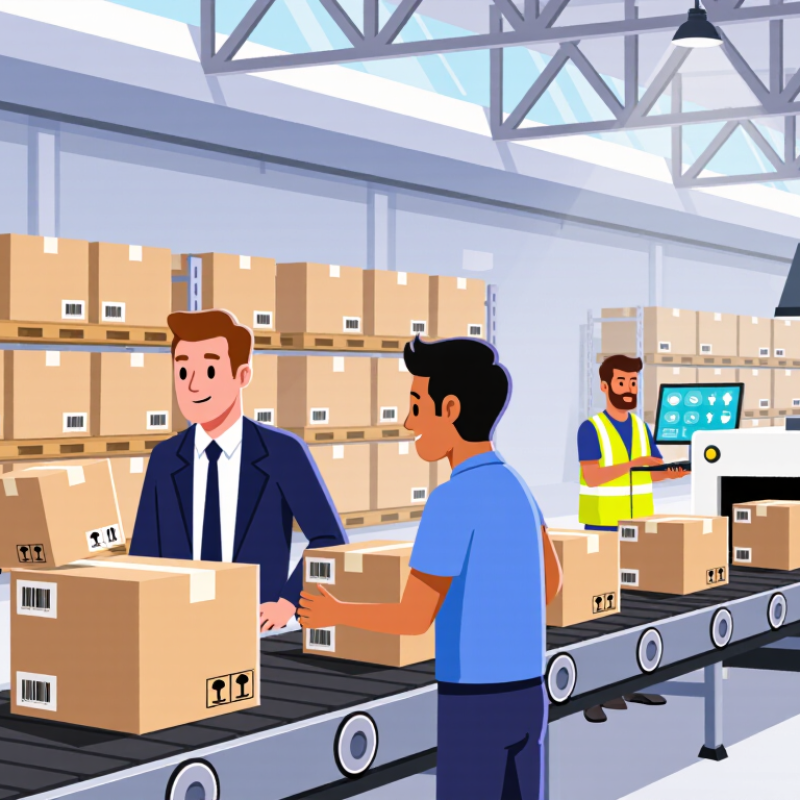
For global buyers, product labels are more than printed names. They help identify goods, compare specifications, check origin details, and follow products through complex supply chains. A carton arriving at a warehouse may pass through several hands before reaching its buyer. Clear labels make the item easier to recognize at each step. Small details matter.

The scale is substantial. The World Trade Organization reported that global merchandise trade was valued at about US$24.01 trillion in 2023, in its Global Trade Outlook and Statistics 2024. That figure does not measure label performance, but it shows the scale of cross-border commerce in which product information must travel reliably. GS1’s standards also provide common systems for product identification and data sharing across trading partners. For buyers, this can support smoother ordering, receiving, and traceability.

Brand strategist Marty Neumeier offers a useful lens: “A brand is not what you say it is. It’s what they say it is.” On a label, that perception may form around a readable product name, a clear ingredient list, or a barcode that scans on the first try. Yet a label cannot solve every supply-chain problem. Nor does more information always mean better information. A crowded design can confuse buyers, while a neat one may still leave important questions unanswered. That tension deserves attention. Thoughtful product labels give global buyers practical facts and a reason to trust what they are purchasing.
Why Are Product Labels Important for Global Buyers?

What Product Labels Tell Global Buyers About a Product’s Identity and Origin

Why Are Product Labels Important for Global Buyers?

A product label gives global buyers a first, practical view of identity and origin. It may show the product name, model, materials, quantity, producer, and country of manufacture. These details help buyers compare similar goods across unfamiliar markets. A clear origin statement also supports supplier verification and shipping documentation. Small wording differences can matter. “Made in” does not always explain every production stage.

In my experience reviewing international goods, traceability begins with simple label details. A batch code can connect a package to inspection records, production dates, and handling information. Contact details make it easier to ask about materials or storage conditions. Accurate translations reduce confusion, especially when symbols replace written instructions. However, translation alone is not enough. A poorly placed warning or unclear measurement can still mislead a careful buyer.

Labels also reveal how responsibly a product has been documented. Buyers often check certification marks, recycled-content claims, ingredient lists, and country-specific requirements. These claims should be supported by reliable records, not attractive wording. A label can still be incomplete. I have seen packages with a clear origin but no useful batch reference, leaving questions about consistency. Design matters too, but evidence matters more. Global buyers need information they can verify, understand, and use before purchase.

Why Are Product Labels Important for Global Buyers?

Core product-information categories addressed by major food-labeling frameworks

Product labels help global buyers verify a product’s identity, ingredients, quantity, responsible operator, date information, storage conditions, allergens, and origin where required. The chart compares the number of these eight core information categories explicitly addressed by the Codex General Standard for the Labelling of Prepackaged Foods, European Union food-information rules, United States packaged-food labeling rules, and China’s prepackaged-food labeling standard. Requirements can vary by product type and legal jurisdiction.

Reference frameworks: Codex Alimentarius CXS 1-1985; Regulation (EU) No 1169/2011; U.S. Federal Food, Drug, and Cosmetic Act and Fair Packaging and Labeling Act; China GB 7718.

How Label Rules Differ: EU Requires 14 Allergen Declarations; the U.S. Names 9 Major Allergens

Why Are Product Labels Important for Global Buyers?

Allergen rules can change the meaning of a familiar package.

The European Union requires declarations for 14 allergen categories.

These include cereals containing gluten, crustaceans, eggs, fish, peanuts, soybeans, milk, nuts, celery, mustard, sesame, lupin, molluscs, and certain sulphites.

The United States identifies nine major allergens.

They include milk, eggs, fish, crustacean shellfish, tree nuts, peanuts, wheat, soybeans, and sesame.

Sesame became the ninth major allergen under U.S. rules in 2023.

That gap matters.

A product accepted in one market may need different wording, emphasis, or ingredient review elsewhere. In practical label checks, teams should compare the full recipe with each destination’s requirements. They should also confirm how allergens appear in compound ingredients, flavorings, and processing aids.

Small details matter. “Nuts” in an EU declaration may require clearer species information, while U.S. labeling commonly identifies specific tree nuts.

Translation deserves careful review too. A technically accurate translation can still confuse shoppers if allergen text is hard to find.

I have seen packaging teams treat this step as cosmetic. It is not.

However, label rules can change, and enforcement may depend on product type, country, and current guidance. Buyers should verify official sources and obtain qualified regulatory advice before printing large quantities. A clean design helps, but clarity and accuracy must come first.

How GS1 Standards Help Buyers Trace Products Across Supply Chains

A product label is more than packaging information. For global buyers, it can become the starting point for product traceability. When a carton arrives at a warehouse, its barcode should connect the physical item with reliable digital records. Without that connection, origin, movement, and handling details can become unclear.

GS1 standards provide a shared structure for this process. A Global Trade Item Number identifies a product consistently across markets. A Global Location Number can identify a factory, warehouse, or delivery point. A Serial Shipping Container Code can identify a specific pallet or logistics unit. These identifiers support scanning at receiving docks, storage areas, and distribution centers. Event data can also record when an item was packed, shipped, or received. This creates a clearer chain of evidence.

But standards do not fix poor data automatically. A warehouse worker may scan the wrong carton. A supplier may enter an outdated location. A label can look perfect and still hide a weak data process. That gap is easy to overlook. Buyers should check whether identifiers match purchase records, shipping documents, and physical goods. They should also review correction procedures when a scan fails. Human mistakes remain possible. Regular audits, trained staff, and consistent scanning points make traceability more dependable. A useful label is not merely readable; it must support accurate decisions across the supply chain.

How the UN GHS Uses 9 Pictograms to Communicate Chemical Hazards

Why Are Product Labels Important for Global Buyers?

The UN Globally Harmonized System uses nine pictograms to show chemical hazards across borders. They include the exploding bomb, flame, flame over circle, gas cylinder, corrosion, skull and crossbones, health hazard, exclamation mark, and environmental hazard. Each symbol supports hazard statements, precautionary instructions, and signal words. A flame warns about fire risk. Corrosion shows possible skin burns or metal damage. The health-hazard symbol can indicate serious long-term effects.

This common visual language matters because chemical supply chains are expanding. UNEP’s Global Chemicals Outlook II projects global chemical production could double by 2030. The ILO reported 2.93 million work-related deaths in 2019, including deaths linked to occupational hazards. Labels cannot prevent every incident, but they can improve recognition during receiving, storage, transport, and emergency response. UNECE’s GHS Rev.10 provides the technical foundation, although national implementation may differ. That difference is easy to overlook. A familiar symbol does not replace a local compliance review.

Tips: Check all nine pictograms against the Safety Data Sheet before purchasing. Confirm the product name, concentration, signal word, hazard statements, and supplier details. Train workers with real containers, not only slide images. Keep labels readable after cold storage, moisture, or handling. Do not assume the exclamation mark means minor danger; its meaning depends on the connected hazard statement. A label can still be misunderstood when translation, print quality, or workplace practice is weak.

Why Are Product Labels Important for Global Buyers? - How the UN GHS Uses 9 Pictograms to Communicate Chemical Hazards

The United Nations Globally Harmonized System of Classification and Labelling of Chemicals (UN GHS) uses standardized pictograms, hazard classes, signal words and precautionary information to help users identify chemical risks across international markets.

GHS Pictogram Official Pictogram Name Representative Hazard Classes Typical Signal Word What the Label Communicates Key Precautionary Emphasis
✹
Exploding Bomb
Exploding bomb
Explosives
Self-reactive substances and mixtures, Types A and B; organic peroxides, Types A and B.
Danger Indicates a risk of explosion from heat, shock, friction, fire or other sources of energy. Keep away from heat, sparks, open flames and sources of ignition. Handle and store with controls that prevent impact, friction and contamination.
♨
Flame
Flame
Flammable hazards
Flammable gases, aerosols, liquids and solids; pyrophoric substances; self-heating substances; substances that emit flammable gas; certain self-reactive substances and organic peroxides.
Danger / Warning Identifies materials that can ignite readily or generate flammable conditions during storage, handling or transport. Keep away from ignition sources. Use suitable ventilation, grounding and static-control procedures where applicable.
◉
Flame Over Circle
Flame over circle
Oxidizing hazards
Oxidizing gases, liquids and solids.
Danger / Warning Shows that a substance can cause or intensify fire by supplying oxygen or supporting combustion. Keep away from combustible materials, reducing agents, heat and ignition sources. Store separately when required.
▥
Gas Cylinder
Gas cylinder
Gases under pressure
Compressed gases, liquefied gases, refrigerated liquefied gases and dissolved gases.
Warning Indicates that the container may explode if heated; refrigerated gases may also cause cold burns or cryogenic injury. Protect the cylinder from sunlight and physical damage. Store upright and use appropriate regulators and handling equipment.
⇓
Corrosion
Corrosion
Corrosive hazards
Skin corrosion, serious eye damage and substances corrosive to metals.
Danger Warns that the product can cause severe skin burns, serious eye damage or corrosion of metals. Wear chemical-resistant gloves, protective clothing and eye or face protection. Prevent contact with skin, eyes and incompatible metals.
☠
Skull and Crossbones
Skull and crossbones
Acute toxicity
Acute toxicity by oral, dermal or inhalation exposure, generally Categories 1, 2 and 3.
Danger Indicates that a small amount may cause severe poisoning or death after short-term exposure. Do not breathe vapour, dust, gas or mist. Avoid all contact and obtain immediate medical advice after exposure.
!
Exclamation Mark
Exclamation mark
Less severe health hazards
Acute toxicity Category 4; skin or eye irritation; skin sensitization; specific target organ toxicity, single exposure Category 3; and certain ozone-layer hazards.
Warning Highlights harmful effects such as irritation, allergic skin reactions, drowsiness, dizziness or harmful acute exposure. Avoid breathing the product and contact with skin or eyes. Use protective equipment and wash thoroughly after handling.
●
Health Hazard
Health hazard
Serious or long-term health hazards
Carcinogenicity; germ cell mutagenicity; reproductive toxicity; respiratory sensitization; aspiration hazard; and specific target organ toxicity.
Danger / Warning Signals the possibility of cancer, genetic damage, reproductive harm, organ damage, respiratory sensitization or fatal aspiration. Obtain special instructions before use where required. Avoid exposure, use effective ventilation and follow occupational hygiene controls.
♣
Environment
Environment
Hazardous to the aquatic environment
Acute and chronic aquatic toxicity categories.
No UN GHS signal word Indicates that the substance may harm aquatic organisms, with effects that can persist in the environment. Prevent release to soil, drains, waterways and the wider environment. Collect spills and dispose of contents according to local requirements.
Important labeling note: Signal words are assigned according to the product’s specific hazard category, not simply by the pictogram. Local regulations may adopt the UN GHS with regional differences, and the environmental pictogram is not mandatory in every jurisdiction.
Reference basis: United Nations Globally Harmonized System of Classification and Labelling of Chemicals (UN GHS), including the standardized nine hazard pictograms.

How Labels Support Counterfeit Checks: Fakes Reached Up to 2.5% of 2019 World Trade

Product labels matter because global buyers need quick, visible evidence before accepting unfamiliar goods. The OECD and EUIPO reported that counterfeit and pirated goods reached up to 2.5% of world trade in 2019, valued at about USD 464 billion. That figure makes label inspection more than a packaging task. It becomes an early control point.

A reliable label may show a batch number, production date, origin, material details, and a scannable verification code. Buyers can compare these details with shipping records and supplier documents. Clear printing also helps. Uneven fonts, blurred symbols, spelling errors, or mismatched dates can signal a problem. However, a label is not proof by itself. Codes can be copied, and honest teams sometimes miss small differences. This is where checks become less certain than expected. The ISO 12944 approach to traceability principles also supports consistent identification across supply chains, although labels must match real records.

Tips: Photograph labels during receiving checks. Scan codes under good lighting. Compare batch data with invoices and inspection reports. Keep samples for later review. Do not rely on appearance alone. A simple checklist prevents rushed decisions, but it still needs trained staff and periodic review.

t