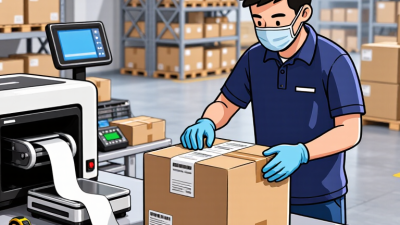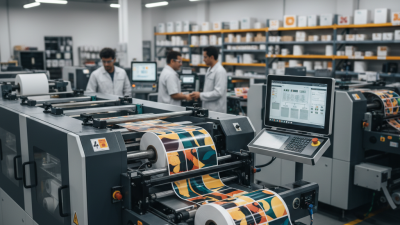
Industrial labels are small components with demanding jobs. They must remain readable on metal housings, chemical drums, cables, and equipment exposed to heat, moisture, abrasion, or outdoor sunlight. For global sourcing teams, the challenge is not simply finding a low unit price. It is matching the face material, adhesive, ink, and printing method to the product’s real operating conditions.
The wider market signals why this category deserves careful evaluation. Fortune Business Insights’ Labels Market report valued the global labels market at USD 48.9 billion in 2023 and projected continued growth through 2032. That figure covers labels broadly, not industrial labels alone, so it should not be treated as a direct measure of industrial demand. Still, it points to a large and evolving supply base. GS1’s Global Traceability Standard also highlights the role of consistent identification data in tracking products across supply chains. A durable label must support that information, not merely carry it off the production line.
For 2026 sourcing decisions, compare samples under realistic conditions: apply them to the intended surface, then test temperature changes, cleaning, and handling. Check print contrast, barcode readability, adhesive performance, and supplier quality controls. A polished specification sheet can miss the failure point. I would not treat a forecast as a buying guarantee, either. The best choice depends on the application, and sometimes the first sample still needs revision.
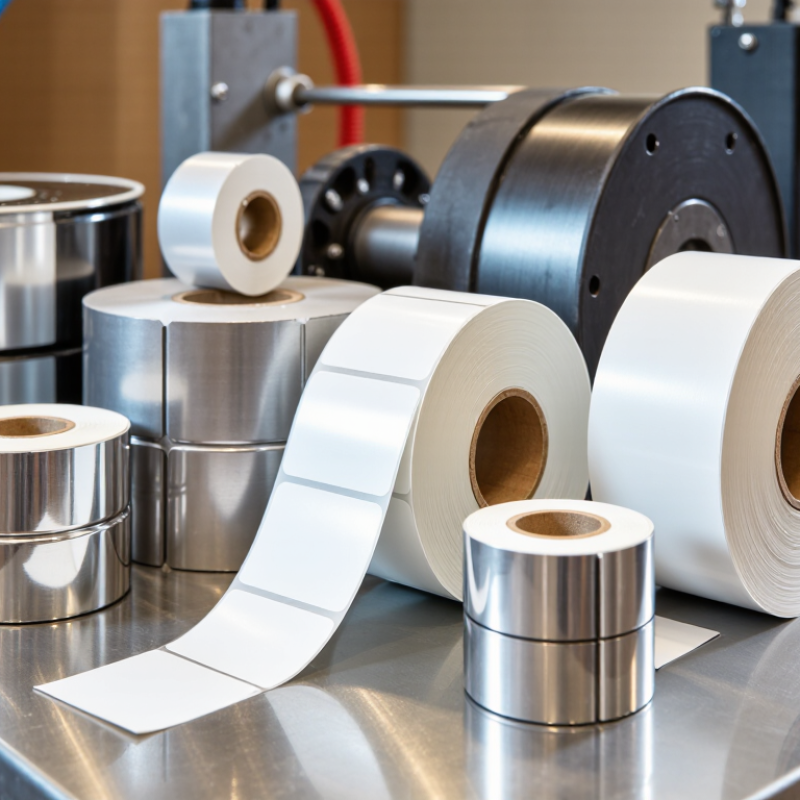
Industrial Labels: Definition, Purpose, and Key Applications
Industrial labels are durable identification surfaces used to display information on products, parts, equipment, and packaging. They may carry serial numbers, batch codes, handling instructions, or maintenance details. Unlike ordinary office labels, they are selected for the conditions they must withstand. Think of a label on a dusty machine panel or a storage bin rubbed daily by cartons. It has to remain readable.
They support identification, tracking, and safer day-to-day operations. In a warehouse, a clear label helps workers locate a bin without opening several boxes. On a production line, a printed code can connect a component with its inspection record. Labels also appear on cables, tools, control cabinets, and shipping containers. Small details matter. Text that looks clear on a computer screen may be too small to read from arm’s length.
Choosing a label means matching its material, adhesive, and print method to the surface and environment. Moisture, abrasion, temperature changes, and cleaning routines can all affect performance. Test a sample on the actual surface when possible; textured plastic and coated metal may behave differently. Even a well-made label can fail if placed over a seam or hidden behind a fitting. That part is easy to overlook.
Industrial labels identify equipment, communicate hazards, and preserve traceability through heat, moisture, abrasion, and cleaning. The right choice depends on the surface, exposure, and required service life—not just the printer. MarketsandMarkets’ 2023 Labels Market report estimated the market at US$48.8 billion and projected US$67.8 billion by 2028. That broader market includes many label types, but its growth reflects rising demand for identification across products and supply chains.
Pressure-sensitive labels suit machine panels, drums, and electrical enclosures because they apply quickly without extra fasteners. For durable asset identification, polyester labels resist scuffing and many common chemicals; polyimide options are used where higher temperatures are expected. Metal tags can provide robust identification on machinery exposed to weather or repeated handling. Safety labels make hazards and operating instructions visible. RFID labels add electronic identification for inventory tracking, though metal surfaces can interfere with radio performance unless the design accounts for them.
Details matter. A label that survives a dry warehouse may fail after repeated washdowns. Check adhesive compatibility, surface texture, temperature range, and exposure to oils or solvents before ordering. Test samples on the actual equipment. Not every sourcing decision gets this right. Even a strong face material can peel if the surface is dusty, curved, or poorly prepared.
For global sourcing in 2026, choose label stock for the surface, environment, and service life—not just the unit price. Paper works well for dry indoor cartons, while polyester and polypropylene better tolerate moisture, abrasion, and handling. A small test can reveal what a specification sheet misses. Check whether the label stays flat on curved housings and remains legible after heat, oil, or cleaning exposure.
Adhesive choice deserves the same attention. Permanent acrylic adhesives often suit long-term identification, while removable grades help with temporary inventory labels. Cold-room applications need adhesives tested at application temperature, not only at room temperature. A missed detail here can mean peeling edges. For procurement context, Smithers’ report The Future of Label Printing to 2028 forecasts continued growth in the global label-printing market, underscoring the need to qualify suppliers and materials against real operating conditions.
Printing technology should match volume and change frequency. Flexographic printing can be efficient for repeat orders, while digital printing supports shorter runs and variable data without plate changes. Thermal transfer is useful for durable barcodes, but ribbon and topcoat compatibility must be tested together. Request samples printed with the intended ink, adhesive, and finish. Then verify barcode readability after abrasion and exposure. Specifications help, but actual line trials matter more. Some failures only appear after weeks in storage.
| Label Type | Common Facestock | Typical Adhesive | Suitable Printing Technologies | Typical Strengths | Key Limitations | Sourcing Considerations |
|---|---|---|---|---|---|---|
| General-purpose equipment and asset label | Coated paper or white polypropylene film | Permanent acrylic pressure-sensitive adhesive | Thermal transfer, flexographic, digital inkjet | Cost-effective for identification, inventory, and indoor asset tracking | Paper versions can be vulnerable to moisture, abrasion, and many chemicals; film performance depends on the specific construction | Specify surface type, indoor or outdoor exposure, expected label life, and whether a protective overlaminate is needed |
| Durable equipment and panel label | Polyester (PET), often with a clear protective layer | Permanent acrylic; specialized adhesives are available for textured or low-surface-energy substrates | Thermal transfer, screen printing, flexographic, digital printing | Good dimensional stability and resistance to moisture and abrasion in many engineered constructions | Adhesion and service life vary with surface preparation, temperature, chemicals, and exposure conditions | Request adhesion and durability data for the exact substrate and environment; confirm print contrast and any regulatory marking needs |
| High-temperature process or component label | Polyimide film or another temperature-rated specialty film | High-temperature acrylic or silicone adhesive, selected for the process | Thermal transfer with compatible ribbons, screen printing, specialty digital printing | Can be designed for demanding heat exposure, including certain electronics and manufacturing processes | Higher material cost; performance varies substantially by construction, exposure duration, and temperature cycling | Define peak and continuous temperatures, dwell time, process steps, and whether the label must remain readable after exposure |
| Drum, tank, and chemical-container identification | Polyester or polypropylene film, sometimes with a protective laminate | Chemical-resistant permanent adhesive matched to the container surface | Thermal transfer, flexographic, screen printing | Film constructions can provide better moisture and tear resistance than uncoated paper | No single label construction resists every chemical; solvents and cleaning agents may affect ink, facestock, or adhesive | Test the complete printed label against the actual chemicals, concentration, contact time, and cleaning method |
| Outdoor asset and utility label | UV-stabilized polyester or other outdoor-rated film | Weather-resistant acrylic pressure-sensitive adhesive | Thermal transfer, screen printing, flexographic | Can be specified for exposure to sunlight, rain, and outdoor temperature variation | Outdoor life depends on UV exposure, climate, print system, and protective coating; results are construction-specific | Request documented outdoor-aging or weathering results and confirm compatibility with the mounting surface |
| Wire and cable identification | Flexible polyester, vinyl, or purpose-designed wraparound film | Permanent adhesive formulated for the cable jacket | Thermal transfer, laser printing on compatible stock, flexographic | Flexible formats can wrap around cables or fit narrow identification areas | Some cable jackets are difficult to bond to; flexibility, flagging, and print durability depend on label design | Confirm cable diameter range, jacket material, bend radius, installation method, and readability after handling |
| Removable process or inspection label | Paper or polypropylene film | Removable acrylic pressure-sensitive adhesive | Thermal transfer, direct thermal, digital printing | Designed for temporary identification where clean removal is important | Removability can change with dwell time, temperature, surface texture, and substrate; residue-free removal is not universal | Test removal after the intended application period on the actual surface, including painted or coated finishes |
| Barcode and serialized tracking label | Coated paper for controlled indoor use; polyester or polypropylene film for greater durability | Permanent acrylic pressure-sensitive adhesive | Thermal transfer, direct thermal, laser, digital inkjet | Supports variable data such as barcodes, serial numbers, and batch identifiers | Direct thermal images may be sensitive to heat, light, and abrasion; barcode readability depends on print quality and contrast | Specify barcode format, required verification grade, scanner conditions, print volume, and expected label life |
Note: These are common material and process options, not universal performance guarantees. Validate the complete printed label—including facestock, adhesive, ink or ribbon, and any laminate—on the intended surface under actual use conditions.
How to Compare Labels for Durability and Compliance
A label that survives a warehouse may fail beside a hot, oily production line. Compare the full label system: facestock, adhesive, ribbon or ink, and surface preparation. Ask suppliers for test results on your actual substrate, not generic claims such as “weatherproof.” ASTM D3330-22 provides peel-adhesion test methods, while UL 969 covers the performance of marking and labeling systems. These references help make supplier comparisons more consistent.
For barcode compliance, request a measured print-quality grade, not just a scan demonstration. ISO/IEC 15416 grades linear barcode quality on a 0.0-to-4.0 scale; capture the grade after printing and after exposure to heat, abrasion, or cleaning fluids. Also confirm that required product and traceability fields remain legible at the intended scan distance. Test samples in realistic conditions. A clean lab rarely matches a dusty shift.
Global sourcing industrial labels in 2026 requires more than comparing unit prices. A low-cost roll can fail when adhesive softens beside a warm motor or ink fades during cleaning. Request samples on the actual substrate, then test them for expected heat, moisture, abrasion, and handling. Small trials help. Still, one test rarely represents every plant, shift, or storage condition. Ask suppliers for material specifications, tolerance ranges, and documented quality checks—not just polished sample sheets. Confirm roll direction, core size, label dimensions, and packaging before approving a shipment. These details affect line speed and can cause avoidable downtime.
Lead time and supply continuity also deserve close review. Check whether production capacity, raw-material sourcing, and change-control procedures are clearly explained. Multiple qualified supply routes can reduce disruption, though a substitute material may need fresh testing. Do not assume it is identical. Agree on how defects are measured, who reviews retained samples, and how corrective actions are recorded. Keep the criteria practical: labels must scan reliably, remain legible, and stay attached after real use. Field conditions vary. Record what failed, too, and revisit specifications when equipment or cleaning routines change.
Regulatory timing is one factor to check when sourcing labels used on packaging for the EU market.
How to read this chart: Bars show the number of days after January 1, 2025, for each milestone. The EU Packaging and Packaging Waste Regulation (PPWR) entered into force on February 11, 2025, and generally applies from August 12, 2026. The PPWR concerns packaging; it does not apply to every industrial label. Confirm which requirements apply to your product and destination market. Source: Regulation (EU) 2025/40.