Choosing among printing labels begins with a simple question: what must the label do? A jar in a refrigerated case faces different demands from a shipping carton or a shampoo bottle. The surface, exposure to moisture, print quality, and application speed all matter. Small details matter.
Label-industry analyst Mike Fairley has written extensively about label technologies and markets. A concise paraphrase of the practical point in his work is: “The right label depends on the product, the surface, and the conditions it must face.” This is a paraphrase, not a verbatim quotation. It offers a useful lens for comparing options without pretending one format suits every job.
This guide introduces common printing labels, including paper and film labels, pressure-sensitive labels, wet-glue labels, and shrink sleeves. It also explains how direct thermal and thermal-transfer printing differ, and why those methods suit particular uses. Material choice affects appearance, durability, and cost. So does the adhesive: a label that sticks well to glass may behave differently on flexible plastic. No single format wins every time. Even familiar terms can blur together, and that is worth noticing before choosing a specification. The sections ahead outline each type, its typical strengths, and the trade-offs buyers should check. Use them as a starting point, then confirm performance with samples on the actual product and under real storage or handling conditions.
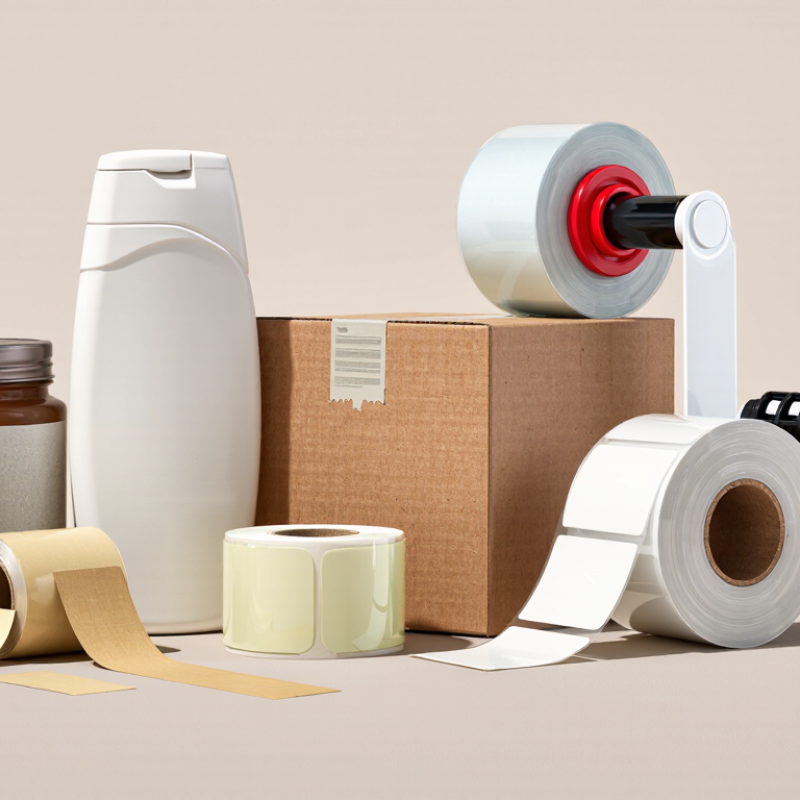
Printed labels can be classified by how they attach, what they are made from, how they are printed, and what they must do. These categories overlap. A label may be pressure-sensitive, film-based, digitally printed, and designed for refrigeration.
Attachment is often the quickest distinction. Pressure-sensitive labels stick when pressed, while glue-applied labels need adhesive during application; sleeves wrap around containers, and in-mold labels bond during molding. Grand View Research’s Labels Market Size, Share & Trends Analysis report valued the global market at USD 45.8 billion in 2022 and tracks categories including pressure-sensitive, glue-applied, sleeve, and in-mold labels. The scale reflects varied packaging needs, not one universal label choice. Material matters, too. Paper suits many dry, indoor uses; films such as polypropylene can better resist moisture and tearing. Check the actual conditions.
Printing method is another useful lens. Flexographic printing works well for long runs, while digital printing can make short runs and changing artwork more practical. Still, method alone does not define performance. A small bottle kept in a cold, wet cooler needs different adhesive and face stock from a shipping carton. There is no perfect category. I would test samples on the real surface, since curved containers, condensation, and handling can expose problems a specification sheet misses.

Label types are often defined by the process that puts ink or marks onto their surfaces. Flexographic printing transfers ink from a flexible plate to a moving roll of label stock. It suits long runs, steady colors, and common materials such as paper and film. Setup takes time, so frequent artwork changes can add cost.
Digital inkjet and electrophotographic presses print from image files, without plates. That makes variable text, short runs, and late design changes easier to manage. Smithers’ 2023 report, The Future of Digital Print for Packaging to 2028, projected digital packaging print to grow from $22.5 billion in 2022 to $36.3 billion by 2028. This figure covers packaging broadly, not labels alone. Short runs suit it. But digital is not automatically cheaper; coverage, substrate, finishing, and run length all affect the unit price.
Offset printing can deliver fine detail and consistent color, especially on paper-based labels, but generally needs more setup than digital. Screen printing lays down thicker ink, useful when bold, opaque color matters. Thermal transfer and direct thermal use heat rather than conventional ink: transfer ribbons can produce durable codes, while direct-thermal marks may fade with heat or light. A practical caveat: labels are chosen for their whole journey, not just the press. A crisp sample can still wrinkle on a curved bottle or scuff during handling.
| Printing Technology | How It Works | Common Label Materials | Best Suited For | Key Advantages | Considerations |
|---|---|---|---|---|---|
| Flexographic | Flexible relief plates transfer ink onto the label material as it passes through a press. | Paper, coated paper, and many plastic films | Medium-to-large production runs, including product, food, and logistics labels | High production speed; economical per label at larger volumes; supports roll-to-roll printing and finishing. | Plate production and press setup add cost and lead time, making frequent short-run changes less economical. |
| Digital Inkjet | Printheads deposit tiny droplets of ink directly onto the label surface without printing plates. | Coated or specially prepared paper, polypropylene, polyethylene, and other compatible stocks | Short-to-medium runs, variable designs, and labels requiring frequent artwork changes | Quick changeovers; variable data and full-color printing; cost-effective for short runs. | Ink adhesion, drying, and durability depend on the ink, substrate, and any applied protective coating. |
| Digital Electrophotographic (Toner) | Charged imaging components transfer toner to the label stock, where heat and pressure fuse it in place. | Paper and compatible synthetic label stocks | Short-to-medium runs, product labels, and designs with variable information | No printing plates; consistent text and fine detail; efficient production of multiple versions. | Compatible materials are press-specific, and heat or abrasion resistance varies with the toner and finishing. |
| Thermal Transfer | A heated printhead transfers ink from a ribbon onto the label surface. | Paper and synthetic stocks such as polyester or polypropylene | Barcodes, asset tags, product identification, and labels needing greater durability | Produces crisp variable data; a suitable ribbon and synthetic stock can provide resistance to smudging and wear. | Requires a ribbon; print durability and chemical resistance depend on the ribbon and label material combination. |
| Direct Thermal | A heated printhead darkens a heat-sensitive coating on the label; no ink or ribbon is used. | Heat-sensitive thermal paper and compatible synthetic stocks | Shipping, receipts, and other short-term identification labels | Simple operation; no ribbon to replace; well suited to variable data and on-demand printing. | Images can fade or darken with heat, sunlight, or prolonged exposure; typically less suitable for long-term use. |
| Screen Printing | Ink is pushed through a patterned mesh screen onto the label material. | Paper, plastic films, and some other compatible surfaces | Specialty labels, bold graphics, and designs requiring an opaque ink layer | Can lay down relatively heavy ink deposits and create strong, vivid areas of color. | Screen preparation and setup can make it less suitable for small runs or designs with frequent changes. |
| Offset Lithography | Ink transfers from a printing plate to a rubber blanket, then onto the label stock. | Primarily paper and compatible coated label stocks | High-quality graphics and larger runs, especially on sheet-fed label work | Produces fine detail and smooth color reproduction on suitable stocks. | Plate and setup costs make it less flexible for short runs; material and finishing options depend on the press. |
Printing labels are chosen by matching the face material to the product’s surface and environment. Paper suits dry cartons and shelf tags; it prints cleanly but can wrinkle when wet. Polypropylene film handles splashes and squeezable bottles, while polyester offers better resistance to heat and abrasion. A chilled jar is a useful test case: condensation can lift a label that looked secure at room temperature. The trade-off is real. Smithers’ 2023 report, The Future of Labels to 2028, projects the global label market will reach $49.9 billion by 2028, reflecting demand across varied packaging and applications.
The adhesive matters just as much as the material. Permanent acrylic adhesives work for many everyday packages, while removable grades help labels peel away with less residue. Freezer-grade adhesives are formulated to bond at low temperatures; hot-melt options can grab quickly on some rough or curved surfaces. Check the label against the actual substrate, not just a product description. Glass, recycled cardboard, and textured plastic can behave differently. That rule is imperfect. A small trial on a filled, chilled container can reveal edge lift, bubbles, or adhesive transfer before a full print run. I still check.
Label types vary by face material and adhesive. The chart compares typical face-stock thickness ranges; actual specifications vary by product.
How to read it: Paper is commonly used for general-purpose labels, while polypropylene (PP), polyethylene (PE), and polyester (PET) are film options. Permanent acrylic, rubber-based, and removable acrylic are common pressure-sensitive adhesive types. Choose the adhesive for the surface and conditions; performance depends on the specific formulation.
Label formats determine how a label reaches the product. Pressure-sensitive labels arrive on rolls or sheets, with adhesive ready beneath a release liner. They suit curved jars, cartons, and small batches where placement needs control. Cut-and-stack labels are printed in piles and glued during application; they can be efficient for high-volume, flat-sided containers. Wraparound labels cover much of a bottle’s circumference, while booklet labels carry extra instructions in a compact space. Shrink sleeves conform to curved shapes, but need heat and careful sizing. There is no perfect format. A seam that looks minor on screen may wrinkle on a tapered bottle.
Construction matters just as much. A typical pressure-sensitive label combines facestock, adhesive, and liner. Paper often gives a natural, matte look; film resists moisture and tearing. Adhesive choice affects cold storage, curved surfaces, and clean removal. Smithers’ The Future of Labels to 2028 valued the global label market at about $49.9 billion in 2023, underscoring how broad these production needs are. For a damp glass bottle, test the adhesive after chilling, not only at room temperature. For a squeezable container, check whether the face material buckles. Small trials reveal problems early. I would still verify finish, print contrast, and application speed on the actual packaging line; specifications alone can miss real handling issues.
A label should fit both the product and the conditions it will face. Paper labels work well on dry cartons, booklets, and short-term packaging, where surfaces stay clean and moisture is limited. Glass jars often need stronger adhesive, especially when condensation forms after refrigeration. Flexible pouches call for labels that bend without wrinkling or lifting at the edges. That matters.
The environment can change the right choice. Labels on frozen goods need adhesives that remain attached at low temperatures, while outdoor equipment may need materials that resist sunlight, rain, and abrasion. In warehouses, scuffing from stacked boxes can blur small text, so a durable surface finish may help. For products handled with wet hands, test the label after repeated contact, not just when it is newly applied.
Printing method also affects the result. Direct thermal labels suit short-lived shipping or inventory information, but heat and sunlight can darken them over time. Thermal transfer printing is often a better fit when text must remain readable longer. A common mistake is choosing by appearance alone; the container’s texture, curve, and temperature deserve equal attention. Test before ordering. One small trial on the actual package can reveal peeling, smearing, or awkward placement before a full run.