A printing banner is a large-format printed graphic designed to communicate a message across a visible space. It may promote a store opening, guide visitors at an event, or display a brand beside a busy road. Common materials include vinyl, fabric, mesh, and coated paper. Each choice changes the banner’s appearance, weight, durability, and installation method.
It is more than an oversized image. A reliable printing banner combines readable typography, suitable color contrast, accurate file preparation, and strong finishing. Hemmed edges, welded seams, grommets, or pole pockets help the banner withstand handling and weather. Outdoor vinyl may face wind, sunlight, rain, and repeated installation. Indoor fabric usually offers softer texture and less glare.
Printing specialist Debbie McKeegan has said, “Digital print enables mass customization and personalization.” Her observation explains why modern banners can be produced for specific locations, audiences, and short campaigns. A small business might order ten matching banners, each with different event details. Practical design matters.
The term is not perfectly standardized. Some people call temporary fabric displays banners, while others reserve the word for flexible signs with finished edges. That uncertainty deserves attention. A good definition should consider both the printed surface and its real-world use.
Before ordering, check the viewing distance, display period, mounting surface, and expected weather. A banner seen from a highway needs larger lettering than one placed beside a reception desk. Small details matter. A beautiful design can still fail when it is unreadable, poorly finished, or printed on the wrong material.
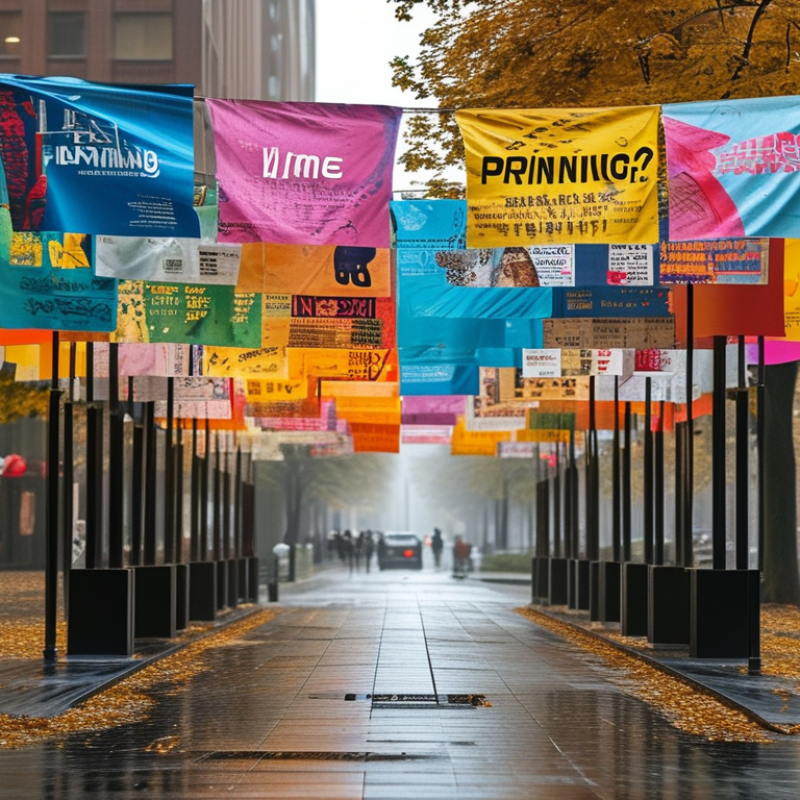
A printing banner is a large graphic printed on flexible material for public communication. It displays messages, directions, event details, or promotional information.
In practical production work, the design must be readable from a planned viewing distance. A banner crowded with small text often fails, even when its colors look attractive. Clear contrast matters more than decoration.
The purpose of a printing banner is to deliver information quickly in busy spaces.
Outdoor banners commonly use vinyl because it resists light rain and routine handling. Mesh material allows wind to pass through, making it useful on fences or building exteriors. Fabric banners create softer colors and fewer reflections for indoor exhibitions. Each material changes the final appearance. Test prints remain valuable.
Hanging formats often use reinforced edges and metal eyelets for secure installation.
Roll-up banners are portable and practical for entrances, meetings, and temporary displays.
Backdrops provide a consistent visual area behind speakers or product demonstrations.
Measure the display space carefully. Small errors become obvious.
From experience, adding a safe margin prevents text from touching hems, poles, or hardware. A designer should also check image resolution before printing. Enlarged low-quality images may appear blurred at close range.
I once approved a layout that looked balanced on screen but felt too dense in person. That mistake reinforced a simple lesson: viewing distance should guide every design decision.
What Is a Printing Banner?
Banner Materials Explained: 13–18 oz Vinyl, Fabric, Mesh, and Paper
A printing banner is a large visual display made for walls, fences, events, or storefronts. Material choice affects image quality, weight, lifespan, and installation. Grand View Research valued the global digital printing market at about USD 36.9 billion in 2023, showing why material decisions now matter across many display projects.
For outdoor banners, 13–18 oz vinyl offers strong tear resistance and vivid color reproduction. A 13 oz sheet is lighter and easier to transport. An 18 oz sheet feels sturdier for long-term fence or building use. However, heavier vinyl is not automatically better. Wind load, eyelet spacing, and mounting hardware also influence performance. That shortcut can fail.
Fabric banners create a softer appearance and reduce glare under exhibition lighting. Polyester fabric is commonly selected for indoor displays because it folds compactly and supports dye-sublimation printing. Mesh vinyl includes small perforations, allowing air to pass through large fence graphics. This can reduce wind pressure, although tiny text may appear less sharp. Paper banners remain practical for short campaigns, retail notices, and controlled indoor spaces. The FESPA Print Census reported continued demand for digitally printed signage and displays, while also highlighting pressure for efficient, lower-waste production. I still test samples before ordering. Lighting changes everything. A matte fabric may look refined indoors but lose impact in a dim corridor. Vinyl may appear brighter, yet its surface can reflect direct sunlight.
| Material | Typical Weight or Thickness | Print Surface and Appearance | Weather Performance | Airflow | Best Applications | Main Advantages | Important Limitations |
|---|---|---|---|---|---|---|---|
| 13 oz Vinyl | Approximately 13 oz per square yard; commonly around 0.013–0.015 inches thick | Smooth, opaque surface with strong color contrast; available in matte or gloss finishes | Good short- to medium-term outdoor performance when properly finished and installed | Low; solid material can catch wind | Retail promotions, events, temporary outdoor signs, and indoor displays | Lightweight, economical, vivid printing, and easy to transport | Less substantial than heavier vinyl; not ideal for highly windy locations without reinforcement |
| 15 oz Vinyl | Approximately 15 oz per square yard; commonly around 0.015–0.018 inches thick | Opaque, smooth-to-slightly textured surface with reliable image density | Good outdoor durability for repeated or seasonal use | Low; wind slits or reinforced finishing may be needed in exposed areas | Outdoor advertising, construction notices, festivals, and promotional backdrops | Balanced combination of durability, print quality, and cost | Heavier and less breathable than fabric or mesh |
| 18 oz Vinyl | Approximately 18 oz per square yard; commonly around 0.018–0.020 inches thick | Dense, opaque surface that supports bold graphics and strong color saturation | Very good durability for long-term or demanding outdoor installations when maintained correctly | Low; solid banner construction requires secure mounting | Long-term outdoor signage, large building banners, and high-use displays | Strong, opaque, durable, and resistant to normal handling | Heavier to ship and install; can experience high wind load |
| Polyester Fabric | Commonly about 4–10 oz per square yard, depending on weave and display purpose | Soft, textile-like appearance with low glare; dye-sublimated fabric can produce rich graphics | Suitable for many indoor settings and selected short-term outdoor uses; performance varies by fabric and ink | Moderate; woven construction may reduce wind pressure compared with solid vinyl | Trade-show backwalls, stage graphics, indoor events, and tension displays | Lightweight, foldable, low-glare, and visually refined | May wrinkle; outdoor lifespan and color retention depend strongly on fabric, ink, and exposure |
| Mesh Vinyl | Commonly about 8–12 oz per square yard; perforated construction varies by product | Perforated surface; graphics appear less solid than on standard vinyl, especially at close range | Well suited to outdoor use where wind exposure is a concern | High; open construction allows wind to pass through | Building wraps, fences, scaffolding, sports venues, and large outdoor installations | Reduces wind load and is practical for large-format applications | Lower image opacity and detail than solid vinyl; may need a suitable viewing distance |
| Banner Paper | Commonly about 7–10 mil thick; weight varies according to paper composition | Smooth, bright surface with sharp text and images; often available in matte or satin finishes | Primarily intended for dry indoor environments; moisture resistance depends on coating | None; solid sheet material | Indoor retail graphics, short-term promotions, presentations, and point-of-sale displays | Lightweight, economical, and capable of crisp text and detailed images | Can tear, crease, or warp when exposed to moisture or rough handling |
A printing banner is a large visual display for walls, events, storefronts, or outdoor spaces. Its purpose is clear communication from a distance. Text, images, and color must remain readable under changing light. Professional banner preparation begins with the final physical dimensions. It looks simple.
Use CMYK color when preparing artwork for print. This system combines cyan, magenta, yellow, and black inks. Screen colors may appear brighter than printed colors, especially vivid greens and blues. A 150–300 PPI resolution provides suitable image detail for many banner applications. Smaller banners viewed closely benefit from higher resolution. Large banners viewed from several meters away can often use lower resolution. Resolution alone cannot fix a blurry original image. I once enlarged a small photograph too far, and the printed face looked soft. That mistake reminded me to inspect source files early.
Tips:
A printing banner is a large-format graphic produced for clear, visible communication. It may hang indoors, stand beside a road, or cover a temporary event wall. Its quality depends on more than a sharp image. Material choice, color control, finishing, and inspection all affect the final result.
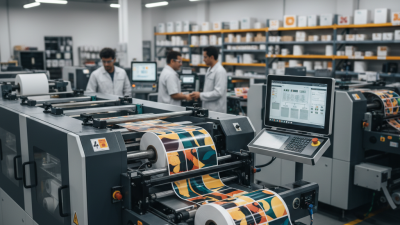
Production begins with a practical design file. Text should remain readable from the expected viewing distance. Important elements need safe margins, especially near hems and eyelets. During large-format printing, technicians check ink coverage, resolution, and material movement. A test strip can reveal uneven color before the full banner runs. Small details matter. A first proof may look slightly dull on screen, yet appear stronger under actual lighting.
Finishing gives the banner usable strength. Edges may be hemmed, reinforced, or fitted with evenly spaced eyelets. Workers should inspect corners, seams, surface marks, and trimming accuracy. I have seen a visually attractive banner fail because one corner was poorly reinforced. That mistake is easy to miss during a rushed review. A reliable inspection uses measured spacing, consistent lighting, and a physical check of every edge. Minor color variation can also occur across wide material, so approval should consider viewing distance and installation conditions, not only the digital proof.
What Is a Printing Banner? It is a flexible graphic panel made for temporary or long-term visual communication. Common materials include coated polyester, PVC, and mesh fabric. Performance depends on more than ink quality. Sunlight, rain, temperature changes, and installation pressure all matter. NOAA’s 1991–2020 Climate Normals show major differences in local wind, rainfall, and sunshine exposure. A banner used beside a coastal road needs different planning from one inside a sheltered market.
Outdoor lifespan often ranges from several months to several years. That estimate is not a promise. UV exposure can fade dark colors, while trapped water can weaken stitched edges. ASTM D751-19(2023) covers coated-fabric testing for breaking strength, tear resistance, and adhesion. Ask for test results, not vague “heavy-duty” wording. Wind resistance also depends on size and mounting. ASCE/SEI 7-22 evaluates wind using three-second gust speeds, exposure, height, and site conditions. A 10-by-20-foot banner has four times the face area of a 5-by-10-foot banner. More area means greater force.
Tips: Choose mesh when wind must pass through the graphic. Reinforce corners and use evenly spaced grommets. Keep the banner tight, but not drum-tight. Inspect seams after storms. A small tear can grow quickly. Never rely on eyelets alone for a large installation. Local wind records and a qualified installer should guide the final mounting plan. Banners are simple. Their failure points are not.
Outdoor banner performance depends on material, wind exposure, size, and mounting. The chart shows typical planning values for commonly used banner materials under proper installation and normal outdoor conditions.
Selection tip: Standard vinyl provides good durability for general signs, mesh vinyl reduces wind load through its perforations, and polyester fabric is lightweight but usually better suited to shorter-term outdoor use. Reinforced hems, evenly spaced grommets, rope or bungee attachment, and adequate spacing from the mounting structure can improve wind performance. Actual results vary with climate, exposure, banner size, and installation quality.