Choosing the best printing banner manufacturer supplier in China requires more than comparing online prices. Experienced buyers examine material quality, color accuracy, finishing details, and delivery records. A reliable supplier should explain fabric or vinyl options clearly. They should also provide physical samples before large production begins. Small details matter. Check reinforced hems, evenly placed grommets, smooth edges, and readable graphics under strong light.
This guide explores how to evaluate Chinese printing banner manufacturers with practical, evidence-based criteria. It considers production equipment, color management, quality control, packaging, communication, and export experience. A capable supplier should confirm artwork requirements, outdoor durability, weather resistance, and expected service life. Factory photos are useful, but independent samples and documented inspections offer stronger evidence. Certifications may support trust, yet they should match the actual product and market requirements.
No supplier is perfect. A low quotation may hide weaker materials, slower support, or inconsistent finishing. Even a respected factory can make mistakes during busy seasons. Buyers should ask how reprints, damaged cartons, and color disputes are handled before payment. This article does not promise one universal winner. Instead, it offers a careful framework for comparing suppliers based on measurable performance and transparent communication. The strongest partnership often develops through a small trial order, clear specifications, and honest feedback. That approach takes longer. It can prevent expensive surprises later.
What Defines a High-Quality Printing Banner Manufacturer in China?
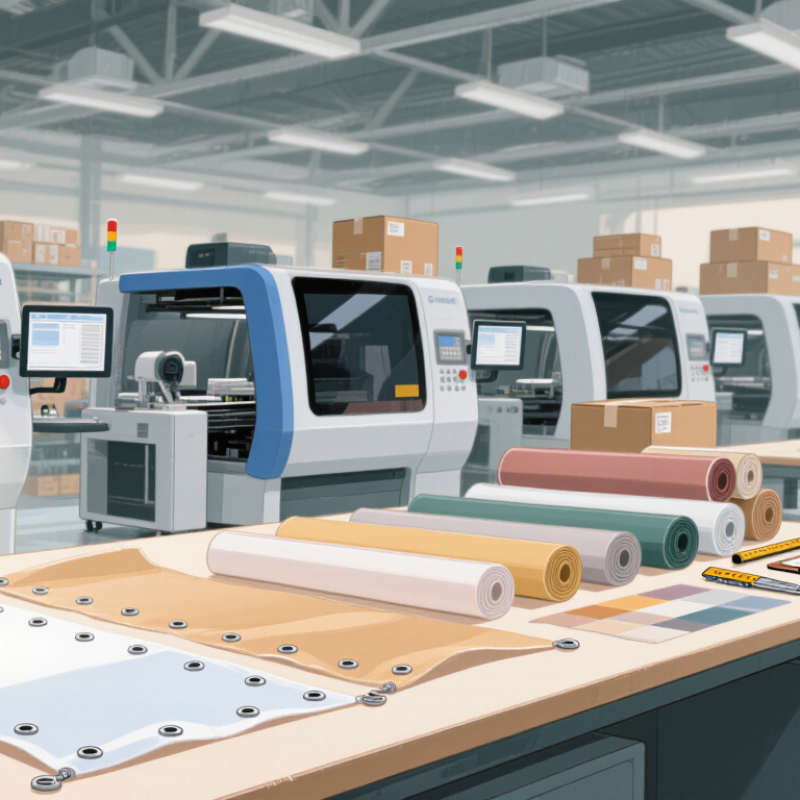
A high-quality printing banner manufacturer begins with clear material knowledge. Experienced teams select vinyl, fabric, mesh, or recycled substrates for the display environment. Outdoor banners need weather resistance, strong hems, and secure eyelets. Indoor banners may require lighter materials and sharper color detail. Ink quality also matters. Proper color profiles help maintain consistent results across repeated orders. A reliable manufacturer checks artwork dimensions, bleed settings, resolution, and finishing requirements before production. Small errors become expensive when hundreds of banners are printed.
Quality control should happen throughout the process, not only at the packing table. Skilled inspectors review color density, surface scratches, edge stitching, eyelet spacing, and final measurements. Sample approval is useful, but it is not enough. Lighting can change how printed colors appear. Production teams should test samples under practical conditions and record the results. Clear communication matters too. A dependable supplier explains lead times, packaging methods, material limits, and possible production risks. Some problems cannot be eliminated completely. Misalignment or slight color variation may still occur, so honest reporting is better than unrealistic promises. Manufacturers with traceable inspection records and responsive after-sales support are easier to trust. Small details often reveal the real standard.
A dependable banner supplier should offer products for different environments, not one material for every job. Vinyl banners suit storefronts, trade shows, and temporary outdoor campaigns. Mesh banners allow wind to pass through on fences and building frames. Fabric banners create softer color and less glare indoors. Roll-up displays work well at reception desks and mobile events.
Customization begins with practical choices. Customers can select width, height, material thickness, and print finish. Hemmed edges help reduce tearing around busy mounting points. Metal eyelets support rope or cable installation. Pole pockets create a cleaner appearance for hanging displays. Wind slits may improve outdoor performance, although their placement can slightly change the design.
Color accuracy needs careful attention. A digital proof is useful, but screens cannot fully copy printed ink. A physical sample may reveal darker reds, softer photographs, or small text that loses clarity. This step sometimes slows production. It prevents larger mistakes later. Experienced production teams should check artwork resolution, bleed, safety margins, and spelling before printing. They should also explain cleaning, storage, and expected use conditions clearly. A banner exposed to strong sunlight will not age like one used indoors. That difference deserves an honest recommendation.
Choosing a capable Chinese printing banner supplier requires more than comparing online prices. A reliable evaluation starts with material control, printing consistency, and clear production evidence. Ask for physical samples showing color accuracy, edge stitching, eyelet spacing, and surface finish. Details matter. Compare the sample with the approved file under natural light. The supplier should explain fabric weight, ink type, weather resistance, and expected outdoor service conditions without vague promises.
Request dated production photos, machine details, and quality inspection records. A serious factory can describe its prepress checks, color management process, drying time, and packaging method. Check whether operators inspect banners before folding them. Ask how defective pieces are recorded and replaced. Do not guess. Independent test documents may support claims about flame resistance or outdoor durability, but they should match the actual material and production batch.
Communication also reveals capability. Test whether the supplier confirms dimensions, artwork requirements, tolerances, delivery dates, and shipping marks in writing. A small trial order can expose weak stitching, uneven cutting, or inconsistent color before a larger purchase. Low prices may hide thin materials or rushed finishing. I have found that even detailed suppliers can overlook one requirement, especially when specifications are translated poorly. Recheck every measurement. Clear drawings, approved samples, and realistic deadlines make the evaluation more dependable.
Selecting a reliable printing banner manufacturer in China requires more than comparing prices. Experienced suppliers should understand polyester fabric, coated vinyl, mesh, and recyclable alternatives. Material choice depends on display duration, wind exposure, light conditions, and installation method. A lightweight fabric suits indoor exhibitions, while reinforced mesh can reduce wind pressure outdoors. Details matter.
Modern production may include UV, latex, or eco-solvent printing technologies. Each process affects color depth, drying time, odor, and surface durability. Skilled technicians should manage color profiles, ink limits, image resolution, and curing temperature. I have found that small calibration errors can change a large banner noticeably. That weakness deserves attention.
Quality control should cover incoming materials, print alignment, color consistency, seam strength, dimensions, and eyelet placement. A practical inspection uses sample measurements and visual checks under consistent lighting. Certifications add credibility when they are current and traceable. Useful evidence may include ISO 9001, material safety testing, REACH compliance, RoHS compliance, and fire-performance reports where required. Certificates alone prove little. Their scope must match the product and destination market. Suppliers should provide production samples, inspection records, and clear packaging details. Even strong factories may miss a minor edge defect, so independent inspection remains a sensible safeguard.
| Evaluation Dimension | Banner Material or Process | Typical Technical Data | Recommended Application | Quality-Control Checkpoints | Relevant Standards or Certifications |
|---|---|---|---|---|---|
| Printing Material | PVC Frontlit Banner | Common weights: approximately 280–550 g/m²; opaque white surface; suitable for solvent, eco-solvent, UV, and latex printing. | Outdoor signs, event backdrops, retail promotions, building wraps, and temporary advertising. | Basis weight, thickness, tensile strength, tear strength, surface uniformity, and ink adhesion. | REACH and RoHS requirements may be requested where applicable. |
| Printing Material | PVC Backlit Banner | Usually engineered with controlled translucency to diffuse light; commonly supplied in approximately 440–650 g/m² ranges. | Light boxes, illuminated storefront signs, transit displays, and night-time advertising. | Light transmission uniformity, pinholes, color consistency under front and rear illumination, and dimensional stability. | REACH and RoHS documentation can support material compliance evaluation. |
| Printing Material | PVC Mesh Banner | Perforated construction reduces wind load; open area commonly varies by product design, often around 20–40%. | Construction fences, building facades, stadium barriers, and large outdoor installations. | Open-area ratio, mesh strength, edge integrity, tear resistance, and reinforced hem performance. | Project-specific fire-performance requirements should be verified before use. |
| Printing Material | Polyester Fabric Banner | Common weights: approximately 90–260 g/m²; lightweight, foldable, and available in wrinkle-resistant constructions. | Indoor exhibitions, trade-show graphics, hanging displays, flags, and tension-frame systems. | Fabric GSM, shrinkage after finishing, color uniformity, edge fraying, sewing quality, and dimensional accuracy. | OEKO-TEX Standard 100 may be requested for qualifying textile components. |
| Printing Material | Polypropylene or PET Film | Commonly used in lightweight indoor graphics; thickness and opacity vary according to the intended display system. | Retail posters, roll-up displays, indoor promotional panels, and short-term point-of-sale graphics. | Flatness, curl resistance, coating uniformity, scratch resistance, and compatibility with the selected ink. | REACH and RoHS declarations may be requested for finished products and substrates. |
| Printing Technology | Eco-Solvent Printing | Suitable for coated vinyl and selected banner media; provides good image quality with comparatively low odor versus traditional solvent systems. | Indoor and outdoor graphics where moderate-to-long display life and detailed images are required. | Nozzle checks, color profiling, ink adhesion, drying time, banding inspection, and scratch testing. | Ink safety documentation and applicable chemical regulations should be reviewed. |
| Printing Technology | UV-Cured Printing | Ink is cured by ultraviolet light directly after printing; supports many rigid and flexible substrates. | Short- and medium-term indoor or outdoor signage requiring fast handling and strong surface durability. | UV lamp performance, curing level, adhesion cross-hatch test, color density, and surface defects. | RoHS and REACH documentation may be relevant to inks, coatings, and substrates. |
| Printing Technology | Latex Printing | Water-based latex ink technology; printed output is generally ready for finishing shortly after printing. | Indoor displays, retail graphics, wall graphics, and selected outdoor applications. | Color calibration, heater settings, drying, media compatibility, image sharpness, and rub resistance. | Low-emission or indoor-air-quality certifications may be requested for interior applications. |
| Color Management | ICC Profile and Proofing | Uses standardized color workflows such as CMYK conversion, device profiles, and controlled proof approval. | Multi-piece campaigns, repeat orders, brand-color matching, and large-format graphics. | Approved digital proof, spectrophotometer readings, color deviation control, and batch-to-batch comparison. | ISO 12647 principles may be used as a reference for process control and proofing. |
| Finishing | Hem, Grommets, and Reinforcement | Typical options include folded hems, welded hems, webbing, rope reinforcement, and metal or plastic grommets. | Outdoor banners requiring hanging, lacing, framing, or repeated installation. | Grommet spacing, hole alignment, weld or stitch strength, corner reinforcement, and edge straightness. | Wind-load and installation requirements should be specified for each project. |
| Dimensional Accuracy | Cutting and Finished Size | Finished dimensions should be confirmed on the purchase order; allowance is normally required for hems, pockets, and pole sleeves. | All banner formats, especially SEG frames, pop-up systems, and fitted displays. | Length, width, squareness, seam position, pocket depth, and tolerance against the approved drawing. | Inspection tolerances should be agreed before mass production. |
| Durability | Outdoor Weather Resistance | Performance depends on substrate, ink, lamination, sunlight, moisture, temperature, and installation conditions; no universal service life applies. | Outdoor campaigns, construction signage, roadside advertising, and seasonal promotions. | Accelerated weathering where required, UV exposure resistance, water resistance, ink adhesion, and material brittleness. | ASTM G154 or ISO 4892-3 may be selected as accelerated-weathering test references. |
| Quality Management | Production Inspection System | Recommended controls include incoming-material inspection, first-article approval, in-process checks, and final inspection. | Custom orders, repeat production, large-volume projects, and export shipments. | Sampling plan, defect classification, approved artwork, color records, quantity verification, and packaging inspection. | ISO 9001 is a widely recognized quality-management-system standard. |
| Environmental Management | Waste and Energy Control | Relevant practices include solvent and ink management, substrate waste reduction, recycling programs, and documented environmental procedures. | Projects with sustainability objectives or environmental procurement requirements. | Waste records, chemical storage, energy monitoring, recycling evidence, and supplier documentation. | ISO 14001 is a recognized environmental-management-system standard. |
| Textile Safety | Restricted Substance Testing for Fabric | Testing may cover selected harmful substances in textile components, depending on the product specification and destination market. | Fabric banners, flags, indoor displays, and products used in public or commercial interiors. | Material traceability, test-report validity, colorfastness, formaldehyde or azo-dye requirements where applicable. | OEKO-TEX Standard 100 may apply to qualifying textile products; certification must be verified for the specific item. |
| Packaging and Shipping | Protection and Export Packing | Common options include individual polybags, protective paper, cartons, pallets, moisture protection, and shipping marks. | Domestic and international delivery of rolled, folded, or finished banner products. | Roll direction, carton strength, moisture protection, quantity per carton, barcode or label accuracy, and damage prevention. | Packaging materials and shipping marks should comply with destination-country requirements. |

China Best Printing Banner Manufacturer Supplier?
Choosing the best printing banner supplier depends on project fit, not a universal ranking. Share the banner size, material, printing method, quantity, finishing, and delivery destination. Request a physical sample or a detailed digital proof before placing a large order. Small color differences can become obvious across a long display. Confirm the minimum order quantity, production schedule, payment terms, and replacement policy in writing.
Pricing should show more than a unit figure. Ask whether artwork checking, hemming, eyelets, packaging, and export documents are included. Compare quotations using the same specifications. A cheaper banner may use thinner material or weaker stitching. That mistake becomes expensive outdoors. Allow a reasonable production buffer, especially during seasonal demand. Rush orders are possible, but quality checks may receive less attention.
Shipping requires clear responsibility. Confirm the trade term, carton dimensions, gross weight, tracking method, and estimated customs process. Waterproof packaging and corner protection matter when banners travel long distances. After delivery, inspect quantity, print clarity, seams, and accessories within the agreed claim period. Send dated photographs and order details if a problem appears. Reliable suppliers should offer practical solutions, such as replacement parts, reprinting, or partial compensation. However, buyers also need to review proofs carefully. A supplier cannot correct every customer-approved error. Supplier performance should be measured over several orders, not one smooth transaction.