
How to Choose a 3D Printer for Business in 2026?
Choosing a 3D printer for business in 2026 is less about buying the newest machine and more about matching equipment to real work. Wohlers Report 2024 estimated the global additive manufacturing industry reached $20.035 billion in 2023, an 11.1% increase over 2022. That figure covers more than printer sales, including services and materials, so it should not be mistaken for a direct measure of hardware demand. Still, it shows why more companies are evaluating additive manufacturing for prototypes, fixtures, replacement parts, and production runs.
Start with the parts you expect to make. Are you printing small fit-check prototypes, durable jigs, or detailed customer-facing components? Each job changes the requirements for material, build volume, accuracy, and throughput. A compact resin system may capture fine details, while a filament or powder-based machine may better suit different materials and workflows. Neither is automatically the better business choice. Consider the whole process: slicing software, operator training, ventilation, maintenance, post-processing, and support when a machine stops mid-job. A printer’s advertised speed can look impressive; actual output may slow when parts need careful finishing.
This guide compares the practical factors behind a business purchase, including total cost, reliability, material options, and room to scale. It also flags an uncomfortable point: a printer can sit idle if demand, staff time, or post-processing capacity is overestimated. Specifications matter. So does the Tuesday afternoon repair. Use current vendor documentation and hands-on trials where possible, and treat market reports as context—not a substitute for testing your own parts.
Define Your Business Needs and Intended Applications
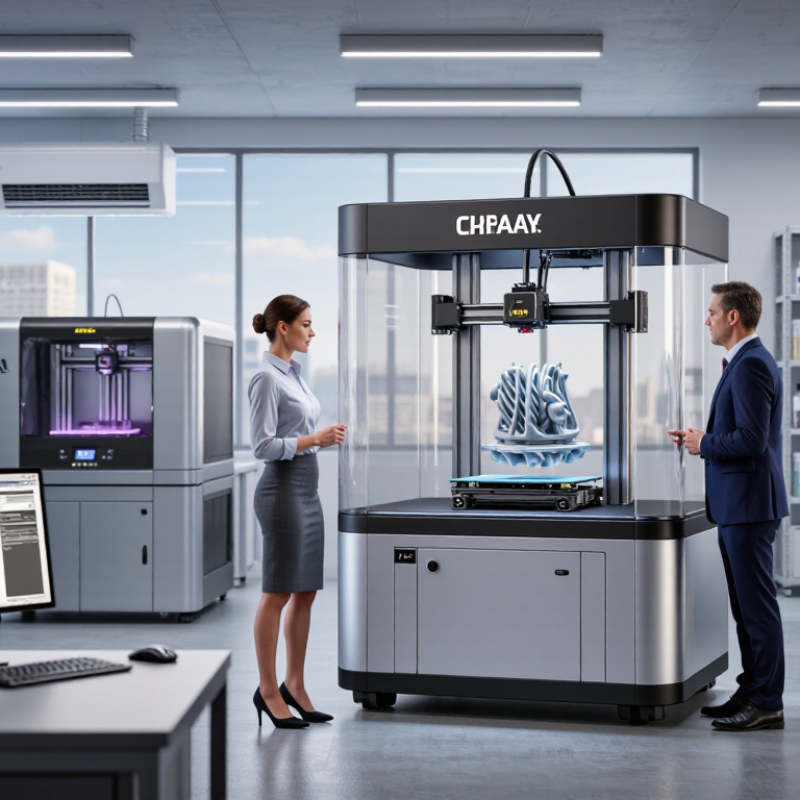
Before comparing printer specifications, define the work the machine must do. Will it produce fit-check prototypes, custom fixtures, replacement parts, or customer-ready products? A bracket that must survive heat needs different materials and testing than a display model. Record the largest part dimensions, required tolerances, weekly production volume, and acceptable post-processing time. Be specific. “Fast” is not a useful target until you know how many parts must be ready by Friday.
Wohlers Report 2024 estimated that the global additive manufacturing industry reached $20.0 billion in 2023, growing 11.1% from 2022. That signals expanding adoption, not a guarantee that a particular printer will pay for itself. Your application matters more than market momentum. Compare the cost per finished part, including failed prints, material, labor, finishing, and machine downtime. Then test representative designs, not just a simple cube. A thin-walled enclosure may reveal problems that a sturdy calibration block will miss. It is easy to underestimate cleanup time. I would also document who will operate the printer and how much training they need; a capable machine can still sit idle when only one employee knows its workflow. Keep a little room for uncertainty. Business demand changes, and early estimates are often imperfect.
How to Choose a 3D Printer for Business in 2026? — Define Your Business Needs and Intended Applications
Start with the parts you need to produce, the materials they require, and the expected workload. The figures below are typical planning ranges, not guaranteed specifications; results vary by machine, material, settings, and post-processing.
| Business need or application | Suitable process | Typical materials | Useful planning range | Key questions before purchase |
|---|---|---|---|---|
| Concept models and design reviews Frequent iterations, visual checks, and basic form studies |
Fused filament fabrication (FFF/FDM) | PLA, PETG, and other compatible thermoplastics | Commonly suited to parts from a few centimetres to several hundred millimetres; dimensional results depend on setup and geometry. | How many design iterations are expected? Is visible layer texture acceptable? Is an enclosed build area needed? |
| Functional prototypes and shop-floor fixtures Jigs, brackets, housings, and low-volume functional parts |
FFF/FDM; selective laser sintering (SLS) for more complex polymer geometries | ABS, ASA, nylon, and other process-compatible engineering polymers | Material properties vary with process, build orientation, and environment. FFF parts can be direction-dependent; powder-bed parts may need depowdering. | What loads, temperatures, chemicals, and service life must the part withstand? Are material data sheets and application testing available? |
| Detailed visual models and small components Fine features, smooth surfaces, or presentation models |
Vat photopolymerization, such as stereolithography (SLA) or masked SLA | Photopolymer resins formulated for model, engineering, or casting applications | Can produce fine detail, but parts generally require washing and post-curing. Resin properties and long-term durability vary by formulation. | Can the workplace manage resin handling, ventilation, washing, curing, and waste according to safety guidance? |
| Small-batch polymer production Multiple functional parts or complex shapes without support structures |
SLS or multi-jet fusion (MJF) | Primarily nylon-based powders and other materials supported by the specific system | Builds can contain multiple parts, but total cycle time includes cooling and finishing. Powder handling and part cleanup affect workflow. | What is the required monthly output? Can you provide space, powder management, finishing, and suitable ventilation? |
| Metal prototypes or end-use components Parts requiring metal properties or complex internal features |
Laser powder bed fusion (LPBF) or another qualified metal additive process | Process-specific metal powders, commonly including stainless steel, aluminium, or titanium alloys | Typically requires support removal and additional operations such as heat treatment or machining; qualification and inspection may be essential. | Are trained operators, powder safety controls, post-processing, inspection, and material traceability available in-house? |
| Large prototypes or oversized tooling Parts that exceed common desktop build volumes |
Large-format FFF/FDM or a suitable industrial process | Thermoplastics compatible with the selected machine and application | Check usable build volume, not just nominal dimensions. Large parts can take longer to print and may need sectioning or assembly. | What is the largest part envelope? Can the room support machine access, material storage, and safe operation? |
| Education, shared offices, or first-time adoption Occasional prints and a need for straightforward operation |
A managed FFF/FDM workflow; outsource specialist processes initially | Common thermoplastics supported by the chosen system | Total cost includes materials, failed prints, staff time, maintenance, software, and post-processing—not only the purchase price. | Who will operate and maintain the printer? What support, training, warranty, and replacement-parts access are available? |
Selection checklist: Define part size and tolerances, required material properties, monthly volume, acceptable finishing effort, operator skills, workspace and safety needs, software compatibility, service access, and total cost of ownership. Request sample parts and verify performance against your own designs before committing to production.
Related Posts
-
What Are the Top Printing Companies in China?
-
What Are the Top Printing Shops for Global Buyers?
-
How to Find Reliable US Printing Suppliers in 2026?
-
Top 10 Industrial Printing Techniques You Need to Know?
-
How to Choose the Right Industrial Printing Solutions for Your Business?
-
What Is UV Printing and How Does It Work?